

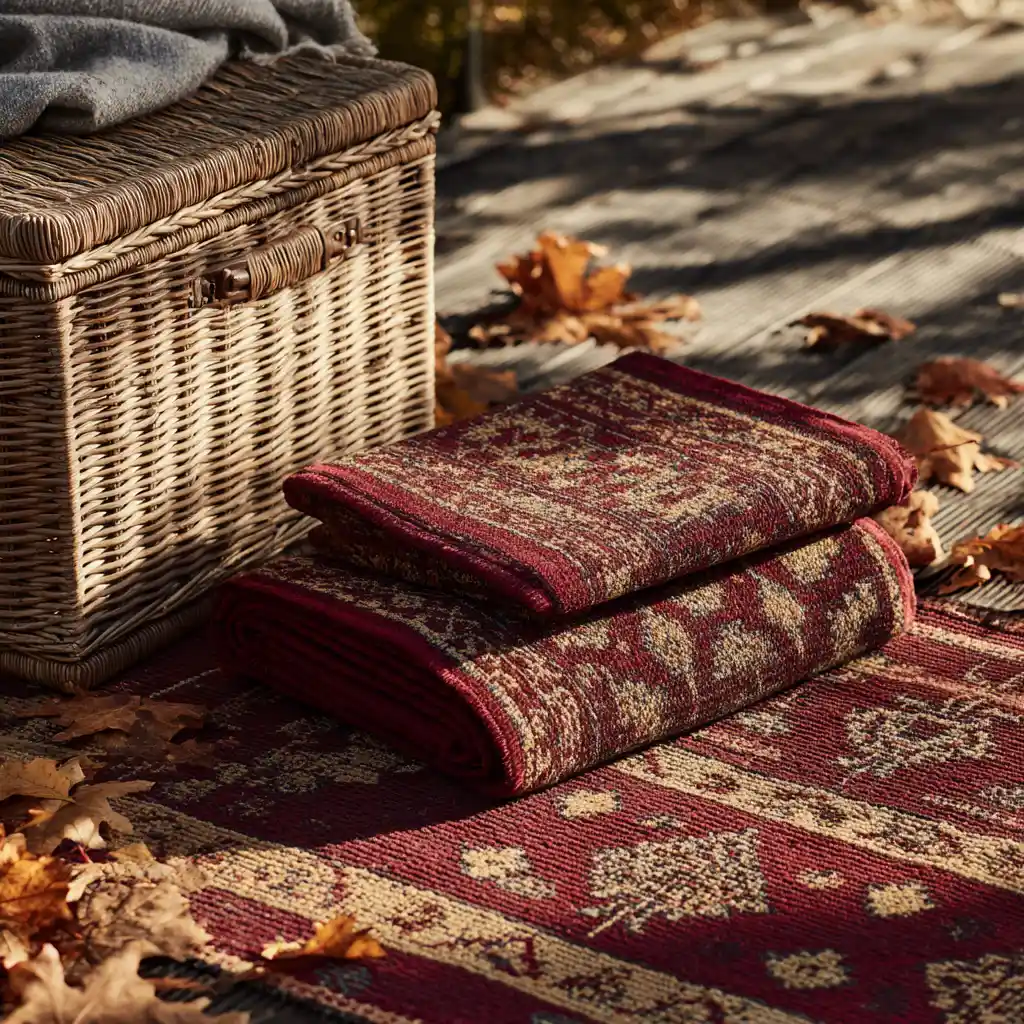
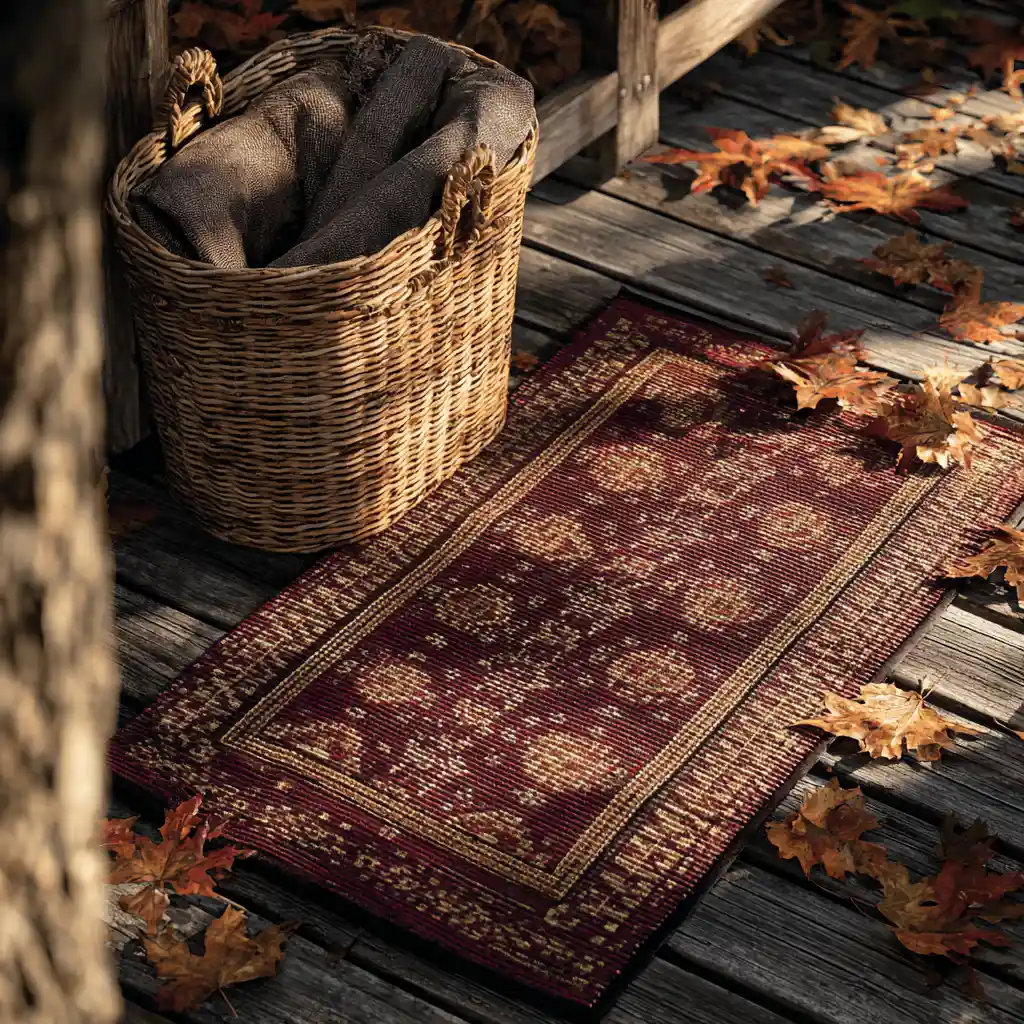
Outdoor rugs face significant deterioration when left exposed to winter’s harsh conditions, with moisture infiltration and freeze-thaw cycles breaking down even the most durable synthetic fibers.
Professional maintenance requires a systematic approach that begins with thorough cleaning, followed by complete moisture removal and proper storage techniques.
The process involves specific rolling methods, strategic location selection, and protective measures that determine whether a rug emerges intact for spring use or requires costly replacement.
Also read this: Indoor-Outdoor Home Decor Ideas
Why Indoor Storage Extends Your Outdoor Rug’s Lifespan
Why do outdoor rugs require special consideration when winter approaches? Indoor storage protects these investments from critical damage mechanisms that substantially reduce their lifespan.

Winter moisture creates ideal conditions for mold and mildew growth on exposed fibers.
When you store rugs indoors in a dry place, you eliminate this fungal threat that compromises structural integrity.
Freezing temperatures cause repeated expansion and contraction cycles, leading to fiber damage that can shorten lifespan by several years.
Harsh weather elements accelerate wear through snow, ice, and rain exposure.
These conditions can reduce durability by up to 50% over multiple winters.
Moving rugs indoors before temperatures drop prevents brittleness and structural degradation that occurs in just one season.
Proper indoor storage maintains colorfastness and material integrity, helping protect your outdoor rug investment for its full 5-10 year lifespan.
Pre-Storage Cleaning: Essential Steps for Optimal Care
Proper pre-storage cleaning requires a systematic three-step process to maximize rug longevity during winter months.

First, remove all accumulated debris and dirt through thorough vacuuming of both sides, followed by targeted stain treatment using appropriate cleaning solutions.
Complete the preparation by ensuring total moisture elimination through proper drying techniques before storage.
Remove Debris and Dirt
Begin the debris removal process by shaking the outdoor rug vigorously to dislodge loose dirt, leaves, and accumulated debris from the surface fibers.
Use a soft broom as an alternative method to remove stubborn particles without damaging the material.
Follow this initial step with careful vacuuming on both sides using a brush attachment to eliminate embedded dirt and dust particles that standard shaking cannot remove.
For thorough cleaning, apply mild detergent diluted in water to address persistent stains, testing first on an inconspicuous area.
Hose the rug with lukewarm water and gentle cleaner according to manufacturer guidelines. After completing the cleaning process, allow the rug to dry completely on both sides in a sunny location. Make sure the rug is clean and dry before proceeding to storage preparation.
Address Stains Thoroughly
Tackle stains immediately upon discovery by blotting the affected area with a clean, absorbent cloth to prevent the substance from penetrating deeper into the rug fibers. Quick action will help prevent permanent damage and maintain the rug’s appearance throughout winter storage.
For stubborn stains, apply a mild detergent mixed with water, scrubbing gently with a soft sponge. Always test cleaning solutions on inconspicuous areas first to avoid discoloration.
Complete thorough drying by hanging the rug in sunny areas, ensuring both sides dry completely.
Any residual moisture can lead to mold and mildew growth during storage, as rugs naturally absorb moisture from their environment.
Proper care during this cleaning phase prevents exposure to moisture-related issues that could cause permanent fiber damage over winter months.
| Stain Type | Treatment Method |
|---|---|
| Food spills | Blot, then mild detergent solution |
| Mud/dirt | Allow to dry, vacuum, then clean |
| Oil-based | Absorb excess, apply degreasing agent |
| Organic matter | Remove debris, disinfect with vinegar |
| Water marks | Air dry completely, brush fibers |
Ensure Complete Drying
After completing the stain removal process, the next step requires eliminating all moisture from the rug’s fibers to prevent mold and mildew formation during storage.
Allow the rug to air dry completely for at least 24 hours in a well-ventilated area, ensuring proper air circulation on all sides.
Flip the rug periodically during drying to eliminate hidden moisture buildup that could compromise fiber integrity.
Weather conditions permitting, hang the rug outdoors using clotheslines or fences, as direct sunlight expedites the drying process within 24-48 hours.
Taking care to verify complete dryness prevents irreversible damage like fiber weakening and mold growth.
Never store your rug while damp, as residual moisture can shorten its lifespan greatly.
Once thoroughly dried, the rug can be safely stored without risk of deterioration.
Your home should be a reflection of your own sense of style, filled with pieces that tell your story and bring you joy.
“Joanna Gaines”
Ensuring Complete Drying Before Storage
Before placing any outdoor rug into winter storage, one must guarantee the material achieves complete dryness to prevent mold, mildew, and fiber degradation that can permanently damage the investment.

Always check the rug thoroughly after removing it from the outdoor area before the winter months arrive.
| Drying Method | Time Required | Best Conditions |
|---|---|---|
| Natural air drying | 24-48 hours | Sunny, breezy days |
| Clothesline hanging | 12-24 hours | Direct sunlight exposure |
| Fence draping | 18-36 hours | Good air circulation |
| Ground spreading | 36-48 hours | Dry, warm surfaces |
| Indoor ventilation | 48-72 hours | Heated, air-moving spaces |
Flip the rug periodically during drying to guarantee both sides receive adequate airflow. Care to guarantee complete moisture elimination protects the outdoor investment and maintains structural integrity throughout storage.
Also read this: Winter Deck Safety and Maintenance
Proper Rolling Techniques to Prevent Damage
Rolling outdoor rugs instead of folding them prevents permanent creases and fiber damage that can compromise the rug’s structural integrity.

The rolling process requires positioning the pile side inward and using a thick curtain rod or dowel to maintain even tension throughout the material.
Proper protective wrapping methods involve rolling tightly but not excessively, then removing any support rods to eliminate pressure points during long-term storage.
Rolling Over Folding
The most effective method for storing outdoor rugs involves rolling rather than folding to prevent permanent creases and fiber damage that can greatly reduce the rug’s lifespan.
Never fold outdoor rugs, as this practice causes irreversible cracking and structural weakening, even in durable materials designed to handle winter weather conditions.
Position the delicate pile side inward during rolling to protect sensitive fibers from compression and abrasion.
Use a thick curtain rod or dowel rod to guarantee straight, even rolling that maintains the rug’s structural integrity.
This systematic approach prevents uneven bends that create weak points.
After rolling, wrap the rug outside in breathable cotton or muslin sheets, securing with twill tape.
Cover with polyurethane wrap for enhanced protection against winter weather, bugs, and moisture while maintaining proper air circulation.
Protective Wrapping Methods
Once the rolling process begins, proper surface preparation becomes paramount to achieving best results.
Position the delicate side inward to keep your outdoor rug’s fibers protected from damage.
Use a thick curtain rod or dowel to maintain straight, even rolling that prevents the rug from developing irregular shapes.
Secure the rolled rug with breathable cotton or muslin sheets, fastening with twill tape to shield against dust and pests.
Apply an additional protective layer using polyurethane material over the fabric covering.
This dual-wrapping system provides bug and moisture resistance while storing outside in winter conditions, unlike materials like polypropylene that trap condensation.
These tips to keep rugs designed to withstand outdoor elements properly stored guarantee your Rug Pad maintains its structural integrity throughout extended storage periods.
Also read this: 7 Bohemian Eclectic Living Room Inspirations
Choosing the Right Storage Location and Conditions
Where should homeowners store their outdoor rugs to guarantee maximum longevity during winter months?

The ideal place to keep these valuable investments requires specific environmental conditions without moisture, direct sunlight, and excessive weight pressure.
A basement or garage serves as the best area for storage, provided it remains cool and dry. Homeowners should elevate rugs using shelves or hooks to prevent direct ground contact and improve air circulation.
Well-ventilated spaces reduce dust accumulation while protecting against UV exposure that causes synthetic fibers to fade and deteriorate.
| Storage Factor | Recommended Approach |
|---|---|
| Elevation | Use shelves/hooks to avoid moisture |
| Ventilation | Guarantee airflow prevents mold growth |
| Weight Management | Avoid stacking to prevent permanent creases |
Regular monthly inspections guarantee rugs maintain their integrity and don’t lose their shape during extended storage periods.
Also read this: 7 Easy DIY Wall Decor Ideas for Beginners
Protecting Your Rug From Pests and Moisture
Beyond selecting proper storage conditions, homeowners must implement specific protective measures to safeguard their outdoor rugs against two primary threats: pest infiltration and moisture damage.
Though outdoor rugs are designed for constant exposure on patios or decks, the material used requires proper preparation before storage.
Natural fiber rugs designed for outdoor use need complete drying in sunny areas before storage to prevent mold development.
Wrapping the rug in breathable cotton or muslin sheets secured with twill tape creates an effective barrier against moths and insects while maintaining air circulation.
Adding polyurethane wrap provides additional humidity protection without moisture entrapment.
Applying environmentally friendly cedar or peppermint repellents deters dust-loving pests that could damage the outdoor space investment during storage months.
Also read this: Best Summer Living Room Cooling Ideas
Spring Preparation: Getting Your Rug Ready for Next Season
Retrieving outdoor rugs from winter storage requires a systematic inspection and cleaning process to restore their functionality for the upcoming season.
Area rugs are typically vulnerable after months of storage, making thorough preparation essential.
The right outdoor rug maintenance guarantees longevity and ideal performance.
- Unroll and vacuum both sides thoroughly to remove dust, debris, and potential pest eggs from winter storage
- Use a leaf blower as a gentle alternative that works well for clearing loose particles without damaging fibers
- Inspect for moisture or mold signs and allow the rug to air out for several hours to maintain freshness
- Perform detailed cleaning with mild detergent if necessary, following manufacturer directions to eliminate lingering dirt
- Elevate slightly off ground using weather-resistant padding to promote air circulation and reduce moisture buildup
Make sure outdoor rugs be left properly prepared for a wide range of seasonal conditions.
Final Verdict
Like a gardener tucking precious seeds into winter’s protective embrace, homeowners who follow these systematic storage protocols transform their outdoor rugs into dormant treasures awaiting spring’s awakening.
The methodical cleaning ritual, careful rolling technique, and climate-controlled sanctuary create an impenetrable cocoon against winter’s harsh elements.
Through diligent pest monitoring and moisture control, these textile investments emerge from their seasonal slumber restored and ready to bloom anew across outdoor spaces.
FAQs
Recommended Products

Balefire Goods Outdoor Throw Pillows Set of 4 - 18x18 Inch Waterproof Fall Autumn Decorative Cushions
Fall outdoor pillows - Autumn throw pillows waterproof
VIEW LATEST PRICE
Proven Winners ColorChoice Chrysanthemum Collection 6-Pack Live Plants
Fall mums live plants - Chrysanthemum plants
VIEW LATEST PRICE
EcoSmart ECO 18 Electric Tankless Water Heater for Outdoor Shower
Outdoor tankless water heater - Winter outdoor shower
VIEW LATEST PRICE