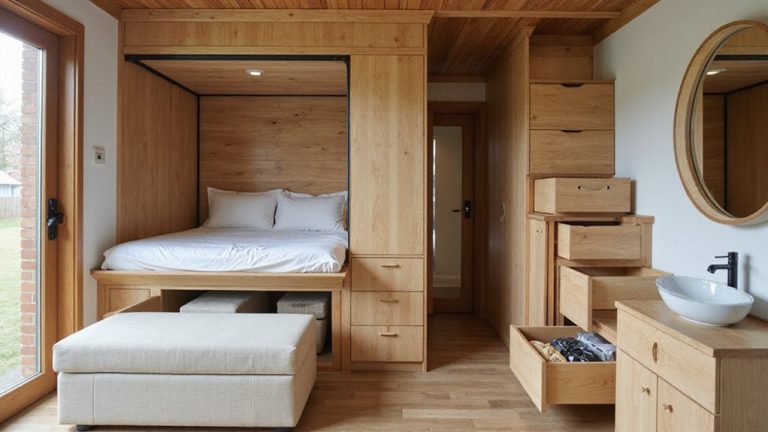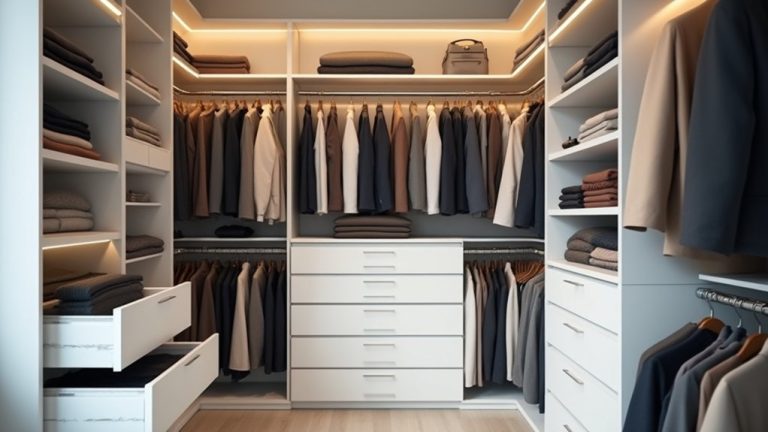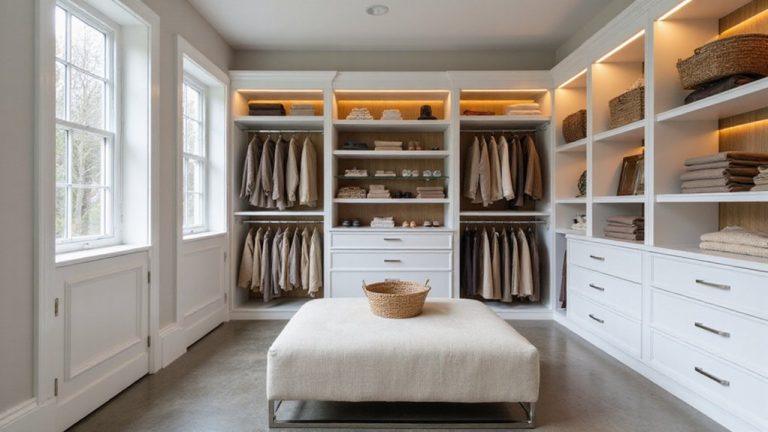


Parents often struggle with maintaining organized children’s closets, watching carefully folded clothes transform into chaotic piles within days.
The challenge lies not in the initial organization, but in creating systems that children can independently maintain.
Effective closet organization requires tactical planning that considers a child’s height, developmental abilities, and natural tendencies toward disorder.
Professional organizers recommend five specific approaches that address these unique challenges while maximizing limited space and promoting long-term organizational success.
Maximize Vertical Space With Built-In Storage Solutions
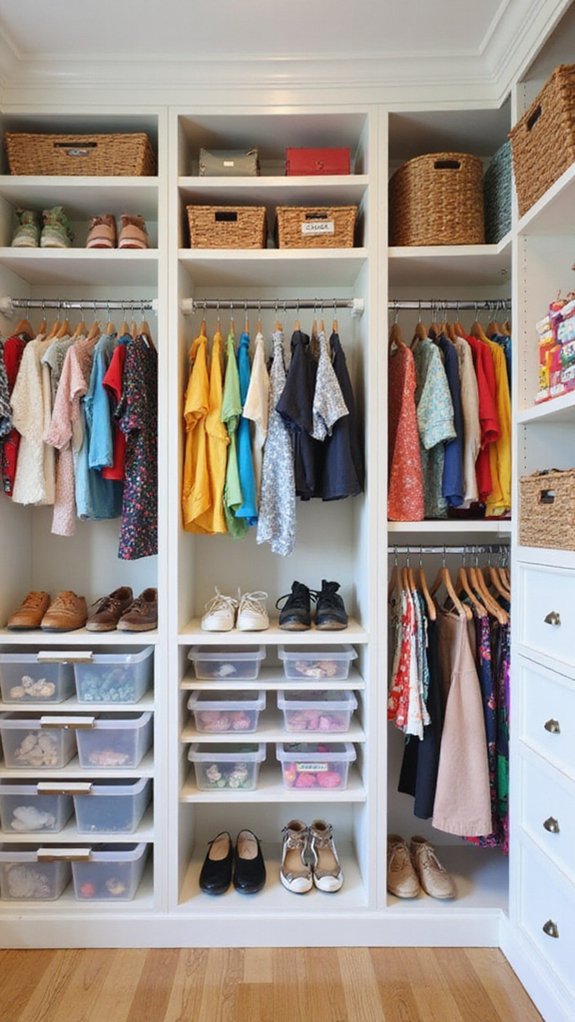
When designing an organized closet for children, built-in storage solutions offer the most efficient method for maximizing vertical space.
Ceiling-height installations create additional storage for seasonal clothing and rarely used items. Built-in storage systems with extending shelves utilize every available inch while maintaining accessibility.
Maximize every inch of closet space with ceiling-height built-ins that keep seasonal items accessible yet organized.
Adjustable shelving accommodates evolving needs as children’s belongings change over time. Vertical dividers within these systems organize shoes, books, and toys effectively.
Pull-out drawers and bins integrated into built-in units enhance accessibility while reducing visual clutter. These systematic solutions help organize your kids’ belongings efficiently, creating a functional closet environment that children can maintain independently.
Floor-to-ceiling shelving within existing alcoves transforms underutilized wall niches into highly functional storage areas for children’s items.
Create Easy Access With Kid-Friendly Bins and Baskets
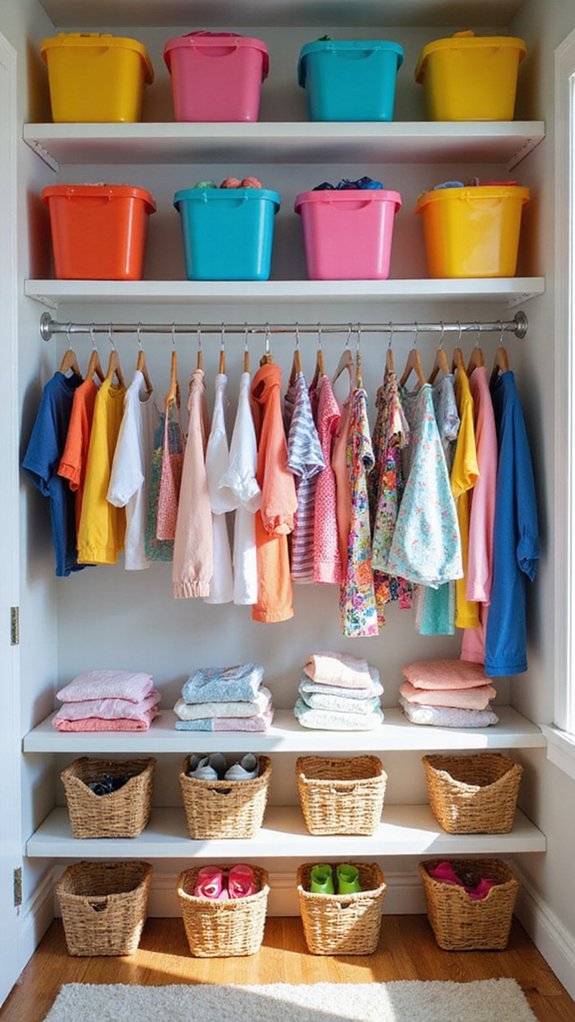
Essential storage components for children’s closets center on bins and baskets designed specifically for young users. Brightly colored containers motivate kids to actively put away belongings while creating visual appeal.
Clear or translucent designs enable children to identify contents instantly, promoting independent outfit selection. Lightweight bins with handles facilitate easy removal and replacement without adult assistance.
Picture-based labeling systems help pre-readers understand proper item placement. Thoughtful positioning at child-appropriate heights guarantees everyday items remain accessible, fostering responsibility and organizational habits.
These Closet Organization Ideas transform storage from parent-dependent tasks into manageable, kid-friendly systems that encourage consistent use and maintenance.
Recommended Products

mDesign Large Stackable Plastic Storage Bin Container with Handles - 6 Pack
Clear plastic storage bins handles - Stackable closet bins kids
VIEW LATEST PRICE
Avery Printable Tags with Strings for Labeling - 96 Pack
Printable labels for kids bins - Closet organization labels
VIEW LATEST PRICE
Elfa Classic White Custom Closet Organization System
Elfa closet system - Modular closet organization
VIEW LATEST PRICEUse Color Coordination to Simplify Daily Outfit Selection

Color coordination transforms chaotic closets into streamlined selection systems that empower children to choose appropriate outfits independently. Grouping similar hues together eliminates visual clutter while creating an aesthetically pleasing arrangement that encourages daily use.
This systematic approach reduces morning preparation time as children quickly identify matching pieces without parental guidance.
Color coordinating clothing items by category blues with blues, reds with reds maximizes closet efficiency and develops organizational responsibility. Make sure to position coordinated groups at child-accessible heights to promote independence.
Research indicates children engage more positively with visually organized spaces, resulting in sustained tidiness and improved room maintenance habits.
Install Double Hanging Rods for Growing Wardrobes
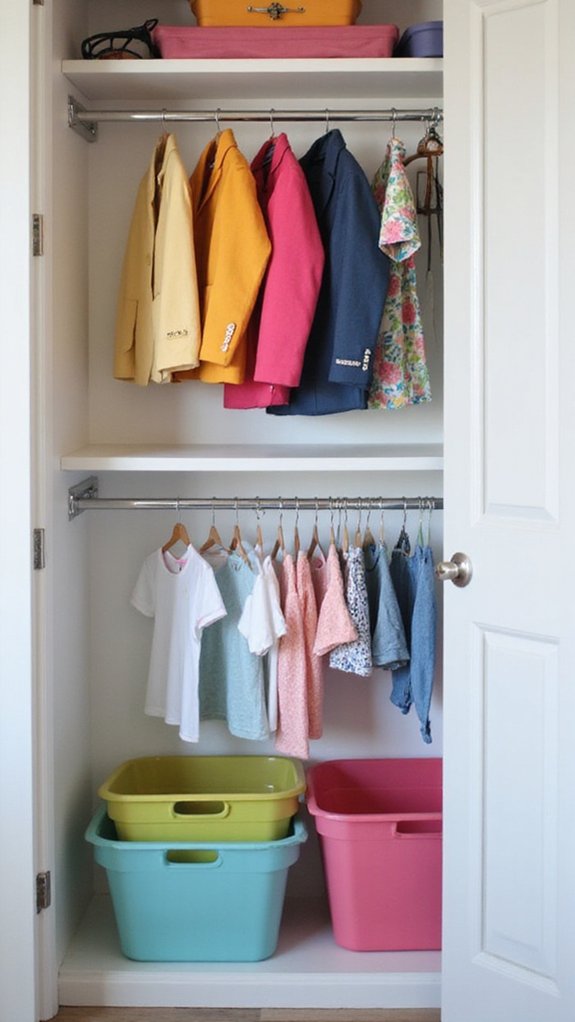
Double hanging rods multiply storage capacity by utilizing the full vertical height of children’s closets. This configuration transforms any sons closet into an efficient organizational system that adapts as children grow.
Kids Closets benefit greatly from this vertical approach, accommodating frequent size changes and expanding wardrobes without overcrowding. The dual-rod setup enables organized separation of clothing categories casual wear on one level, formal attire on another.
This systematic arrangement promotes independence by making garments visible and accessible to young users. The solution maximizes space efficiency in compact areas while encouraging children to maintain organized habits through simplified storage accessibility.
Add Personal Touches That Encourage Organization Habits

Children’s natural inclination toward organization strengthens when their storage spaces reflect personal preferences and individual style choices.
Collaborate with children to select colorful hangers and personalized storage systems, creating ownership over their kid’s closet space.
Add decorative wall decals reflecting their interests while allowing kids to choose organizational bins or baskets that promote engagement.
Statement signs labeling storage sections help children understand where items belong, making it easy to put belongings back in designated spots.
A reward system for maintaining tidiness reinforces positive habits, transforming organization into an engaging challenge that makes keeping spaces orderly both achievable and enjoyable.
FAQs
How to Organize a Kids Closet?
One should implement systematic clothes sorting by category, install adjustable storage solutions like shelves and bins, and create clear labeling systems. This practical approach maximizes space while enabling children to independently maintain their organized closet.
How to Organize Kids’ Clothes in a Small Space?
One maximizes small spaces through systematic clothing rotation, storing off-season items in labeled storage bins. Hanging organizers utilize vertical space efficiently, while clear containers and double hangers create practical solutions for accessible, organized children’s wardrobes.
How to Use Dead Space in a Closet?
One maximizes dead closet space by installing closet shelving above hanging areas, placing storage bins in corners and floor spaces, and utilizing vertical hangers to create multi-level storage solutions for peak organization.
What Is the Best Order to Organize Closets?
One should first declutter, then group similar items together, implement color coding systems, establish seasonal rotation zones, label bins clearly, and finally arrange by frequency of use to create maximum efficiency and accessibility.
Final Verdict
Implementing these systematic closet organization strategies creates functional, child-accessible storage systems that grow with developing needs.
The combination of vertical storage maximization, tactical color coordination, and appropriately positioned organizational tools establishes sustainable habits while optimizing limited space.
Double hanging configurations and personalized elements guarantee both practical functionality and emotional investment in maintaining order.
This thorough approach transforms chaotic closets into efficient, kid-friendly spaces that support independence and streamline daily routines through thoughtful design implementation.
Recommended Products

mDesign Wire Storage Baskets for Closet Organization Set of 8
Wire storage baskets - Closet wire baskets
VIEW LATEST PRICE
IKEA PAX Wardrobe System 98.5x23.6x93.1 inch White
IKEA PAX wardrobe system - Modular closet system
VIEW LATEST PRICE