


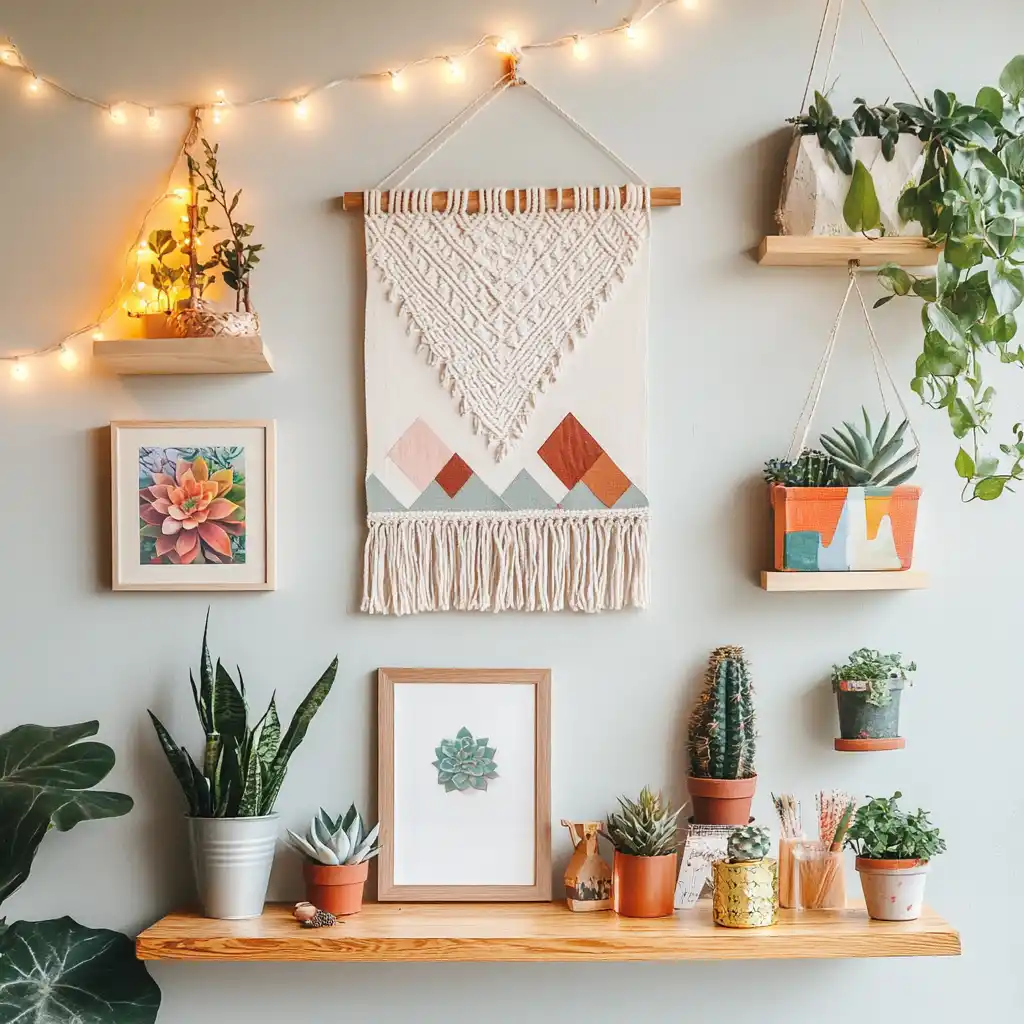
Transforming blank walls into compelling focal points requires strategic application of accessible design techniques that prioritize visual impact over complex execution.
Beginning practitioners often overlook fundamental principles of scale, texture contrast, and color harmony when selecting decorative elements.
These seven methodical approaches utilize readily available materials and basic crafting skills to establish cohesive wall compositions.
Each technique addresses specific design challenges while maintaining cost-effectiveness and minimizing technical barriers that typically discourage novice decorators from pursuing their vision.
Also read this: Indoor-Outdoor Home Decor Ideas
Gallery Wall With Free Printable Art
Gallery walls represent one of the most cost-effective approaches to transforming blank wall space into a sophisticated visual focal point. This DIY wall decor technique leverages free printable art sourced from public domain archives, Wikimedia Commons, and museum collections.

Strategic planning involves measuring wall dimensions and testing arrangements with paper templates before installation. Mixing frame styles creates visual interest while maintaining design cohesion through consistent spacing of 2-6 inches between pieces.
Digital printables enable seasonal rotation at minimal cost, with artwork positioned at eye level (60-63 inches) for ideal viewing impact and professional gallery wall presentation.
With every brushstroke and crafted piece, beginners can transform bare walls into a canvas of their own story, blending timeless charm with personal flair.
“Joanna Gaines”
Hand-Painted Abstract Canvases
Why purchase expensive artwork when hand-painted abstract canvases offer unlimited creative potential at a fraction of retail costs?

Creating DIY wall art with acrylic paints provides beginners an accessible entry into hand-painted art while developing technical proficiency through experimentation.
Hand-painted abstract canvases deliver unlimited creative potential at a fraction of expensive artwork costs while building technical skills through experimentation.
Essential techniques for compelling abstract canvases include:
- Layering complementary colors using varied brush strokes and blending methods
- Incorporating geometric shapes with precise edges for structural balance
- Adding texture through controlled splattering and gradient applications
- Utilizing contrasting color palettes to achieve visual impact
Beginning with smaller canvases enables skill development before advancing to larger compositions, ensuring successful abstract creations.
Also read this: Best Summer Living Room Cooling Ideas
Woven Basket Wall Display
Woven basket wall displays transform flat vintage or thrifted baskets into sophisticated decorative art pieces that introduce organic texture and visual warmth to interior spaces.
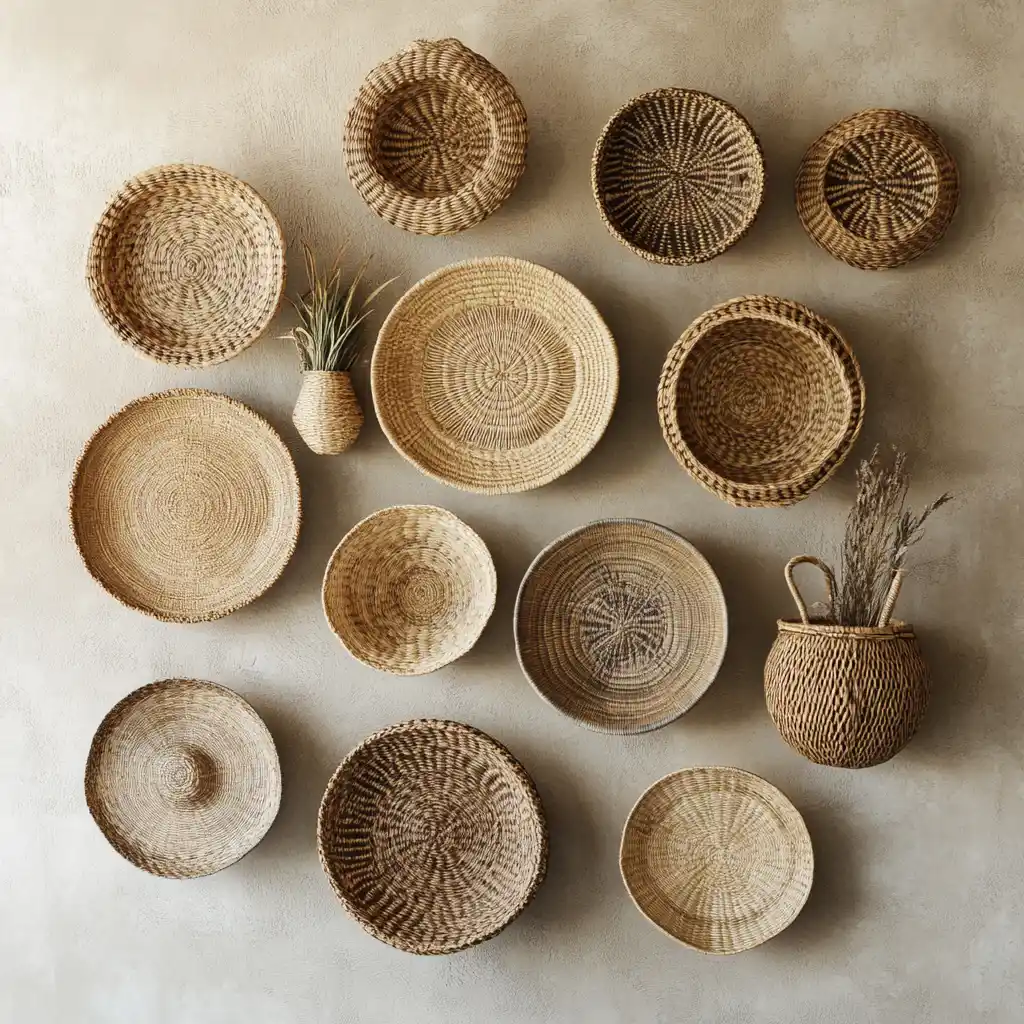
The selection process requires evaluating basket materials, weave patterns, and color palettes to guarantee cohesive design integration while maintaining individual character within the composition.
Strategic arrangement principles govern both symmetrical and asymmetrical layouts, with precise spacing calculations determining the overall visual impact and proportional balance of the gallery wall installation.
Choosing Basket Styles
The selection of appropriate basket styles forms the foundation of an effective woven basket wall display, with flat or shallow profiles providing ideal mounting characteristics while maintaining visual impact.
Natural fiber compositions in rattan, seagrass, and wicker deliver authentic textural elements essential for cohesive wall decor arrangements.
Strategic procurement from thrift store sources enables budget-conscious acquisition of vintage pieces, often securing quality baskets at minimal cost while supporting sustainable design practices.
- Round baskets provide classical focal points for symmetrical compositions
- Oval shapes create transitional elements between geometric forms
- Rectangular profiles establish structured foundation elements
- Varying diameter proportions generate dynamic visual hierarchy systems
Arrangement and Spacing
Strategic placement determines visual impact when establishing ideal distances between mounted baskets, with measurements of 2 to 4 inches creating balanced compositions that prevent overcrowding while maintaining cohesive unity.
This DIY wall decor approach requires pre-planning through floor layouts or paper templates before installation.
Varying basket dimensions and silhouettes generates visual dynamism while preventing monotonous uniformity. Lightweight mounting hardware, including adhesive strips and specialized hooks, facilitates repositioning without structural damage.
Maintaining consistent 3-inch spacing intervals between individual pieces establishes rhythmic harmony throughout the arrangement.
Proper spacing methodology transforms disparate woven elements into sophisticated, gallery-quality installations that demonstrate mastery of fundamental design principles.
Also read this: 3 Modern Apartment Living Room Decor Ideas
Pressed Flower Shadow Boxes
Pressed flower shadow boxes transform botanical specimens into sophisticated wall installations through systematic preservation and strategic presentation techniques.

The creation process requires careful flower selection based on structural integrity and color retention properties, followed by precise assembly within appropriately sized shadow box frames.
Strategic styling considerations including compositional balance, supplementary natural elements, and ideal wall placement determine the visual impact and cohesiveness of the final display.
Choosing Perfect Flowers
How does one select botanical specimens that will maintain their structural integrity and chromatic vibrancy throughout the pressing process? Ideal pressed flowers for shadow box displays require specific characteristics that guarantee successful art preservation.
Fresh, vibrant specimens like daisies, lavender, and roses provide superior results when subjected to proper flower drying techniques.
Essential selection criteria include:
- Moisture content – Choose flowers at peak bloom before wilting begins
- Petal thickness – Thin, delicate petals press more effectively than thick, fleshy varieties
- Color saturation – Vivid hues retain better chromatic stability during preservation
- Structural durability – Sturdy stems and petals withstand pressing forces without deterioration
These parameters maximize aesthetic outcomes in finished shadow box compositions.
Shadow Box Assembly
Once botanical specimens achieve ideal pressing conditions, the assembly process transforms preserved materials into sophisticated three-dimensional displays. Shadow box construction requires systematic arrangement on acid-free backing paper, positioning pressed flowers according to compositional balance and visual hierarchy.
Clear adhesive or framing tape secures botanical elements, preventing displacement during handling. Preservation protocols maintain specimen integrity while protective glass or acrylic fronts shield arrangements from environmental contaminants.
Frame customization through paint applications or decorative treatments enables seamless integration with existing interior design schemes. This methodical assembly approach ensures professional-quality DIY wall art that showcases botanical specimens within durable, aesthetically refined display frameworks.
Styling and Display
Where should completed pressed flower shadow boxes be positioned to maximize their aesthetic impact within interior spaces? Strategic placement ensures ideal visual presentation of these natural botanical displays.
Wall decor featuring pressed specimens requires careful consideration of lighting conditions and viewing angles to showcase delicate textures effectively.
Essential display ideas for pressed flower shadow boxes include:
- Mount at eye level for a comfortable viewing experience
- Position on well-lit walls to illuminate natural colors
- Group multiple frames for enhanced visual impact
- Maintain consistent spacing between adjacent pieces
Professional installation techniques preserve the integrity of these nature-inspired focal points while creating sophisticated interior environments.
Yarn and Macrame Wall Hangings
The resurgence of textile-based wall art has positioned yarn and macrame hangings as sophisticated architectural elements that introduce tactile dimension and organic movement into contemporary interior spaces.

These handmade wall decor pieces utilize fundamental knotting techniques square knots, half hitch, and lark’s head to construct intricate geometric compositions.
Strategic layering of varied yarn thicknesses creates visual depth while maintaining budget-conscious accessibility.
DIY wall decor enthusiasts can initiate projects through elementary tassel construction or chevron configurations before advancing to complex macrame wall hangings.
Essential tools remain minimal: precision scissors, mounting dowels, and quality cordage, enabling customizable yarn wall art that harmonizes with existing spatial aesthetics.
Repurposed Fabric Textile Art
Building upon the tactile foundation established through yarn-based installations, repurposed fabric textile art expands the material vocabulary to encompass discarded textiles as primary design mediums.
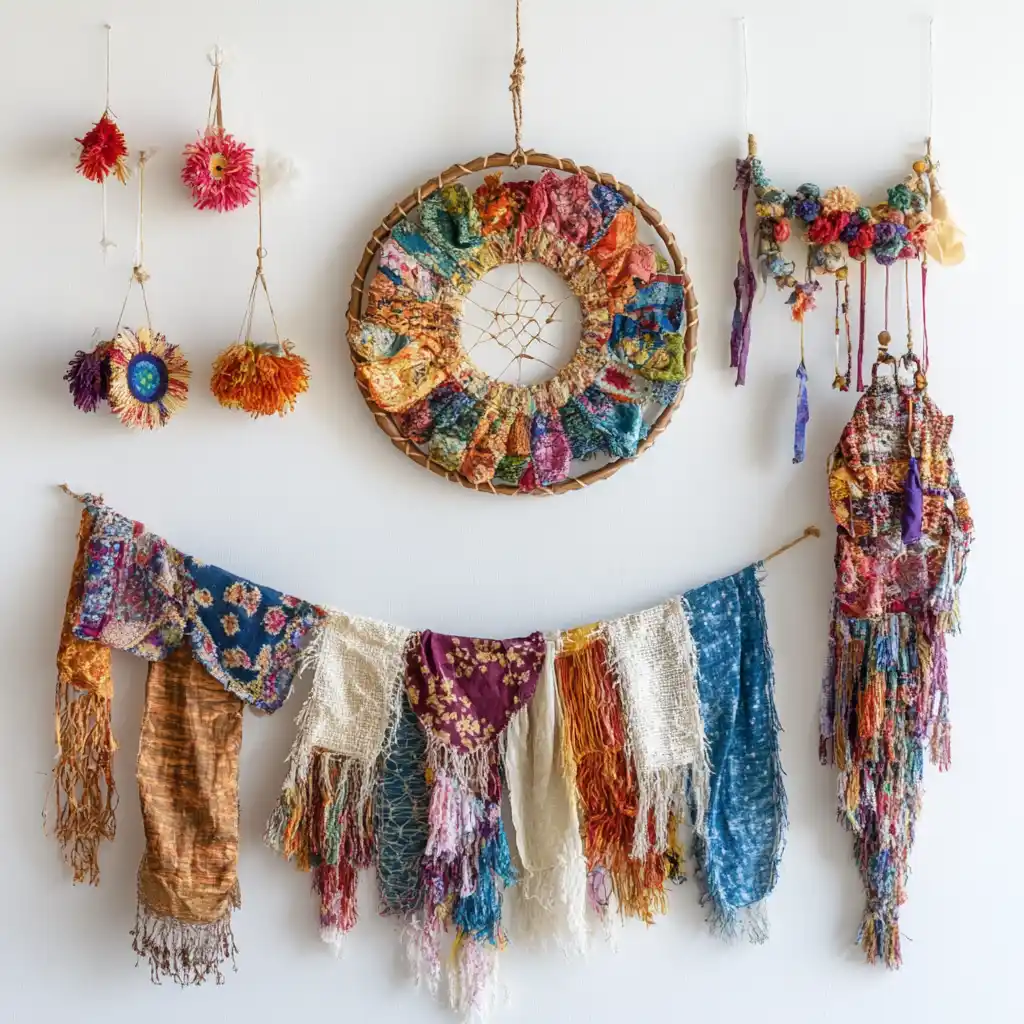
This DIY wall decor approach transforms obsolete fabrics into sophisticated wall hangings through systematic application of sewing, embroidery, and appliqué techniques.
Essential material considerations include:
- Vintage linens and thrifted textiles for authentic patina
- Fabric scraps for cost-effective sourcing
- Wooden dowels or embroidery hoops for mounting systems
- Complementary thread selection for cohesive color schemes
The repurposed fabric methodology enables exhaustive customization while maintaining budgetary constraints, allowing practitioners to integrate personal textile collections into cohesive interior compositions.
Thrift Store Frame Transformations
Abandoned picture frames discovered in thrift establishments represent untapped potential for sophisticated wall decor applications, offering substantial cost advantages while enabling all-encompassing aesthetic customization.

These thrift store frames, typically priced between $2-$10, serve as foundational elements for innovative DIY wall art projects.
Strategic upcycling techniques including spray painting, distressing, and decorative trim application transform deteriorated surfaces into contemporary design statements.
Professional-grade staining processes achieve vintage patinas, while fabric or wallpaper integration creates distinctive artistic inserts.
Combining disparate frames establishes dynamic gallery wall compositions, achieving eclectic visual harmony through intentional asymmetry and coordinated color schemes.
Final Verdict
These seven DIY methodologies demonstrate fundamental design principles through accessible material manipulation and strategic spatial composition.
Each technique leverages cost-effective resource allocation while maintaining aesthetic coherence and visual impact.
The systematic approach to wall curation enables practitioners to develop all-encompassing design vocabularies through hands-on experimentation with texture, color theory, and dimensional layering.
These foundational projects establish technical proficiency in basic fabrication methods, creating sustainable decorative solutions that enhance interior architectural environments through intentional visual programming.
FAQs
Recommended Products

Amerock Decorative Wall Moulding Kit Crown Moulding 8-Pack
Decorative wall moulding - Crown moulding kit
VIEW LATEST PRICE
Uttermost Driftwood Sculpture Large Statement Piece
Large driftwood sculpture - Statement driftwood decor
VIEW LATEST PRICE
Anthropologie Gleaming Primrose Mirror Decorative Wall Mirror
Decorative wall mirror - Spring home decor
VIEW LATEST PRICE

