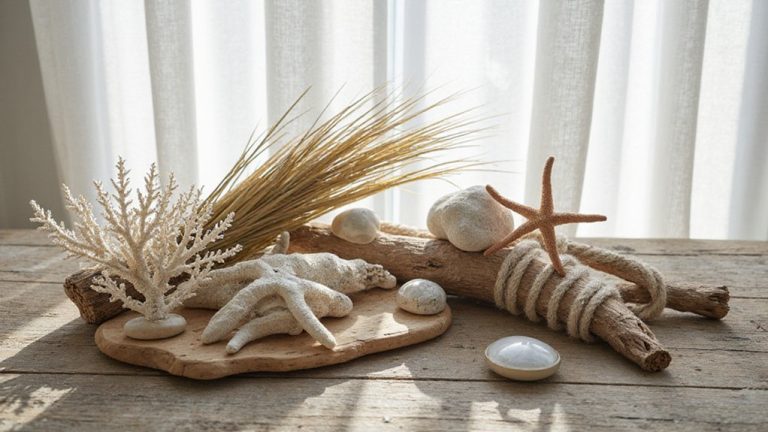


Antique markets offer interior designers and homeowners a selection of functional décor elements that establish visual warmth within residential spaces.
These carefully chosen vintage pieces serve dual purposes delivering both aesthetic appeal and practical utility while maintaining authentic character that mass-produced items cannot replicate.
Placement of these weathered treasures creates layered textural interest and develops inviting atmospheres through their inherent patina and craftsmanship. Seven specific categories emerge as particularly effective for achieving rustic elegance.
Vintage Wooden Cutting Boards and Bread Boards for Wall Display

The inherent patina and wear patterns of vintage wooden cutting boards establish them as compelling focal elements in modern wall compositions.
These antique pieces, crafted from hardwoods like maple and oak, demonstrate exceptional versatility through singular placement or gallery arrangements.
Their authentic grain textures and carving marks generate rustic visual interest while maintaining design cohesion across farmhouse and traditional interiors.
Natural wood tones and distressed finishes provide material authenticity that enhances wall decor schemes.
Thoughtful display positioning of these functional artifacts transforms utilitarian objects into artisanal statements, creating atmospheric depth within residential environments through historical craftsmanship appreciation.
Strategic positioning of these vintage boards using varying heights can create dynamic visual impact similar to multi-level arrangements used in contemporary design schemes.
Antique Wicker Screens as Room Dividers and Texture Elements

How effectively can room boundaries be established while preserving visual continuity throughout interior environments? Antique wicker screens function as elegant room dividers that maintain atmospheric flow while introducing essential texture elements.
These vintage finds, typically measuring 4-6 feet in height, feature handcrafted rattan construction with intricate weaving patterns that enhance cozy decor schemes.
Vintage wicker screens create sophisticated spatial divisions while preserving open-concept flow through their graceful semi-transparent weaving patterns.
- Filtered sunlight dancing through open-weave panels, casting geometric shadows across hardwood floors
- Aged patina surfaces displaying weathered charm from decades of graceful functionality
- Natural reed fibers creating tactile contrast against smooth modern furnishings
These vintage treasures establish intimate zones without architectural permanence, allowing designers to reconfigure spaces while preserving the essential openness of modern living environments.
During holiday seasons, these screens complement natural materials like pine cones and greenery, creating layered textures that enhance the warmth of rustic-inspired festive displays.
Ornate Empty Frames as Standalone Wall Art

Ornate empty frames function as elegant architectural elements that transform bare walls through their inherent decorative value and historical craftsmanship.
Thoughtful placement considerations include wall proportions, lighting conditions, and visual weight distribution to maximize their impact as standalone art pieces.
Successful implementation requires understanding frame style characteristics, ideal spacing ratios, and compositional balance when arranging single specimens or selected groupings.
Salvaged mismatched frames can be unified with uniform finishes to create cohesive gallery compositions that enhance visual coherence across diverse decorative periods and styles.
Choosing Ornate Frame Styles
When selecting ornate frame styles for standalone wall art, designers must evaluate the architectural elements and proportions that will complement the existing room composition.
Vintage frames sourced from antique store collections require careful consideration of their detail embellishments and structural integrity.
Different decor styles demand specific frame characteristics to achieve visual cohesion.
Thoughtful selection criteria include:
- Gilded baroque frames with deep relief carvings for traditional or maximalist interiors
- Weathered plaster frames featuring delicate flourishes for shabby chic aesthetics
- Mixed-scale ornate frames creating dynamic gallery wall compositions through varied proportional relationships
Proper frame selection transforms empty architectural elements into refined focal points that enhance room depth and visual interest.
Ornate frames may require sanding techniques to simplify excessive decorative embellishments while preserving their vintage character for modern minimalist appeal.
Wall Placement Strategies
Wall placement of ornate empty frames requires precise analysis to maximize their architectural impact within interior compositions.
Gallery wall configurations benefit from varying frame heights, creating dynamic visual interest through layered decor principles.
Vintage frames function as autonomous decorative elements, eliminating dependency on internal artwork while showcasing intricate craftsmanship details. Wall arrangement methodology involves clustering different-sized antique accents to establish focal points and rhythm.
Gilt and carved frames introduce textural contrast against neutral surfaces, enhancing dimensional depth.
Professional designers position these decorative elements using mathematical spacing ratios, ensuring balanced compositions that elevate interior atmospheres through vintage frame deployment.
Strategic positioning along entryways mirrors the concept of framing doorways with cornstalks vertically to create architectural emphasis and seasonal visual anchoring.
Grouping Multiple Frames
The deliberate clustering of multiple ornate empty frames transforms vacant wall surfaces into elegant focal points through calculated compositional arrangements.
Vintage frames positioned in cohesive grids or organic clusters establish dynamic gallery wall configurations that emphasize antique character while maintaining visual hierarchy.
Eclectic display methods include varied frame dimensions and decorative styles to create layered compositions that enhance cozy spaces through thoughtful wall decor implementation.
Strategic placement of frames along doorframes and architectural features guides the eye upward while maintaining proportional balance with surrounding elements.
- Gilt baroque frames cascading down stairwell walls in asymmetrical triangular formations
- Carved wooden frames arranged in precise geometric grids above console tables
- Mixed-scale ornate frames clustering around doorways creating architectural emphasis points
White Ironstone Pitchers for Striking Vignettes

How does one achieve visual impact through the arrangement of vintage ceramics? White ironstone pitchers serve as exemplary focal points when sourced from antique market vendors.
These 19th-century vessels demonstrate superior dynamics through varied proportions and heights, creating compelling visual triangulation.
Their neutral palette integrates seamlessly within farmhouse style interiors while maintaining design flexibility across multiple aesthetic frameworks. Professional home decorating principles emphasize grouping dissimilar scales to establish rhythm and movement.
The collection’s inherent textural contrast smooth surfaces juxtaposed with embossed botanical motifs generates refined vintage decor arrangements that command attention through calculated asymmetrical placement rather than conventional symmetrical positioning.
Strategic positioning near windows allows these white ironstone pieces to capture and reflect natural light, enhancing their luminous qualities and creating sophisticated focal points within curated displays.
Antique Mixing Bowls for Charming Shelf Styling

Antique mixing bowls function as versatile design elements that enhance shelf compositions through their substantial forms and distinctive patinas.
Thoughtful placement involves utilizing the bowls’ nested capabilities and varied scales to create visual hierarchy within arranged vignettes.
Their inherent craftsmanship and material authenticity establish focal points that anchor broader arrangements of vintage kitchenware and collectibles.
Strategic positioning of these bowls creates balanced composition by varying heights and textures throughout your display area.
Mixing Bowl Display Ideas
Three fundamental principles guide successful antique mixing bowl displays: vertical layering, compositional balance, and material harmony.
Thoughtful arrangement transforms vintage mixing bowls into compelling focal points that establish cozy ambiance throughout living spaces.
Professional display ideas maximize visual impact through intentional grouping:
- Graduated stacking – Nest bowls by descending size, creating dynamic height variations that draw the eye upward
- Color clustering – Group complementary enamel tones and ceramic finishes to establish cohesive visual rhythm
- Functional integration – Position vintage pieces as decorative risers supporting candles, plants, or seasonal elements
This systematic approach ensures antique decor maintains harmony while showcasing authentic craftsmanship.
Thoughtful arrangement elevates utilitarian objects into refined home decor statements. Vintage bowls serve as elegant elevated platforms that enhance visual hierarchy when styling seasonal centerpieces or year-round displays.
Vintage Bowl Styling Tips
Why do certain vintage arrangements capture attention while others fall flat? Thoughtful placement transforms ordinary antique collections into well-organized displays with substantial visual interest.
Vintage bowls require deliberate spacing and height variation to achieve proper balance. Grouping by color gradients or pattern themes creates cohesive vignettes while maintaining individual character.
Scale relationships between decorating elements prevent visual competition—larger bowls anchor arrangements while smaller pieces provide accent points.
Professional stylists organize collections using odd-numbered groupings and negative space principles.
Antique mixing bowls excel when positioned at eye level, allowing intricate details and patina to become focal elements rather than background clutter.
Strategic placement of decorative elements requires considering height variation alongside existing furnishings to create dimensional hierarchy throughout the display area.
Shelf Arrangement Techniques
Open shelving transforms antique mixing bowls into architectural elements through layered placement and calculated positioning intervals.
Professional shelf arrangement utilizes staggered positioning to maximize visual depth while maintaining harmony.
Antique bowls achieve ideal display through deliberate grouping by material cohesion and proportional scaling.
Essential vintage decor display techniques include:
- Nested bowl configurations creating dimensional hierarchy within limited shelf space
- Color-coordinated clusters establishing visual anchors throughout the composition
- Complementary accessories balancing negative space between primary focal points
Successful arrangement implementation requires alternating bowl sizes with supplementary elements like candlesticks or framed art.
These decor ideas emphasize functional beauty while preserving the authentic character of collectible pieces.
Enhance your vintage bowl displays with vintage ornaments positioned strategically between pieces to create curated seasonal appeal without overwhelming the spatial composition.
Vintage Ladders and Shutters for Creative Storage Solutions
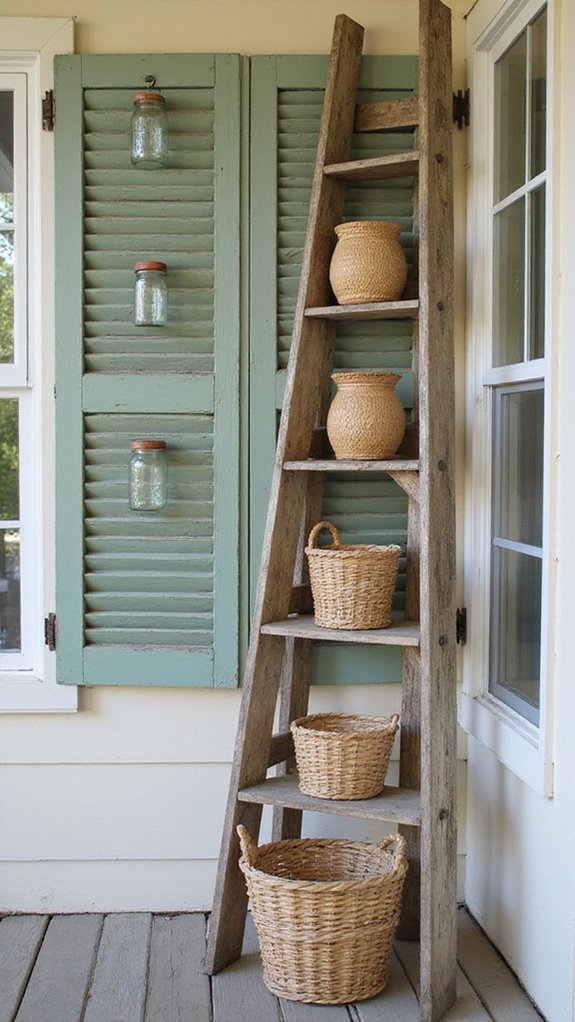
Architectural salvage presents exceptional opportunities for functional design solutions through repurposed vintage ladders and weathered shutters.
These distinctive pieces from antique stores transform conventional storage solutions while introducing rustic charm to interior environments.
Vintage ladders serve as vertical display systems for plants, books, or textiles, maximizing space efficiency. Shutters function effectively as room dividers or wall-mounted organizational systems, their louvered construction providing ventilation and visual interest.
When paired with weather-resistant cushions and outdoor textiles, these architectural elements create seamless indoor-outdoor living spaces that blur traditional boundaries.
| Item | Primary Function | Design Style | Application | Cost Range |
|---|---|---|---|---|
| Vintage Ladders | Vertical Storage | Farmhouse/Industrial | Corner Displays | $25-85 |
| Weathered Shutters | Room Division | Shabby Chic/Rustic | Wall Systems | $15-65 |
| Ladder Shelving | Plant Display | Cottage Core | Garden Rooms | $30-90 |
| Shutter Panels | Storage Backdrop | French Country | Dining Areas | $20-75 |
| Distressed Units | Decorative Storage | Vintage Modern | Living Spaces | $35-95 |
These repurposed decor elements establish authentic character through distressed finishes and weathered patina.
Copper Accents and Metallic Treasures for Warm Finishing Touches

Beyond structural elements, metallic accents establish warm ambiance through carefully selected copper and brass components discovered in antique markets. These vintage metals introduce natural patina that develops character over time, creating authentic rustic decor with historical depth.
Copper accents function as both decorative elements and practical cookware, offering dual-purpose solutions for space optimization.
Essential metallic treasures include:
- Double boilers and cauldrons displaying rich oxidation patterns
- Mixing bowls with hammered textures reflecting ambient lighting
- Decorative vessels creating focal points on shelving systems
Layering copper with contrasting metals like silver produces visual texture while maintaining cohesive warmth.
Thoughtful placement of antique market finds elevates room composition through reflective surfaces. These warm metallic elements pair beautifully with muted earth tones like soft taupe and warm beige to create organic warmth throughout the space.
Frequently Asked Questions
What Is Considered Vintage in Home Decor?
Vintage home decor encompasses pieces 40-100 years old featuring rustic charm and retro styles. Antique furniture, classic accessories, vintage color palettes, and historical influences define mid-century aesthetics, creating cohesive environments through authentic period-appropriate design principles.
How to Give Vintage Look to Home?
Achieving vintage aesthetics requires restoring furniture with period-appropriate techniques, choosing muted color palettes, sourcing authentic pieces strategically, mixing styles cohesively, maintaining original antique finishes, and repurposing vintage items to create balanced, historically-informed interior compositions.
How to Display Vintage Items at Home?
Vintage display ideas utilize antique shelving tips and retro arrangement tips. Antique lighting ideas illuminate focal pieces, while vintage wall decor creates depth. Antique centerpiece ideas anchor spaces through thoughtful vignettes at ideal sight lines.
Why Decorate With Antiques?
Antique restoration preserves superior antique materials and collectible value while authentic sourcing enables period styles integration. Storytelling decor creates awareness through historical narratives, establishing design principles that blend craftsmanship authenticity with modern interior compositions effectively.
Final Verdict
These carefully selected antique elements establish visual hierarchy through varied textures, proportions, and materiality.
Thoughtful placement creates focal points while maintaining balance across horizontal and vertical planes. The juxtaposition of organic wood grains, metallic patinas, and ceramic surfaces introduces tactile depth essential for layered interior compositions.
When integrated thoughtfully, these vintage finds provide the foundational elements necessary for achieving authentic, lived-in environments that demonstrate understanding of timeless design principles and relationships.
Recommended Products

Color Wheel for Interior Designers Professional Size
Interior design color wheel - Decorator color theory tool
VIEW LATEST PRICE
Anthropologie Gleaming Primrose Mirror Large Vintage Gold
Vintage gold mirror - Ornate wall mirror
VIEW LATEST PRICE
Wagner Spraytech Studio Home Decor HVLP Paint Sprayer
Wagner paint sprayer - HVLP sprayer interior
VIEW LATEST PRICE