


Contemporary outdoor design emphasizes the strategic integration of functional elements with aesthetic appeal to maximize deck potential during peak seasonal months.
Professional designers recognize that successful deck transformations require a systematic approach incorporating lighting schemes, textile layering, spatial definition, and architectural enhancements.
The most effective makeovers balance comfort with visual impact while addressing practical considerations such as weather protection and zone differentiation.
These seven targeted strategies offer homeowners a thorough framework for achieving sophisticated outdoor spaces that rival interior design standards.
Also read this: Indoor-Outdoor Home Decor Ideas
Transform Your Space With Layered Outdoor Lighting
How can homeowners elevate their deck’s evening appeal beyond basic overhead fixtures? Layered outdoor lighting creates sophisticated outdoor ambiance through strategic combinations of string lights, lanterns, spotlights, and candles.

Strategic layering of string lights, lanterns, spotlights, and candles transforms basic deck lighting into sophisticated outdoor ambiance.
This design approach utilizes varying intensities warm LED bulbs producing 50-100 lumens paired with accent lighting—to establish visual depth and dimensional interest.
Solar-powered fixtures offer cost-effective flexibility without electrical constraints, while dimming capabilities enable seamless changeover between entertaining and intimate settings.
When positioned around focal elements like fire pits, seating arrangements, or landscape features, these outdoor lights transform the outdoor space feel into a curated environment that enhances contemporary outdoor decor aesthetics.
Also read this: 5 Summer Front Porch Decor Ideas for a Fresh Look
Organization isn’t about perfection; it’s about efficiency, reducing stress and clutter, saving time and money.
Create Cozy Seating Areas With Colorful Cushions and Textiles
The strategic implementation of vibrant cushions and textiles serves as the cornerstone for establishing inviting outdoor seating zones that balance comfort with contemporary design aesthetics.
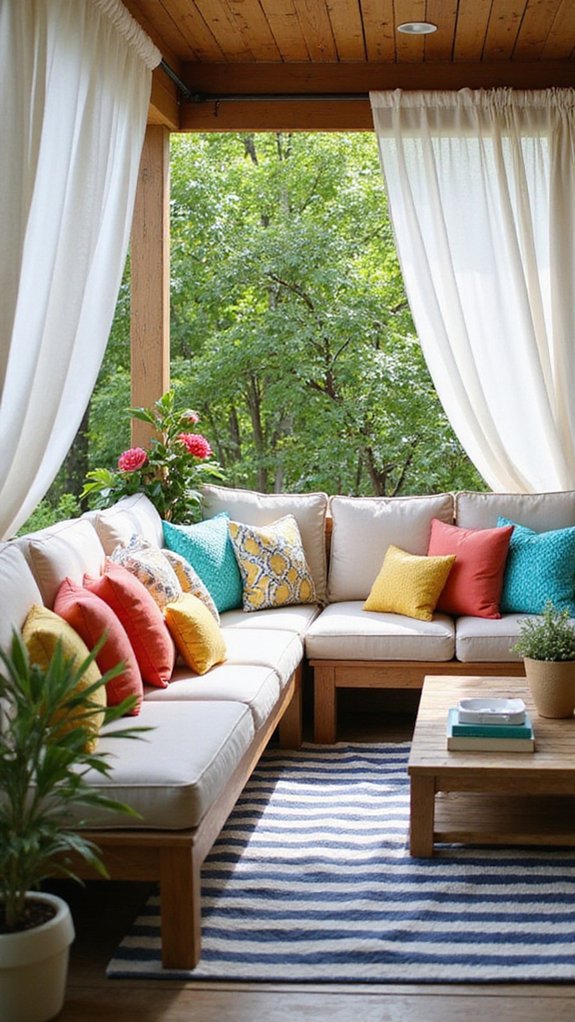
Outdoor cushions in turquoise, coral, or yellow create dynamic focal points while solution-dyed acrylic fabrics ensure weather resistance.
Combining patterned throw pillows with solid-colored foundations adds sophisticated visual layering to deck decor. Strategic textile placement incorporating outdoor rugs, throw blankets, and poufs generates dimensional depth essential for cozy seating environments.
Moisture-resistant polyester materials guarantee longevity, while regular rotation and cleaning protocols maintain color integrity.
Add Visual Interest With Vibrant Outdoor Rugs and Floor Coverings
Outdoor rugs serve as foundational design elements that instantly transform deck surfaces while establishing distinct functional areas within larger outdoor spaces.

Strategic material selection focuses on polypropylene and similar synthetic fibers that withstand UV exposure, moisture, and heavy foot traffic without compromising visual appeal.
Weather-resistant floor coverings in bold patterns create spatial definition between dining, lounging, and entertaining zones. They also add essential texture and color contrast to neutral decking materials.
Choose Weather-Resistant Rug Materials
Contemporary deck design emphasizes both aesthetic appeal and practical durability when selecting floor coverings for outdoor spaces.
Polypropylene emerges as the premier material choice for weather-resistant outdoor rug applications, delivering exceptional UV-resistant properties that prevent fading and deterioration under intense summer conditions.
Design professionals recommend selecting mold resistant options with low pile construction to minimize moisture retention and simplify maintenance protocols.
These synthetic fibers maintain structural integrity while resisting humidity, precipitation, and temperature fluctuations.
The most suitable outdoor rug combines functional weather-resistant characteristics with contemporary design elements, ensuring longevity without compromising visual impact throughout extended seasonal exposure.
Create Defined Outdoor Zones
Strategic placement of vibrant outdoor rugs transforms expansive deck surfaces into purposeful, visually distinct areas that enhance both functionality and aesthetic appeal.
Bold, patterned rugs in coral, turquoise, or yellow serve as foundational elements that anchor dining and seating arrangements while defining outdoor zones.
Large area rugs positioned beneath furniture create visual weight and protect deck surfaces. Layered floor coverings, including accent mats and runners, establish depth and delineate pathways between functional areas.
This sophisticated approach to deck decorating ideas utilizes color and pattern to highlight focal points like fire pits, creating cohesive layouts that define spaces effectively.
Incorporate Lush Greenery With Strategic Plant Placement
Strategic plant placement transforms deck spaces through intentional design principles that maximize visual impact while creating functional outdoor environments.

Professional designers employ three core techniques: corner clustering creates dramatic focal points, railing planter boxes establish boundaries and privacy, and varied height arrangements generate dynamic vertical interest.
These placement strategies work synergistically to establish a cohesive outdoor living space that balances aesthetic appeal with practical functionality.
Corner Clustering for Impact
How can homeowners maximize visual impact while optimizing limited deck space? Corner clustering transforms underutilized deck areas into sophisticated focal points through strategic plant arrangement.
This deck decor technique employs varying heights and textures to establish a dynamic layered effect that commands attention. Large, vibrant containers serve as visual anchors, while trailing specimens like ivy soften harsh architectural lines.
Multi-level positioning ground, mid-height, and suspended elements maximizes vertical real estate effectively.
Incorporating functional botanicals such as citronella and lavender delivers dual benefits of aesthetic enhancement and natural pest deterrence, creating a thorough outdoor oasis that balances form with purposeful design.
Railing Planter Box Design
Railing planter boxes extend the vertical growing potential beyond corner arrangements, transforming deck perimeters into living architectural elements.
Strategic plant placement maximizes visual impact through height variation and species grouping.
Weather-resistant containers enable seasonal flexibility while maintaining structural integrity throughout summer conditions.
| Material | Design Benefit | Maintenance | Cost |
|---|---|---|---|
| Wood | Classic aesthetic, DIY customization | Moderate | Low-Medium |
| Metal | Contemporary look, durability | Low | Medium-High |
| Recycled Plastic | Lightweight, eco-friendly | Minimal | Medium |
Incorporating flowering and foliage combinations creates textural depth while attracting pollinators.
Trailing varieties cascade downward, while upright specimens establish lush privacy barriers. This outdoor decor approach transforms functional railings into sophisticated botanical displays.
Height Variation Plant Arrangements
Tiered plant arrangements establish dynamic visual hierarchies that transform flat deck surfaces into three-dimensional garden landscapes.
Strategic placement of potted plants at varying elevations creates sophisticated visual interest through layered greenery compositions.
Tall specimens like ficus or bamboo positioned in corner containers provide privacy screening while establishing vertical anchors.
Mid-height ornamental grasses and compact shrubs in tiered planters introduce transitional elements that bridge ground and canopy levels.
Cascading varieties along railings soften architectural edges through graceful downward movement.
These thoughtfully orchestrated plant arrangements maximize spatial depth perception, creating luxurious deck decor that mimics natural forest understory stratification principles.
Design a Dedicated Outdoor Dining Zone
The foundation of any successful outdoor dining zone begins with selecting a weather-resistant table that can withstand summer’s elements while maintaining aesthetic appeal.

Teak and metal materials provide ideal durability for patio furniture while supporting contemporary deck ideas. Strategic shade integration through pergolas or umbrellas ensures comfort during peak daylight hours.
Cohesive outdoor dining aesthetics emerge through coordinated tableware and cushions that complement existing patio decor. Surrounding plantings serve dual purposes enhancing visual appeal while providing culinary herbs.
Ambient lighting transforms evening gatherings, with string lights creating intimate atmospheres perfect for extended Outdoor Dining experiences throughout summer months.
| Element | Material/Type | Function |
|---|---|---|
| Table | Teak/Metal | Durability |
| Shade | Pergola/Umbrella | Sun Protection |
| Seating | Cushioned Chairs | Comfort |
| Lighting | String Lights | Ambiance |
| Plants | Herbs/Flowers | Enhancement |
Install Stylish Shade Solutions for Comfort and Appeal
Building upon thoughtfully designed dining areas, effective shade integration becomes paramount for maximizing deck usability during intense summer heat.

Contemporary shade solutions encompass portable umbrellas featuring bold patterns and adjustable tilt mechanisms, secured with weighted bases.
Shade sails constructed from weather-resistant materials deliver modern aesthetics while spanning expansive outdoor patio zones. Motorized retractable awnings provide dynamic coverage control, protecting outdoor furniture from UV damage.
Pergolas enhanced with lattice panels create semi-enclosed spaces for intimate gatherings.
Lightweight shade structures utilizing bamboo or metal frameworks offer repositionable protection, enabling strategic placement optimization throughout daylight hours for comprehensive deck refresh initiatives.
Enhance Ambiance With Fire Features and Decorative Accents
While shade solutions establish daytime comfort zones, strategic fire feature integration transforms deck environments into mesmerizing evening retreats.

Portable fire pit selections enable flexible placement without permanent modifications, while non-combustible protective pads safeguard decking surfaces from heat damage.
Contemporary metal bowls and rustic stone designs offer scalable options matching diverse architectural aesthetics. String lights create layered illumination patterns, complementing flickering flame dynamics for enhanced visual depth.
Coordinated outdoor decor elements lanterns, candles, and accent lighting establish sophisticated ambiance frameworks.
These curated combinations generate cozy gathering spaces that extend deck functionality beyond daylight hours, maximizing seasonal entertainment potential through thoughtful atmospheric design integration.
Final Verdict
These strategic design interventions collectively establish a sophisticated outdoor living environment that maximizes both aesthetic impact and functional utility.
The layered approach combining illumination schemes, textile applications, botanical elements, and architectural features creates visual depth while addressing practical comfort requirements.
Contemporary deck design emphasizes seamless indoor-outdoor connection through cohesive material palettes and zoning strategies.
This holistic methodology transforms underutilized outdoor spaces into highly functional entertainment areas that reflect current lifestyle trends and design sensibilities.
FAQs
Recommended Products

Hampton Bay Belleville 7-Piece Padded Sling Outdoor Dining Set
Outdoor dining set - Patio furniture set
VIEW LATEST PRICE
Havenly Interior Design Service Gift Card $200-500
Interior design service - Home decorating consultation
VIEW LATEST PRICE
West Elm Outdoor/Indoor Ikat Pattern Pillow Cover Set
West elm pillow covers - Ikat pattern cushions
VIEW LATEST PRICE

