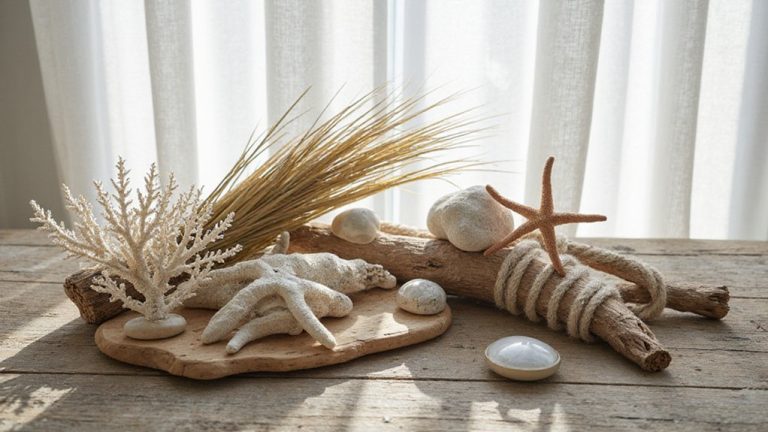


Japandi design philosophy merges Japanese minimalism with Scandinavian functionality, creating spaces where natural wood becomes the primary design element.
This aesthetic approach prioritizes material authenticity and harmony through carefully selected wood choices and thoughtful placement.
Interior designers increasingly recognize wood’s capacity to establish tranquil environments when properly integrated with complementary textures and lighting conditions.
However, achieving this serene balance requires understanding specific techniques that transform ordinary wooden elements into cohesive, meditative spaces.
Layer Light and Medium Wood Tones for Visual Harmony

The foundation of successful Japandi wood layering relies on thoughtful tonal gradation, where light and medium wood finishes create visual depth without overwhelming the space’s inherent minimalism.
Oak, birch, and maple establish the primary wood tone palette, while darker walnut accents provide essential wood contrast.
This wood layering technique achieves a harmonious aesthetic through careful wood grain variety selection. Natural wood textures enhance tactile richness when combined with matte finishes.
Wood accessories like frames and bowls introduce subtle tonal variations, creating visual interest across different zones while maintaining the serene, balanced atmosphere characteristic of authentic Japandi design principles.
Strategic furniture placement of wooden pieces helps define distinct areas within open-concept spaces while preserving the clean, spatial flow that Japandi design emphasizes.
Maximize Natural Light to Enhance Wood’s Warmth
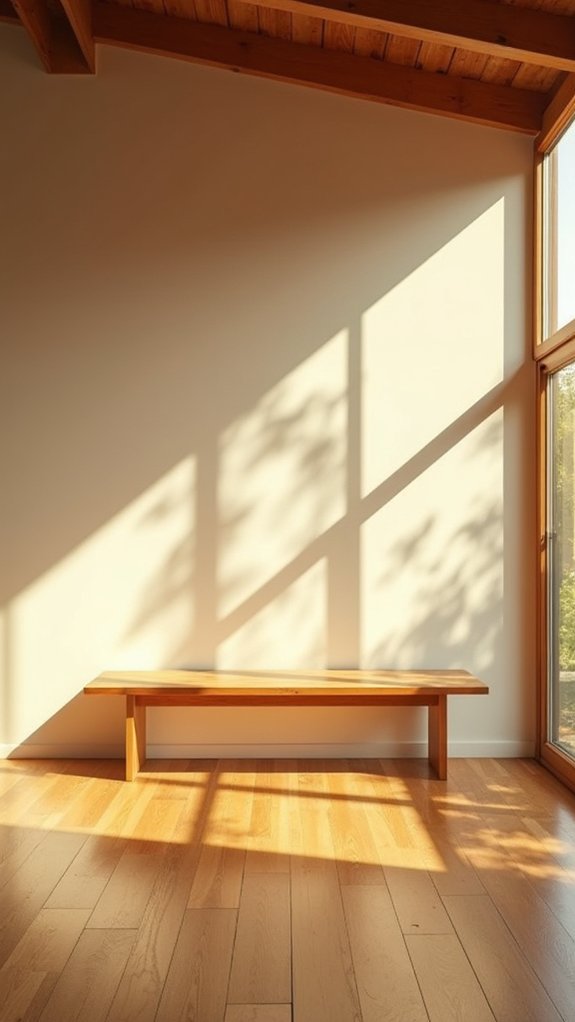
When natural light floods through carefully positioned windows and skylights, wood surfaces transform into luminous focal points that radiate organic warmth throughout the space.
Wood surfaces become radiant centerpieces when bathed in carefully orchestrated natural light, infusing spaces with luminous organic energy.
Japandi style emphasizes unobstructed daylight penetration through minimal window treatments, allowing sheer curtains to filter light while preserving the serene atmosphere.
Thoughtful furniture placement amplifies illumination, creating bright space that celebrates natural wood’s inherent beauty.
Reflective surfaces like polished stone bounce sunlight deeper into wood interiors, intensifying organic tones.
This minimalist design approach keeps window areas uncluttered, ensuring maximum light exposure that enhances the meditative quality essential to authentic Japandi aesthetics.
To complement this natural illumination, consider incorporating layered lighting from multiple affordable sources such as LED string lights or battery-operated lamps during evening hours.
Choose Low-Profile Furniture With Clean Lines

Abundant natural illumination serves its purpose best when paired with furniture selections that maintain visual continuity and flow. Low-profile furniture with clean lines reduces visual clutter while emphasizing negative space essential to minimalist design principles.
These streamlined pieces allow natural materials and their inherent textures to command attention, fostering a serene environment. Furniture featuring organic shapes and authentic craftsmanship aligns with Japandi’s commitment to material honesty.
Low-slung silhouettes define functional zones without compromising openness, maintaining an airy atmosphere throughout interior layouts while supporting the aesthetic’s emphasis on understated refinement and deliberate restraint.
Compact profiles deliver substantial visual impact without compromising spatial flow, drawing the eye upward to enhance perceived ceiling height.
Incorporate Stone and Bamboo Accents With Wood

While wood establishes the foundational warmth in Japandi interiors, thoughtful inclusion of stone accents and bamboo elements creates textural depth and material diversity essential to authentic aesthetic expression.
Natural wood pairs harmoniously with quartz or slate surfaces in countertops and feature walls, generating organic textures that enhance biophilic design principles.
Stone and wood surfaces merge seamlessly, creating tactile harmony that strengthens our innate connection to nature’s grounding presence.
Bamboo elements through screens and furniture introduce sustainable materials with complementary tones. This harmonious contrast between smooth natural surfaces and warm wood finishes creates grounding energy throughout spaces.
Stone and bamboo planters support indoor greenery while reinforcing the connection between natural materials, achieving balanced serenity characteristic of refined Japandi aesthetics.
Consider incorporating modular storage systems using natural wood construction to maintain the serene aesthetic while maximizing organizational functionality in smaller spaces.
Maintain Minimal Decor to Let Natural Materials Shine

Because natural wood possesses inherent visual complexity through grain patterns and textural variations, successful Japandi interiors require thoughtful restraint in decorative elements to prevent competing focal points.
Minimal decor emphasizing essential pieces allows textured wood’s organic qualities to dominate room compositions.
Clean lines and clutter-free arrangements create negative space that amplifies craftsmanship details within wooden elements.
A neutral palette with subdued tones ensures natural materials sustain visual hierarchy without chromatic interference.
Complementary materials like linen textiles and stone accents support wood’s prominence while preserving aesthetic cohesion.
Open shelving configurations and unadorned surfaces maximize appreciation for wood’s inherent beauty and structural integrity.
Keep horizontal surfaces clear to maximize perceived room dimensions and allow the natural wood’s grain patterns to serve as the primary visual interest without distraction.
Frequently Asked Questions
How Do I Prevent Wood Furniture From Warping in Humid Climates?
Preventing warping requires thorough humidity control through dehumidifiers, careful furniture positioning away from moisture sources, applying protective finishes and wood sealants, installing moisture barriers, implementing seasonal adjustments, continuous climate monitoring, and proper furniture placement maintaining consistent environmental conditions.
What’s the Best Way to Clean and Maintain Bamboo Accents?
Regular dust removal using soft cloths and gentle brushing maintains bamboo’s natural finish. Eco-friendly products guarantee proper bamboo polishing while moisture control prevents damage. Establishing a maintenance schedule with stain protection preserves the material’s integrity.
Can I Mix Different Wood Species While Maintaining Japandi Aesthetics?
Yes, mixing wood species works when maintaining color harmony and tonal balance. Successful wood pairing requires finish consistency, complementary grain alignment, and thoughtful texture blending. Thoughtful species contrast achieves visual cohesion while preserving design unity through careful material variety selection.
How Do I Budget for Authentic Natural Materials Versus Alternatives?
Budget planning requires material comparison between authentic woods and cost-effective options. Designers recommend allocating 70% budget to high-impact authentic pieces, utilizing budget-friendly materials for secondary elements while prioritizing sustainable choices and long-term material durability over initial renovation costs.
What Lighting Temperature Works Best With Natural Wood Tones?
Warm glow temperatures (2700K-3000K) complement natural wood’s inherent warmth ideally. Designers recommend layered lighting combining ambient lighting, dimmable options, and indirect lighting to enhance wood grain while maintaining soft ambiance through thoughtful accent illumination and task lighting placement.
Final Verdict
These five strategies collectively establish a cohesive Japandi aesthetic that prioritizes material authenticity and restraint.
The interplay between varied wood tones, optimized illumination, and streamlined furnishings creates visual continuity while maintaining textural interest.
Thoughtful inclusion of complementary natural materials enhances dimensional contrast without compromising the overall compositional balance.
Through disciplined material selection and editing, these principles generate environments that embody both Japanese minimalism and Scandinavian functionality, resulting in harmonious, tranquil interior spaces.
Recommended Products

Muji Oak Wood Low Profile Dresser with Drawers
Oak wood dresser Japanese - Low profile dresser
VIEW LATEST PRICE
Floyd Platform Bed Frame - Walnut King Size
Walnut platform bed frame - Japanese minimalist bed
VIEW LATEST PRICE
Muji Japanese White Oak Wide Chest 3-Drawer Storage Cabinet
Japanese oak dresser - Low profile chest drawers
VIEW LATEST PRICE