
Modern households struggle with persistent clutter that disrupts mental clarity and creates daily stress.
The accumulation of belongings without systematic organization leads to overwhelming environments that drain energy and productivity.
However, achieving lasting serenity requires more than occasional cleaning sprees. Targeted approaches that address root causes rather than symptoms transform chaotic spaces into peaceful sanctuaries.
Seven proven methods tackle specific clutter sources while establishing sustainable routines that maintain order effortlessly, creating homes that support both functionality and tranquility.
Establish Daily Habits That Prevent Clutter Accumulation

Since clutter accumulates gradually through small daily oversights, establishing consistent preventive habits forms the foundation of long-term home organization. Implementing a practice of putting items away immediately after use reduces clutter by up to 80% over time.
Making the bed each morning creates an organizational tone that encourages tidiness throughout the day.
Dedicating 5-10 minutes daily to tidying common areas prevents accumulation while maintaining order.
Creating nightly routines to reset rooms by collecting misplaced items and returning them to proper spots guarantees consistent clutter prevention.
Transform obsolete fabrics and forgotten materials into textile art displays that serve dual purposes as both decorative elements and organized storage solutions for smaller items.
These daily habits transform any space into a tidy space naturally.
Create Designated Storage Solutions for Every Item

The key to maintaining a clutter-free environment lies in guaranteeing every item has a designated home within the living space.
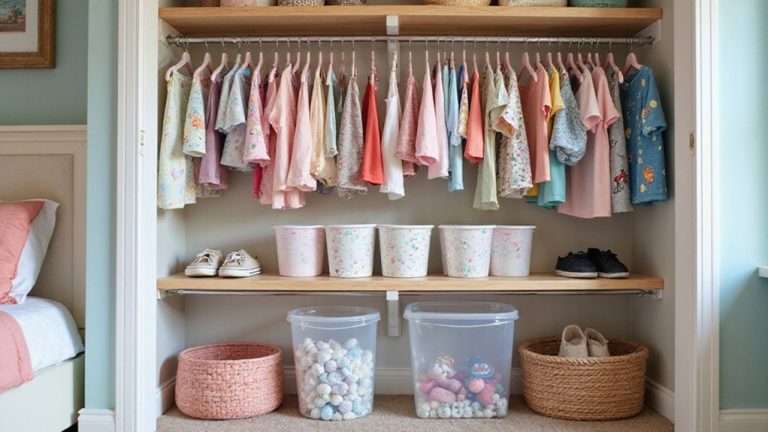
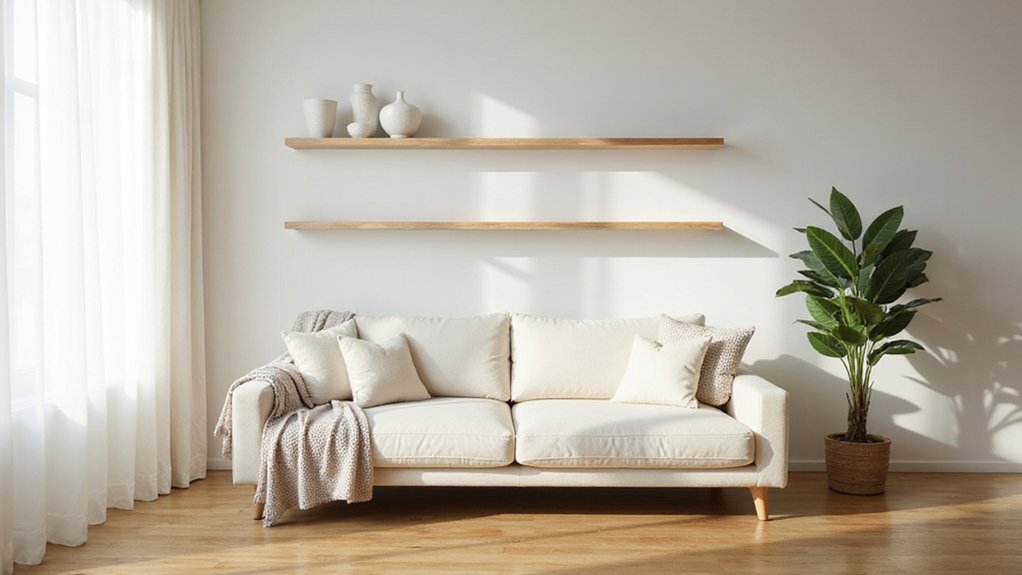
Effective storage solutions begin with labeled bins and clear containers that enable quick identification and access while reducing search time. Wall-mounted shelves maximize vertical space, preventing surface accumulation.
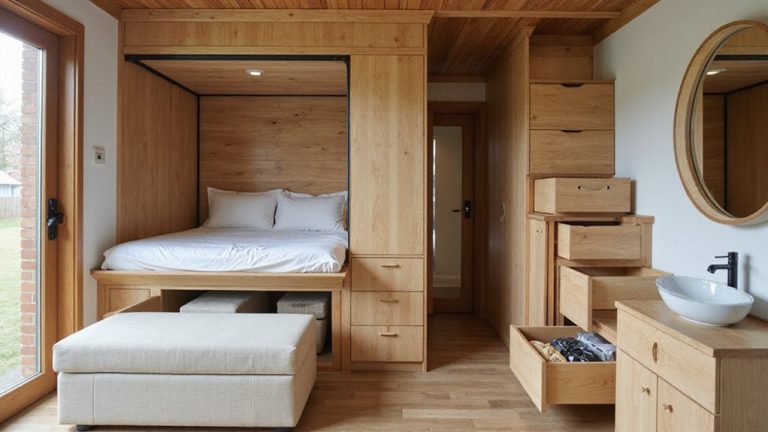
Multifunctional furniture with built-in storage, such as ottomans or beds with drawers, consolidates belongings efficiently.
Creating dedicated zones for specific categories toys, tools, paperwork establishes clear placement systems. Regular reviews help declutter overfilled areas, maintaining ideal organization.
DIY storage ottomans with concealed compartments provide dual-purpose seating while maximizing organizational capacity in compact living areas.
These systematic approaches ensure every possession has its proper place, supporting sustained home serenity.
Implement Strategic Paper and Mail Management Systems

How can households transform the overwhelming influx of daily mail and documents into an organized, manageable system? Effective paper management requires establishing systematic processes that prevent accumulation and maintain order.
A dedicated family command center serves as the foundation for effective mail organization, providing centralized storage and processing capabilities.
- Create labeled sorting stations with designated folders or trays for bills, important documents, and disposable items
- Schedule weekly processing sessions every Sunday to review, organize, and file accumulated papers systematically
- Establish individual storage bins for each family member to maintain personal document organization and prevent misplacement
Regular digitization and disposal of outdated materials maintains long-term efficiency. Incorporate decorative storage baskets that blend seamlessly with your home’s aesthetic while concealing paperwork clutter and maintaining visual cohesion throughout your living spaces.
Master the Art of Counter and Surface Organization

While paper management tackles one source of household clutter, countertops and open surfaces present their own organizational challenges that require targeted strategies.
Effective counter organization begins with regular clearing of dishes, papers, and personal items that accumulate throughout the day.
Designating specific storage locations for frequently used items prevents surfaces from becoming catch-alls. The immediate return of items after use markedly reduces surface clutter buildup.
Weekly decluttering sessions combined with organizational tools like trays and baskets maintain consistency.
Coffee tables with hidden compartments provide discreet storage solutions that keep surfaces clear while maintaining easy access to essentials.
Limiting open surfaces to essential items only creates visual cues that promote sustained organization and enhance home serenity.
Utilize Drop Baskets and Room Reset Routines

Building on organized surfaces, drop baskets serve as temporary collection points that prevent clutter from spreading throughout living spaces. These tools enable efficient room reset routines that maintain order with minimal effort.
Drop baskets create strategic collection points that stop clutter from spreading while enabling effortless daily maintenance routines.
Implementing this system involves three key steps:
- Place baskets in main rooms – Position dedicated containers in high-traffic areas for quick clutter collection.
- Perform daily room resets – Walk through spaces gathering misplaced items, then return them to proper locations.
- Establish consistent timing – Reset rooms each evening to prevent accumulation and simplify weekly cleaning.
This systematic approach creates a clutter-free home while reducing stress and saving valuable time daily.
Similar to how woven baskets can serve as both functional storage and decorative elements in seasonal displays, these organizational containers blend practicality with aesthetic appeal in your daily living spaces.
Tackle Clothing and Seasonal Item Decluttering

Clothing accumulation represents one of the most persistent sources of household clutter, requiring systematic approaches to maintain organized living spaces.
Regular wardrobe assessment and seasonal item rotation create sustainable decluttering practices that prevent overwhelming buildup.
Effective management of costumes, children’s outgrown items, and sentimental pieces establishes clear boundaries between functional storage and unnecessary excess.
Consider repurposing quality vintage pieces as decorative elements or incorporating handwoven textiles into your home’s design scheme rather than storing them indefinitely.
Streamline Your Wardrobe Daily
One of the most transformative steps toward achieving clutter-free serenity involves establishing a systematic approach to wardrobe management that addresses both daily organization and seasonal shifts. Creating sustainable habits helps maintain order while reducing decision fatigue and visual chaos.
To effectively organize and declutter your wardrobe:
- Replace inconsistent hangers with uniform velvet or wooden options that maximize space and create visual harmony.
- Store seasonal clothing in labeled bins or vacuum-sealed bags to maintain accessibility while reducing daily clutter.
- Assess regularly by donating unworn items from the past year to prevent accumulation and maintain streamlined functionality.
When storing seasonal decorations, apply the same principle by repurposing household items like vintage suitcases or wooden crates as organized storage solutions that serve dual purposes throughout the year.
Clear Seasonal Costume Clutter
How can homeowners maintain year-round organization while managing the inevitable accumulation of seasonal costumes and holiday accessories? Implementing systematic storage solutions prevents costume chaos from overwhelming living spaces.
Store seasonal costumes in labeled bins or vacuum-sealed bags to maximize space while maintaining accessibility. Use clear containers and dedicated shelves for instant identification of specific items.
Establish regular review cycles to declutter outgrown or unused costumes through donation or resale. This organized storage approach eliminates guesswork during costume searches.
Promptly pack away holiday accessories after each season ends, maintaining consistent organization throughout the year and preventing accumulation from disrupting home serenity.
Consider repurposing clear mason jars for storing smaller costume accessories like jewelry, buttons, or miniature props in an organized and visually appealing way.
Transform Your Space With Mindful Maintenance Practices

While decluttering creates initial order, sustainable serenity requires establishing consistent maintenance practices that prevent chaos from returning.
Mindful maintenance transforms spaces through systematic approaches that address clutter before it accumulates.
Effective maintenance strategies include:
- Daily Reset Routines – Collect misplaced items in designated baskets and wipe surfaces to reduce clutter buildup by up to 80%.
- Scheduled Inspections – Replace filters and expired products while checking designated storage areas for organization gaps.
- Time-Blocked Decluttering – Set specific daily periods for quick tidying tasks to reinforce consistent habits.
These practices help declutter and organize spaces sustainably, creating lasting serenity through proactive maintenance rather than reactive cleaning.
During seasonal transitions, incorporating sustainable decor choices helps maintain organized spaces while adding refreshing elements without contributing to long-term clutter accumulation.
Frequently Asked Questions
What Is the 10 10 10 Rule for Decluttering?
The 10-10-10 rule evaluates possessions by considering emotional significance in 10 minutes, 10 months, and 10 years. This organizing strategy uses minimalist philosophies for systematic clutter measurement, enabling practical decisions about retention versus disposal.
What Are the 4 C’s of Decluttering?
The 4 C’s of decluttering are Cut, Collect, Categorize, and Contain. This systematic framework helps individuals develop organizational habits, implement effective storage solutions, and cultivate a minimalist mindset for maintaining clutter-free living spaces.
What Is the 1 3 5 Decluttering Rule?
The 1-3-5 decluttering rule requires removing one large item, three medium items, and five small items daily. This systematic approach supports organizing storage spaces, promotes minimalist lifestyle tips, and helps manage emotional attachment while maintaining consistent progress.
What Is the 12 12 12 Rule for Decluttering?
The 12 12 12 rule requires removing twelve items, twelve papers, and dedicating twelve minutes daily to decluttering. This systematic approach creates effective cleaning routines, optimizes storage solutions, and gradually establishes minimalist design principles throughout one’s living space.
Final Verdict
Achieving lasting clutter-free serenity requires consistent implementation of these systematic approaches. Success depends on maintaining daily habits, utilizing designated storage solutions, and executing regular maintenance routines.
Each strategy builds upon the others, creating a thorough framework that prevents accumulation while preserving organization.
When applied consistently, these methods transform chaotic spaces into peaceful environments that support both productivity and well-being, establishing sustainable systems that require minimal ongoing effort to maintain.
Recommended Products

Safavieh Home Collection Kayson Velvet Tufted Accent Chair
Modern accent chair - Velvet tufted chair
VIEW LATEST PRICE
West Elm Marble and Brass Geometric Decorative Objects Set
Marble decorative objects - Brass geometric decor
VIEW LATEST PRICE
IKEA KALLAX Storage Unit
KALLAX storage cube organizer - Home office storage solutions
VIEW LATEST PRICE