


Interior designers increasingly recognize soft lighting as the cornerstone of authentic Japandi aesthetics.
This fusion design philosophy demands precise illumination strategies that honor both Japanese minimalism and Scandinavian hygge principles.
Thoughtful placement of warm-toned fixtures, natural material integration, and controlled ambient layers creates spaces that transcend mere visual appeal.
Seven specific lighting approaches emerge as essential for achieving the coveted tranquil atmosphere that defines successful Japandi interiors, each addressing distinct functional and emotional requirements.
Layered Ambient Lighting With Natural Materials

Thoughtful layering of ambient lighting forms the foundation of effective Japandi illumination, requiring careful orchestration of multiple light sources at varying heights and intensities.
Natural materials like bamboo and wood fixtures establish organic warmth while rice paper shades create essential diffused lighting.
Warm-toned bulbs at 2700K-3000K generate soft glow without disrupting the space’s serene atmosphere. Indirect LED strips positioned behind architectural elements provide subtle backdrop illumination.
Ceiling-mounted fixtures, wall sconces, and table lamps work cohesively to eliminate harsh shadows.
This layered lighting approach achieves harmonious illumination that supports Japandi’s minimalist philosophy while maintaining functional versatility throughout different daily activities.
Large-scale fixtures like oversized pendants guide the visual line upward and amplify perceived ceiling height in compact spaces.
Warm-Toned LED Fixtures for Cozy Atmosphere

How does one achieve the perfect balance between functionality and serenity in Japandi lighting design? Warm LED lighting between 2700K-3000K creates the foundation for a cozy atmosphere through soft illumination that complements Japanese interior lighting principles.
Warm LED lighting between 2700K-3000K establishes the essential foundation for achieving authentic Japandi design harmony through thoughtfully balanced illumination.
High CRI LED fixtures above 80 reveal natural textures authentically, while energy-efficient bulbs minimize environmental impact.
Essential warm-toned LED considerations include:
- Dimmable fixtures enabling customizable ambient lighting for varied activities
- Consistent color temperature throughout spaces ensuring calming ambiance
- Thoughtful placement highlighting organic materials and earthy palettes
Battery-operated candles provide flickering ambiance without fire hazards while maintaining the serene aesthetic of Japandi design principles.
This technical approach transforms spaces into tranquil sanctuaries where functionality meets mindful design philosophy.
Paper Lanterns and Linen Shade Floor Lamps

Traditional paper lanterns incorporating washi or rice paper construction deliver the diffuse illumination essential to authentic Japandi lighting schemes.
Natural linen shade floor lamps complement this approach by filtering harsh directional light through organic textile fibers, creating uniform ambient distribution throughout the space.
Both fixtures utilize sustainable materials that align with modern wellness-focused interior trends while maintaining the minimalist visual restraint characteristic of Japanese-Scandinavian design fusion.
The strategic placement of warm-toned lights enhances the cozy, inviting atmosphere that defines contemporary tranquil spaces.
Traditional Paper Lantern Styles
Paper lanterns crafted from washi or rice paper represent cornerstone elements in Japandi lighting design, delivering diffuse illumination that softens harsh architectural lines while maintaining the aesthetic’s commitment to natural materials. These traditional styles create gentle, ambient zones essential for mindfulness practices.
Key characteristics of authentic paper lantern designs include:
- Washi paper construction – Handmade Japanese paper provides ideal light diffusion while showcasing artisanal craftsmanship
- Bamboo framework integration – Organic accents reinforce the natural foundation central to minimalist aesthetic principles
- Warm light emission – Muted illumination establishes calming ambiance perfect for relaxation spaces
Traditional styles seamlessly integrate into modern Japandi decor, offering versatile lighting solutions that enhance tranquil environments.
Implementing dimmable LED configurations allows for activity-specific mood adjustments while maintaining the soft illumination essential to authentic Japandi aesthetics.
Natural Linen Shade Benefits
Natural linen shades elevate Japandi lighting through their inherent ability to transform harsh illumination into soft, diffused light that harmonizes with minimalist design principles.
These natural materials provide organic textures that complement Japandi decor’s earthy aesthetics while maintaining essential breathability.
The fabric’s subtle weave creates warm glow patterns that establish a tranquil ambiance without overwhelming clarity. Linen shades excel in versatility, adapting to paper lantern configurations and floor lamp applications seamlessly.
Their non-glaring luminescence promotes a serene atmosphere essential to minimalist environments. The understated material reinforces soft lighting objectives while supporting the organic harmony central to Japandi interiors.
Like their bohemian counterparts, these natural fibers introduce organic geometry through subtle basketweave patterns that create tactile variation while maintaining visual cohesion.
Dimmable Wall Sconces With Wood Accents

Dimmable wall sconces featuring natural wood frames deliver ideal efficiency while maintaining Japandi’s core aesthetic principles of organic materiality and functional minimalism.
The integration of oak, walnut, or bamboo elements creates visual warmth against neutral wall surfaces, establishing focal points that enhance room architecture without overwhelming clean lines.
Advanced dimming technology enables precise luminosity control, transforming these fixtures from ambient background lighting to focused task illumination based on requirements and circadian rhythm considerations.
These wood-accented fixtures pair seamlessly with warm beige wall treatments, amplifying organic textures while maintaining the serene atmospheric foundations essential to Japandi design philosophy.
Natural Wood Frame Benefits
Five key advantages emerge when adding wooden frames into dimmable wall sconce designs within Japandi interiors. Natural wood delivers organic appeal while maintaining the aesthetic’s minimalist principles. Wood accents provide subtle visual interest without compromising visual harmony.
Key benefits include:
- Energy efficiency: Dimmable sconces with wood frames optimize LED compatibility, reducing power consumption while delivering effective illumination
- Customizable ambiance: Adjustable brightness creates personalized soft lighting environments supporting tranquil atmospheres
- Longevity: Wood frames offer exceptional durability and timeless design appeal
These fixtures represent sustainable decor choices, combining eco-friendly materials with functional lighting solutions that enhance Japandi spaces through carefully controlled illumination.
Adjustable Brightness Control Options
Beyond their structural advantages, wood-accented dimmable wall sconces deliver advanced brightness control mechanisms that transform Japandi interiors through precise illumination management.
These fixtures include integrated LED technology enabling seamless brightness adjustment from 10% to 100%, supporting versatile ambient lighting scenarios.
Touch and rotary dimmer switches provide effortless customization, while compatible dimmer switches ensure smooth operation within minimalist interior frameworks.
The layering of light capabilities allow progressions between relaxing illumination and functional task lighting, creating tranquil atmospheres that align with Japandi principles.
Strategic string lights placement can complement these fixtures by adding warm, layered illumination that enhances the overall ambiance without overwhelming the minimalist aesthetic.
| Control Type | Brightness Range | Application |
|---|---|---|
| Touch Controls | 10-100% | Ambient Settings |
| Rotary Dimmers | Variable Intensity | Task Lighting |
| Smart Integration | Programmable Scenes | Automated Comfort |
| Manual Switches | Preset Levels | Quick Adjustment |
Reflective Surfaces to Amplify Gentle Illumination

While soft lighting forms the foundation of Japandi tranquility, reflective surfaces function as silent amplifiers that multiply and distribute gentle illumination throughout the space.
These light-enhancing materials transform ambient lighting by creating a diffused glow that eliminates harsh shadows and promotes visual serenity.
Thoughtful placement of reflective surfaces maximizes natural light efficiency:
- Mirrors positioned opposite windows capture and redirect daylight, creating enhanced illumination depth
- Light-colored lacquered furniture and matte ceramics bounce warm tones while maintaining aesthetic minimalism
- Polished stone and glass elements provide subtle light diffusion without overwhelming the tranquil atmosphere
Minimalist frames in natural woods complement this illumination approach perfectly. Layer illumination schemes with varying intensities of warm LED bulbs to complement the reflective surfaces and create sophisticated visual depth throughout the space.
Candlelight and Tea Light Arrangements
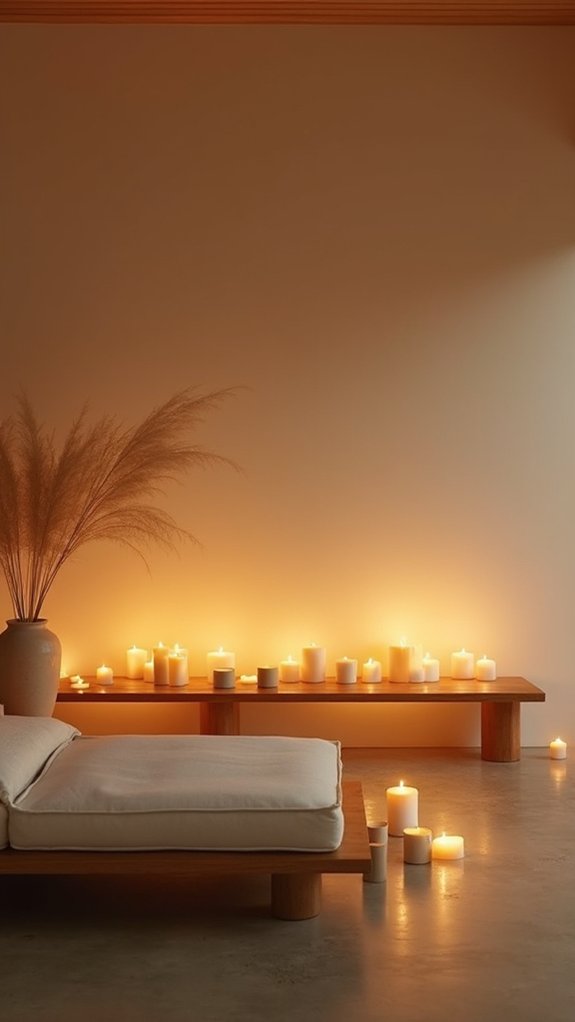
Candlelight placement creates layered ambient illumination that enhances Japandi’s fundamental principle of harmonious simplicity.
Small candleholders crafted from natural materials like ceramic, wood, and stone integrate seamlessly with minimalist decor aesthetics. Unscented tea lights in neutral holders preserve tranquil ambiance without sensory disruption.
| Arrangement Method | Light Enhancement |
|---|---|
| Low wooden trays with clustered candles | Creates concentrated warm glow zones |
| Positioning near reflective surfaces | Amplifies soft light distribution |
| Window-adjacent placement | Maximizes natural light interaction |
Flameless candles offer sustainable alternatives, delivering consistent warm illumination while maintaining Japandi style authenticity.
Thoughtful clustering on simple coasters generates gentle, layered lighting that transforms spaces into serene sanctuaries.
Following visual hierarchy principles ensures that candlelight arrangements maintain balanced composition while creating depth through strategic placement of varying candle heights and cluster sizes.
Strategic Natural Light Maximization Through Minimal Window Treatments

How does natural light transform minimalist interiors into luminous sanctuaries of tranquility? Thoughtful light maximization through minimal window coverings creates ethereal Japandi spaces where daylight becomes architectural art.
Minimal window treatments allow daylight to flow freely, creating serene Japandi interiors where natural illumination becomes a profound architectural element.
Window treatments requiring careful consideration include:
- Layered sheer curtains with bamboo blinds for controlled daylight diffusion while preserving privacy
- Translucent roller shades and shoji screens maintaining aesthetic purity without obstructing natural light flow
- Large, unobstructed window design paired with reflective surfaces like matte white walls amplifying luminosity
Light enhancement occurs through purposeful mirror placement opposite windows, creating doubled illumination effects.
Polished stone surfaces and neutral-toned materials maximize light penetration, transforming spaces into serene, naturally-lit environments.
Combining multiple light sources with dimmable fixtures allows for creating warm dimensional depth that complements the natural illumination throughout different times of day.
Frequently Asked Questions
How Do I Maintain Japandi Lighting Fixtures Made From Natural Materials?
Natural preservation requires gentle cleaning techniques with material-compatible solutions. Humidity control prevents discoloration while eco-friendly treatments guarantee fixture longevity. Regular craftsmanship care maintains aesthetic integrity through proper repair methods, preserving minimalist design principles.
What’s the Ideal Color Temperature Range for Japandi Bedroom Lighting?
Optimal Japandi bedroom lighting requires 2700K-3000K color temperature, creating warm glow and cozy atmosphere. This soft illumination range delivers natural tones with gentle brightness, ensuring color consistency while maintaining the soothing shades essential for tranquil ambient mood lighting.
Can Smart Home Technology Work With Traditional Japandi Lighting Design?
Smart home integration seamlessly complements japandi aesthetics through wireless lighting solutions, automated dimming, and programmable lighting scenes. Voice controlled lighting and sensor based illumination maintain minimalist principles while offering app customization and energy efficient systems.
How Do I Prevent Wooden Light Fixtures From Warping in Humidity?
Protective coatings and proper wood treatment create effective moisture barriers for wooden finishes. Well-planned ventilation solutions maintain ideal humidity levels, while seasonal adjustments and regular maintenance routines preserve fixture integrity through careful material selection and humidity control measures.
What’s the Recommended Budget Range for Complete Japandi Bedroom Lighting Makeover?
Complete Japandi bedroom lighting renovation budgets typically range $800-2,500, depending on fixture selection and installation complexity. Thoughtful budget planning emphasizes layered lighting coordination, sustainable material sourcing, and cost-saving DIY installation for achieving authentic minimalist aesthetics.
Final Verdict
These seven soft-light strategies establish ideal illumination parameters for Japandi environments through calculated material selection and fixture placement.
The integration of dimmable LED systems, organic textile elements, and controlled natural light penetration creates measurable lux reduction while maintaining functional visibility.
Modern lighting technology merged with traditional Japanese design principles produces spaces with enhanced circadian rhythm support.
Proper implementation of these techniques generates quantifiable improvements in ambient light quality and tranquility metrics.
Recommended Products

Color Wheel for Interior Designers Professional Size
Interior design color wheel - Decorator color theory tool
VIEW LATEST PRICE
Havenly Interior Design Service Gift Card $200-500
Interior design service - Home decorating consultation
VIEW LATEST PRICE
Wagner Spraytech Studio Home Decor HVLP Paint Sprayer
Wagner paint sprayer - HVLP sprayer interior
VIEW LATEST PRICE

