


The art of Thanksgiving table design extends far beyond simply arranging dinnerware and adding a centerpiece.
Professional designers understand that creating a truly memorable feast requires thoughtful layering of textures, deliberate color coordination, and careful attention to lighting principles.
Each element must work harmoniously to establish both visual hierarchy and emotional warmth. The difference between an ordinary holiday meal and an extraordinary gathering lies in seven fundamental design techniques that transform any dining space into a mesmerizing seasonal showcase.
Choose Your Fall Color Palette and Theme

The foundation of compelling Thanksgiving table design begins with establishing a cohesive fall color palette that anchors the entire visual composition. Selecting warm tones including oranges, reds, yellows, and browns creates an inviting seasonal decor framework.
The decor theme gains elegance through thoughtful metallic accents in gold, bronze, or copper finishes, which enhance richness while maintaining visual harmony. Adding pumpkins and gourds in varying sizes and textures establishes a harvest-inspired aesthetic that reinforces the festive atmosphere.
Coordinating all table setting elements tableware, linens, and decorative accessories within this chosen palette guarantees seamless integration and professional-quality results throughout the dining presentation.
Area rugs beneath the dining arrangement can further anchor the festive space and add complementary colors that tie together your seasonal decor scheme.
Layer Table Linens for Depth and Texture
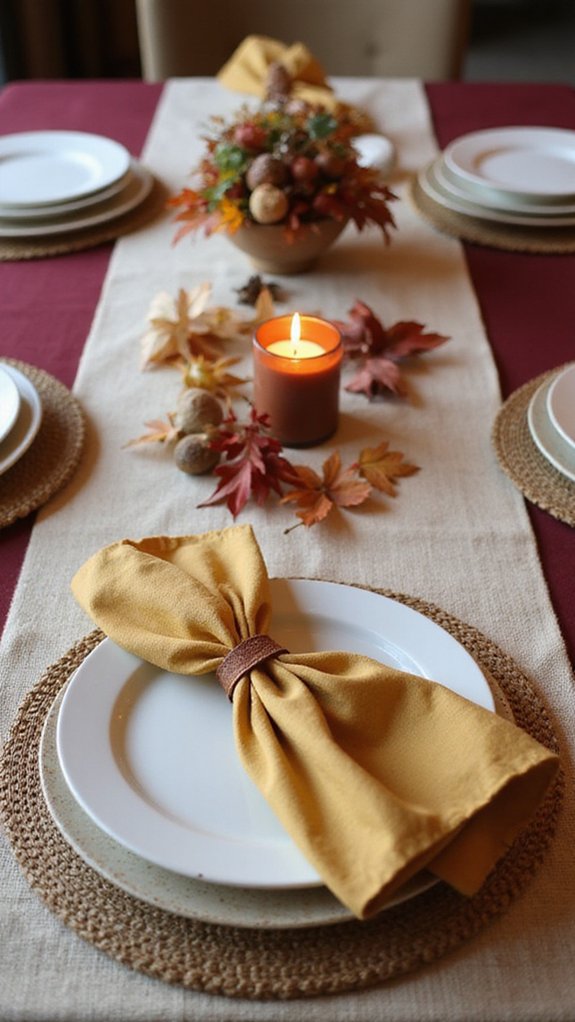
Once the color palette establishes visual direction, thoughtful layering of table linens creates dimensional depth that transforms flat surfaces into dynamic compositions.
Layered linens generate table depth through contrasting textures and materials burlap over smooth cotton, lace atop solid foundations, or metallic overlays paired with neutral bases. These combinations produce tactile interest while enhancing seasonal feel through varied fabric weights and finishes.
Purposeful contrast between smooth and textured surfaces amplifies visual interest, defining distinct zones for centerpieces and place settings.
This systematic approach to table setting elevates table decor from functional necessity to refined design element, balancing rustic authenticity with polished elegance throughout the tablescape.
Similar to outdoor styling where soft neutrals help balance more vibrant elements, incorporating muted tones within your layered linens tempers bold autumn hues while maintaining sophisticated visual cohesion.
Design a Show-Stopping Centerpiece

Building upon layered textile foundations, centerpiece design demands thoughtful composition that balances visual weight with conversational functionality. A compelling Thanksgiving centerpiece integrates dimensional elements while maintaining low profiles for unobstructed sight lines.
Essential components for maximum impact:
- Organic Foundation – Combine pumpkins, gourds, and seasonal flowers like chrysanthemums to establish textured decor anchors.
- Natural Elements – Scatter fall leaves, pinecones, and acorns for authentic rustic charm.
- Illumination Plan – Position varying candle heights using tapers and votives for ambient warmth.
- Color Harmony – Unite deep reds, oranges, and metallic accents throughout the arrangement for cohesive visual flow.
Enhance your organic elements with gold accents via metallic ribbons or gilded natural materials for luxurious contrast that elevates the rustic foundation.
Select Coordinating Dinnerware and Place Settings

Elegant place settings transform individual dining experiences through thoughtful layering and intentional color coordination. Dinnerware selection emphasizes warm seasonal palettes featuring deep orange, gold, and earthy tones that establish cohesive table decor foundations.
Layered plates utilizing chargers, salad dishes, and main course vessels create dimensional visual interest while maintaining functional efficiency. Coordinating colors extend through matching glassware and flatware selections that reinforce the overall design aesthetic.
Metallic accents appear in textured table linens and elegant napkin rings, elevating standard place settings into refined presentations. Personalized name cards provide intimate touches, completing festive tableware arrangements that balance elegance with seasonal warmth.
Transform thrift store finds by applying uniform finishes to mismatched frames and vintage dishware, creating cohesive thanksgiving table presentations while maintaining budget-conscious hosting goals.
Incorporate Warm Lighting and Candles

Warm lighting and candles complement meticulously arranged dinnerware by establishing atmospheric depth that enhances visual impact across the entire tablescape. Thoughtful candle placement creates layered glow through varied heights and textures.
Strategic candle positioning transforms ordinary table settings into captivating dining experiences through carefully orchestrated illumination that balances warmth with sophisticated visual drama.
- Mix candle varieties – Combine pillar, votive, and tealight candles in metallic holders to achieve dimensional warm lighting within centerpieces.
- Include flameless LED options – Add battery-operated candles for flickering effect without safety concerns during extended gatherings.
- Select unscented varieties – Choose neutral candles to preserve aromatic integrity of seasonal cuisine.
- Control ambient illumination – Implement dim lighting techniques using overhead controls combined with string lights for enhanced cozy ambiance and visual interest.
Strategic candle positioning at varying heights mirrors the layering principles used in bohemian design to create dynamic visual compositions and establish focal points throughout your tablescape.
Add Natural Elements and Seasonal Accents

Natural elements bridge the gap between indoor dining spaces and autumn’s organic beauty, establishing textural contrast that grounds elegant table arrangements in seasonal authenticity. Fresh autumn leaves, acorns, and pinecones create dimensional seasonal accents.
While natural textures from wooden accents and bark enhance visual depth. Fresh fruits including apples, pears, and pomegranates serve dual functions as edible components and decorative focal points.
Dried wheat stalks and millet arranged in rustic elements like woven baskets amplify harvest-inspired decor themes.
Eucalyptus and rosemary sprigs introduce essential greenery, balancing the organic feel while maintaining design cohesion throughout the tablescape composition. Dried orange slices and cinnamon sticks contribute aromatic qualities to decorations while providing warm, inviting scents that complement the visual feast.
Personalize With Handwritten Details and Finishing Touches

While natural elements provide the foundational aesthetic framework, handwritten details transform impersonal table settings into intimate dining experiences that reflect thoughtful hospitality.
These handcrafted accents elevate table personalization through deliberate design choices:
- Calligraphic Name Cards – Premium cardstock with elegant calligraphy creates personal touches that anchor each place setting.
- Gratitude Messages – Individual handwritten notes placed at each setting foster meaningful guest experiences through intimate communication.
- Customized Menu Cards – Seasonal dish descriptions with handwritten elements showcase culinary intentions while adding personalized decor.
- Tagged Seasonal Elements – Handwritten labels on mini pumpkins or napkin rings integrate personalized details seamlessly into the overall aesthetic composition.
These handwritten details demonstrate intentional hospitality design. Just as neutral color palettes provide versatile foundations that enable seasonal shifts through accessory updates, handwritten elements can be adapted throughout the year while maintaining timeless appeal.
Frequently Asked Questions
How Do You Make a Table Look Festive?
One creates festive tablescape through careful layering: autumn color palettes, candle centerpieces, rustic accents, themed placemats, natural elements, seasonal florals, decorative pumpkins, vintage dishes, woven runners, and ambient string lights achieve cohesive visual impact and celebratory atmosphere.
How Do You Make a Thanksgiving Table Special?
Special Thanksgiving tables combine fall themed linens with harvest inspired centerpieces, personalized place cards, and decorative napkin rings. Seasonal floral displays, natural elements, rustic accents, cozy lighting, and candle arrangements create memorable decorative place settings.
How to Make a Festive Table?
Create festive tables through seasonal color schemes, themed runners, and natural elements. Layer vintage dishware on woven placemats, add floral arrangements with candles and lighting, include rustic accents, decorative napkins, and personalized place cards for cohesive design.
What Is an Inexpensive Centerpiece for Thanksgiving?
Inexpensive centerpieces combine mini pumpkins, fall gourds, and harvest corn arranged in mason jars with twig accents. Layer burlap runners beneath DIY floral displays featuring autumn leaves and pine cone elements, complemented by simple candle holders for balanced visual composition.
Final Verdict
Successful Thanksgiving table design relies on cohesive color coordination, thoughtful layering of textures, and balanced visual weight distribution.
The integration of natural elements with refined dinnerware creates dynamic contrast while maintaining seasonal authenticity.
Varied lighting sources establish atmospheric depth, while personalized details provide intimate scale.
These fundamental design principles unity, emphasis, proportion, and rhythm converge to transform functional dining space into memorable experiential environment that celebrates both aesthetic elegance and harvest tradition.
Recommended Products

Threshold Harvest Artificial Pumpkin and Gourd Assortment 12-Piece Set
Artificial pumpkins gourds - Fall centerpiece decorations
VIEW LATEST PRICE
Waterford Lismore Diamond Gold 5x7 Picture Frame
Waterford gold frame - Luxury table decor
VIEW LATEST PRICE
Fall Thanksgiving Wooden Table Decor Letters 4 Piece Set
Wooden fall letters - Thanksgiving table decor
VIEW LATEST PRICE

