


Loft-style homes present unique design challenges that require a sophisticated understanding of industrial aesthetics and spatial planning.
The conversion of former warehouses, factories, and commercial spaces into residential environments demands careful consideration of structural elements, lighting dynamics, and functional zoning strategies.
Designers must navigate the balance between preserving authentic architectural character and creating livable, comfortable spaces.
Successfully executing this design approach involves mastering several critical principles that transform raw industrial spaces into refined urban sanctuaries.
Also read this: Indoor-Outdoor Home Decor Ideas
Embrace Industrial Architecture and Exposed Elements
When designing authentic loft-style homes, architects prioritize the preservation and celebration of original industrial elements that define the space’s character.

Industrial architecture showcases exposed brick walls, steel beams, and visible ductwork as focal points rather than concealing these structural elements.
Raw materials including concrete floors, metal fixtures, and reclaimed wood maintain authenticity while creating visual texture. Open floor plans eliminate unnecessary partitions, allowing industrial features to dominate the aesthetic landscape.
Strategic preservation of original mechanical systems, pipe work, and load-bearing columns transforms functional infrastructure into decorative elements that emphasize the building’s manufacturing heritage and architectural integrity.
Also read this: How to Decorate Modern Apartment Living Rooms
Industrial design doesn’t mean stark. It means honest.
Maximize Natural Light With Strategic Window Treatments
Strategic window treatment selection plays a vital role in optimizing daylight penetration within loft environments, where expansive fenestration serves as both architectural feature and primary illumination source.
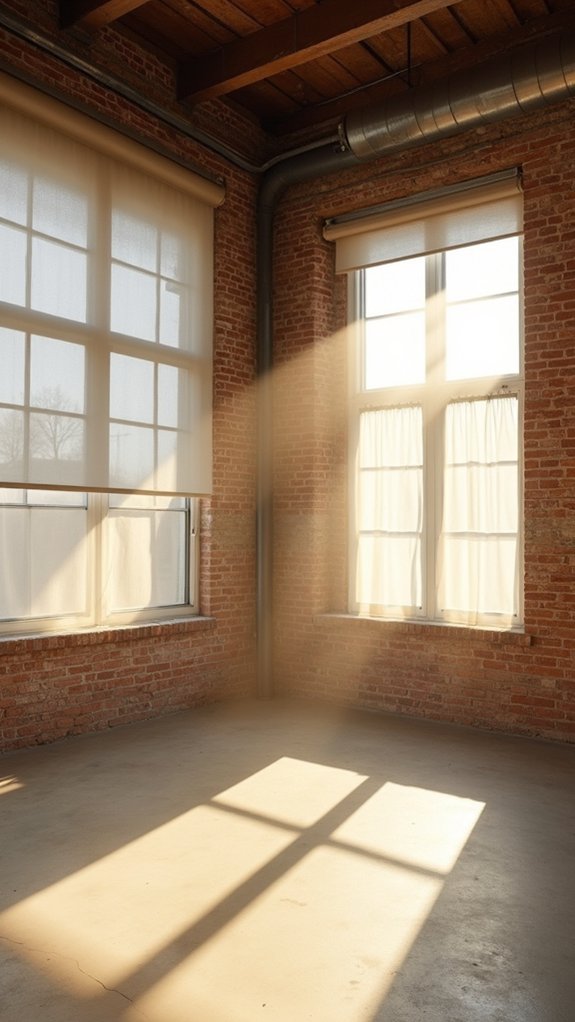
Minimal coverings eliminate visual barriers that compete with the clean lines characteristic of industrial design aesthetics while preserving essential privacy functions.
Floor-to-ceiling installations create uninterrupted vertical planes that enhance spatial proportions and allow maximum light transmission during peak daylight hours.
Choose Minimal Window Coverings
The selection of appropriate window treatments plays a crucial role in preserving the open, light-filled atmosphere characteristic of loft-style homes. Minimal window coverings maximize natural light penetration while maintaining essential privacy requirements.
Strategic implementation of streamlined window treatments ensures the modern aesthetic remains uncompromised.
Optimal solutions include:
- Sheer or lightweight fabrics that filter sunlight while providing visual screening
- Solar shades and roller blinds in neutral tones with complete retraction capabilities
- Integrated shading systems with slim profiles that preserve architectural lines
These approaches enhance openness by eliminating visual barriers between interior and exterior spaces, creating seamless transitions that amplify the expansive quality fundamental to contemporary loft design.
Embrace Floor-to-Ceiling Windows
Floor-to-ceiling windows represent the pinnacle of loft design implementation, extending minimal covering principles to architectural elements that fundamentally transform spatial perception.
These large windows increase daylight exposure by 50% compared to standard configurations, maximizing natural light penetration throughout interior spaces.
| Treatment Type | Light Control | Privacy Level | Energy Efficiency |
|---|---|---|---|
| Sheer Curtains | High sunlight flow | Moderate | Good heat regulation |
| Minimalist Blinds | Adjustable filtering | Excellent | Superior glare reduction |
| UV-Protective Film | Maximum penetration | None | Prevents furniture fading |
| Layered Coverings | Complete flexibility | Variable | Ideal temperature control |
Strategic window treatments enhance functionality while preserving architectural integrity and promoting sustainable energy efficiency.
Define Functional Zones in Open Floor Plans
Open floor plans require strategic spatial organization to establish distinct functional areas without compromising the expansive aesthetic inherent to loft design. Furniture placement serves as the primary method for creating visual boundaries.

While area rugs provide additional zone delineation through color, texture, and scale variations. Effective multi-functional space planning integrates these elements to maximize both the utility and flow of interconnected living areas.
Furniture as Room Dividers
Strategic furniture placement serves as an effective architectural solution for delineating functional zones within loft-style open floor plans without compromising spatial flow or natural light penetration.
Multi-functional furniture pieces create visual separation while maximizing space efficiency through dual-purpose design elements.
- Room dividers: Open-backed cabinets and screens establish boundaries while maintaining airiness
- Furniture arrangement: Distinct clustering of pieces visually delineates living, dining, and sleeping areas
- Visual separation: Area rugs and varied furniture styles enhance zone perception with aesthetic cohesion
Extendable dining tables and storage ottomans exemplify multi-functional furniture that defines areas within open layouts, fostering organizational clarity while preserving the expansive character inherent to loft-style residential design.
Area Rugs Zone Definition
Area rugs function as fundamental spatial anchoring elements that establish clear territorial boundaries within expansive loft environments. They create distinct functional zones through strategic textile placement and visual weight distribution.
Large patterned rugs beneath seating arrangements generate intimate boundaries that separate living areas from adjacent spaces while introducing textural complexity.
Multiple rug layers utilizing varied dimensions and geometric configurations emphasize specific zones, enhancing spatial flow throughout the open floor plan.
Strategic rug placement anchors furniture arrangement, preventing visual chaos while establishing organizational hierarchy.
Selecting distinct colorways, patterns, and textures for each zone reinforces functional purpose, contributing to cohesive interior design through deliberate visual delineation.
Multi-Functional Space Planning
Beyond textile-based zoning techniques, all-encompassing spatial organization requires systematic functional programming that transforms expansive loft volumes into purposeful living environments through deliberate architectural hierarchy.
Multi-functional furniture serves as primary organizational infrastructure, establishing discrete space zones while maintaining open layout fluidity. Strategic deployment of convertible elements maximizes spatial efficiency across living, dining, and sleeping territories.
Essential multi-functional space planning components include:
- Room dividers utilizing open shelving systems that maintain visual connectivity while establishing territorial boundaries
- Storage solutions incorporating wall-mounted configurations that preserve floor area integrity
- Lighting strategies employing zone-specific illumination to reinforce functional differentiation
This systematic approach ensures efficient spatial utilization within loft environments.
Also read this: 3 Upcycled Furniture Ideas for Tiny Spaces
Choose Multi-Functional and Space-Saving Furniture
When designing loft-style homes, selecting multi-functional and space-saving furniture becomes essential for maximizing the efficiency of open-plan layouts.

Sofa beds, extendable dining tables, and storage ottomans optimize spatial utilization while maintaining aesthetic coherence.
Loft beds with integrated workstations capitalize on vertical dimensions, liberating valuable floor area. Modular furniture systems offer reconfigurable solutions that adapt to evolving functional requirements.
Built-in storage compartments within seating and tables eliminate visual clutter while preserving the characteristic open atmosphere.
Multi-purpose elements such as wall-mounted desks and foldable seating provide operational flexibility, enabling seamless progressions between residential functions within consolidated square footage.
Layer Textures to Add Warmth and Visual Interest
Successful loft design requires a calculated balance between industrial hardness and residential softness through deliberate texture layering.

The juxtaposition of rough concrete surfaces with plush textiles creates visual tension while maintaining spatial cohesion.
Strategic placement of varied materials from exposed brick paired with velvet upholstery to polished metal accented by woven fibers transforms stark industrial spaces into inviting living environments.
Mixing Hard and Soft
How does one transform a potentially stark industrial space into an inviting, sophisticated environment?
The strategic integration of contrasting materials creates essential visual depth while establishing coziness through deliberate textural layers. This approach balances raw architectural elements with comfort-driven design solutions.
Key considerations for effective texture mixing include:
- Pairing concrete, brick, and metal with plush textiles like cushions and throws
- Combining smooth leather and rough wood with silky curtains for enhanced warmth
- Integrating glossy surfaces such as lacquered furniture with matte linen upholstery
This methodical contrast prevents spaces from feeling cold while maintaining industrial authenticity, achieving sophisticated livability.
Strategic Textile Placement
The deliberate layering of textiles serves as a foundational technique for introducing warmth and tactile complexity into loft environments where hard surfaces predominate.
Strategic placement of soft furnishings near seating areas and sleeping zones counterbalances industrial elements while creating inviting comfort zones.
Layering diverse materials velvet against leather, shaggy rugs with smooth linens generates essential contrast and visual depth. Textured wall hangings, woven baskets, and upholstered pieces enhance spatial interest through varied surface treatments.
Mixing patterns and finishes, including matte, glossy, and embroidered textures, adds sophisticated complexity. This systematic approach transforms austere industrial spaces into welcoming environments through calculated textile integration.
Also read this: Top 5 Hallway Christmas Decor Ideas for a Festive Look
Create Vertical Storage Solutions
Maximizing cubic footage in loft-style homes requires strategic implementation of vertical storage architectures that capitalize on soaring ceiling heights.

High ceilings present exceptional opportunities for space optimization through carefully engineered wall-mounted shelves and integrated storage solutions that transform underutilized vertical planes into functional organizational systems.
Strategic vertical storage architectures transform soaring loft ceilings into functional organizational systems, maximizing cubic footage through carefully engineered wall-mounted solutions.
Effective loft design incorporates:
- Floor-to-ceiling shelving units and bookcases that establish maximum vertical storage capacity
- Ceiling-mounted racks and overhead hanging systems for lightweight inventory management
- Multi-functional furniture configurations including loft beds with integrated drawer systems
Vertical storage methodologies eliminate floor clutter while maintaining accessibility through floating shelves and wall-mounted cabinetry, ensuring optimal spatial efficiency throughout the residential environment.
Incorporate Statement Lighting as Design Features
Strategic illumination through statement lighting fixtures transforms loft environments into architecturally distinguished spaces that emphasize both functionality and aesthetic sophistication.

Oversized chandeliers and industrial pendant fixtures serve as commanding focal points, accentuating the open-plan loft’s inherent architectural features while preserving industrial charm.
Layered lighting strategies combine dramatic statement pieces with recessed installations, creating dimensional depth across functional zones. Large-scale sculptural fixtures visually anchor spaces, establishing grandeur within expansive layouts.
| Lighting Strategy | Design Impact | Functional Benefit |
|---|---|---|
| Oversized Chandeliers | Creates dramatic focal points | Anchors open spaces visually |
| Industrial Pendants | Enhances raw architectural elements | Defines specific activity zones |
| Metallic Finishes | Adds sophisticated warmth | Complements modern industrial aesthetics |
Strategic placement over dining areas and seating nooks emphasizes zoning while elevating overall design sophistication through purposeful lighting fixtures.
Use Area Rugs to Anchor Spaces and Add Color
Area rugs function as essential spatial organizers within loft environments, establishing defined zones through tactile boundaries that complement the architectural openness while introducing chromatic vitality.

These textile elements serve as visual anchors, delineating living, dining, and sleeping areas without compromising spatial flow.
Bold patterns and vibrant colorways create deliberate contrast against industrial backdrops, enhancing the eclectic aesthetic.
Strategic rug deployment includes:
- Oversized installations that unify furniture groupings and establish cohesive zones
- Layered compositions combining varied textures and scales for dimensional complexity
- Geometric or traditional motifs that introduce visual movement and stylistic versatility
Balance Raw Materials With Luxurious Accents
Beyond establishing spatial boundaries through textile elements, successful loft design requires careful calibration between industrial authenticity and refined sophistication.

Raw materials like exposed concrete and steel beams achieve harmonious balance when paired with luxurious accents such as plush velvet textiles and marble surfaces.
High-end materials including brass fixtures and gold detailing elevate utilitarian industrial elements without compromising their inherent character.
Statement lighting chandeliers or designer pendants creates dramatic focal points against rugged backdrops.
Layered decor incorporating sleek furniture, curated artwork, and soft furnishings softens harsh textures while preserving the space’s industrial edge, resulting in sophisticated urban environments.
Establish Focal Points With Art and Unique Pieces
How can expansive loft spaces avoid becoming visually overwhelming environments that lack clear hierarchical organization?

Strategic deployment of curated focal points through oversized art and statement pieces creates deliberate visual anchors within open-plan configurations. These elements establish spatial hierarchy while preventing monotonous environments.
Effective focal point implementation requires:
- Large-scale artwork positioning – Mount pieces at eye level to define zones and emphasize importance within open areas
- Statement piece integration – Incorporate dramatic mirrors or sculptural lighting to generate visual interest and elevate design sophistication
- Intentional curation methodology – Arrange decor systematically to guide viewer attention naturally throughout spaces while enhancing overall aesthetic cohesion
Personalize Your Space With Curated Decor Elements
The transformation of expansive loft environments from sterile industrial shells into personalized living spaces relies fundamentally on strategic curation of distinctive decorative elements that reflect individual aesthetic sensibilities.
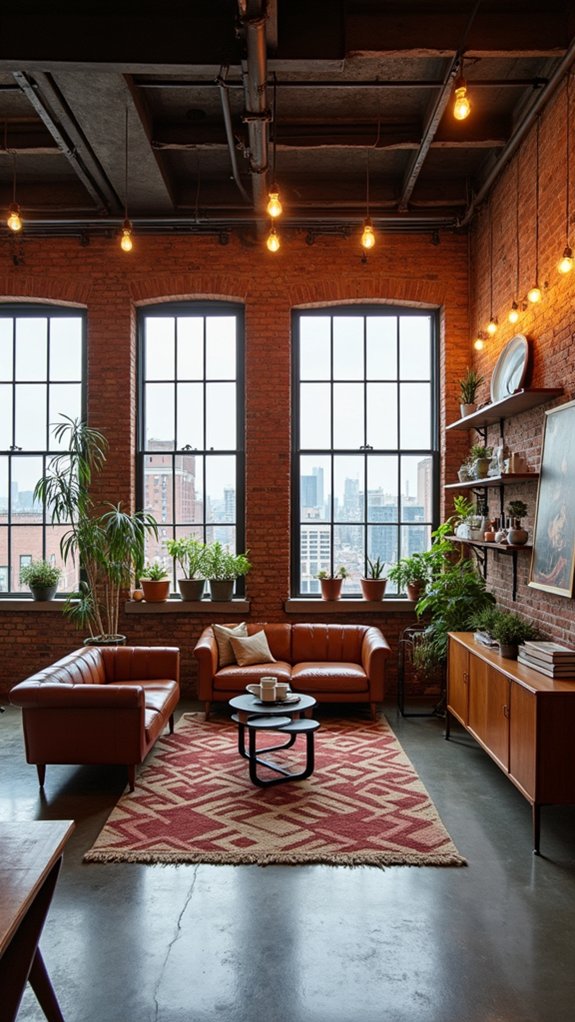
Curated decor incorporating vintage sculptures and unique artwork establishes authentic character through meaningful objects like travel collections and family heirlooms.
Bold statement pieces oversized canvases or sculptural lighting function as commanding focal points within open-plan configurations.
Sophisticated layering of textures and finishes, combining metal, wood, and plush textiles, generates visual complexity.
Strategic integration of personal photos alongside professional artwork balances industrial aesthetics with intimate warmth, creating environments that transcend conventional loft stereotypes.
Final Verdict
Successful loft-style design requires careful orchestration of industrial elements with contemporary functionality.
The strategic preservation of architectural features, combined with purposeful material layering and zoning techniques, creates cohesive living environments that honor the space’s industrial heritage while meeting modern residential needs.
Through deliberate integration of multi-functional furnishings, textural contrasts, and personalized installations, designers can achieve the ideal balance between raw authenticity and refined comfort characteristic of sophisticated loft interiors.
FAQs
Recommended Products

Herman Miller Sayl Ergonomic Office Chair with Autumn Orange Frame
Herman Miller office chair - Ergonomic desk chair orange
VIEW LATEST PRICE
Pottery Barn Monique Lhuillier Jeweled Christmas Tree Collection Set
Metallic Christmas tree decor - Designer holiday trees
VIEW LATEST PRICE
Bethany Lowe Designs Black Cat Silhouette Halloween Lantern
Bethany Lowe cat lantern - Vintage Halloween black cat
VIEW LATEST PRICE

