


Contemporary holiday design has evolved beyond traditional red-and-green motifs into sophisticated expressions that honor both seasonal celebration and year-round aesthetic principles.
Modern decorators now prioritize clean geometry, natural textures, and restrained color palettes that complement existing architectural elements rather than overwhelming them.
This approach transforms seasonal decorating from temporary disruption into seamless integration, where holiday elements enhance spatial flow and maintain visual coherence.
The following strategies demonstrate how intentional material selection and strategic placement create elevated festive environments.
Also read this: Indoor-Outdoor Home Decor Ideas
Embrace Clean Lines With Natural Greenery
When winter decorating calls for sophistication over embellishment, designers turn to the strategic placement of natural greenery within geometric frameworks. Eucalyptus, pine, and cedar create striking focal points when arranged in linear metal or glass vessels.
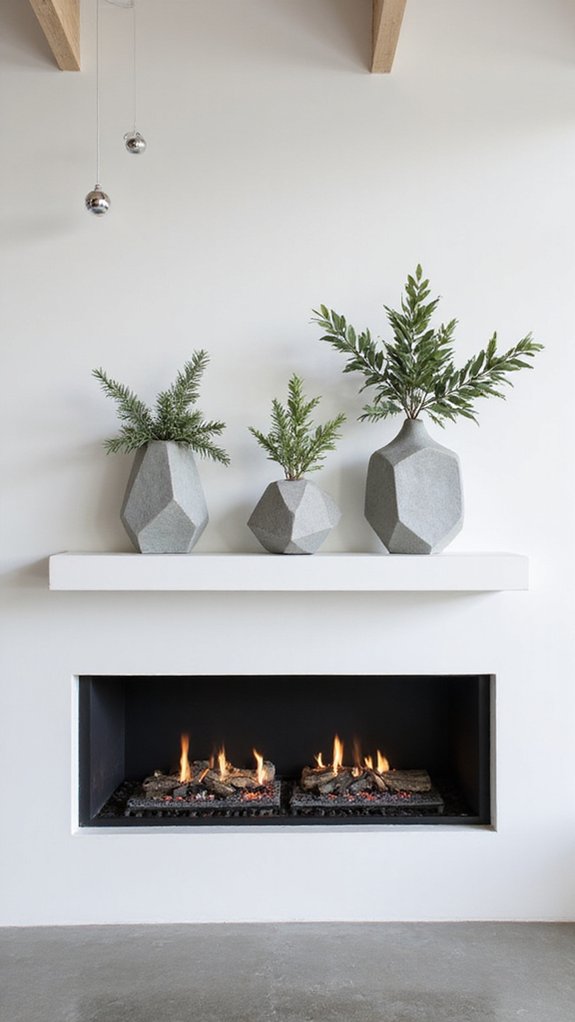
The modern approach emphasizes uniform trimming and systematic spacing, allowing each botanical element to contribute to the overall composition without visual competition. A curated palette of verdant tones paired with neutral bases establishes spatial harmony.
Minimalist arrangements benefit from subtle metallic accents that complement rather than compete with organic textures, resulting in refined installations that celebrate both architectural precision and natural beauty.
Also read this: 10 Best Budget Wall Art Ideas for Apartments
Winter decorating is about bringing warmth to the coldest season.
Layer Neutral Textures for Sophisticated Warmth
Building upon the foundation of geometric restraint and natural elements, sophisticated winter environments require the strategic application of layered neutral textures to achieve thermal and visual warmth without sacrificing refined aesthetics.
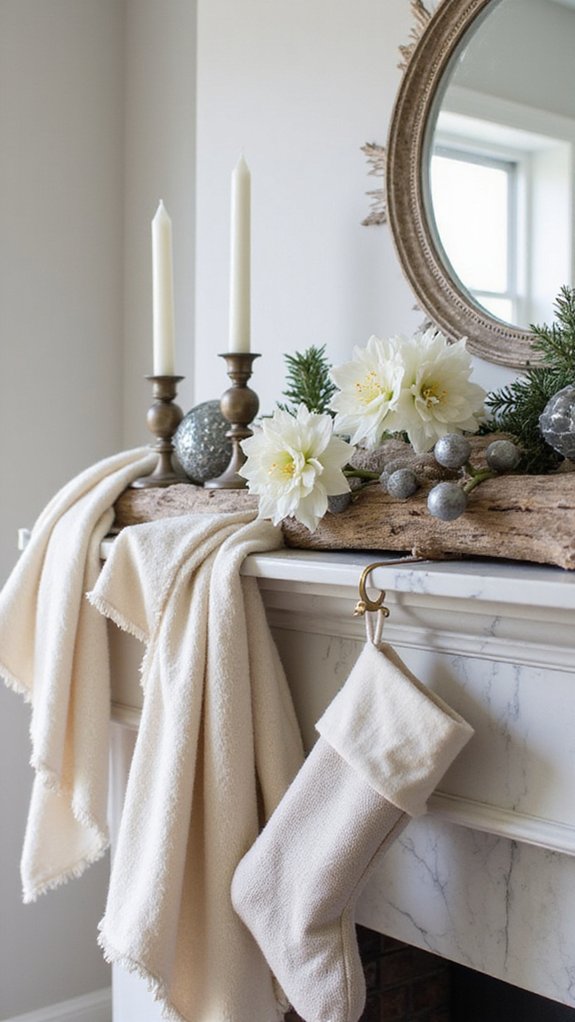
Neutral textures including wool, linen, velvet, and faux fur establish depth through material contrast. Combining matte and reflective surfaces creates dimensional interest within monochromatic schemes.
| Texture Category | Material Examples | Application Method |
|---|---|---|
| Soft Textiles | Wool throws, velvet pillows | Layer on furniture surfaces |
| Natural Elements | Pinecones, dried grasses, burlap | Arrange with smooth ceramics |
| Layered Textiles | Plush throws, textured rugs | Overlap for cozy winter decor |
Create Focal Points With Sculptural Winter Branches
How does one achieve dramatic visual impact while maintaining the sophisticated restraint established through neutral textures?
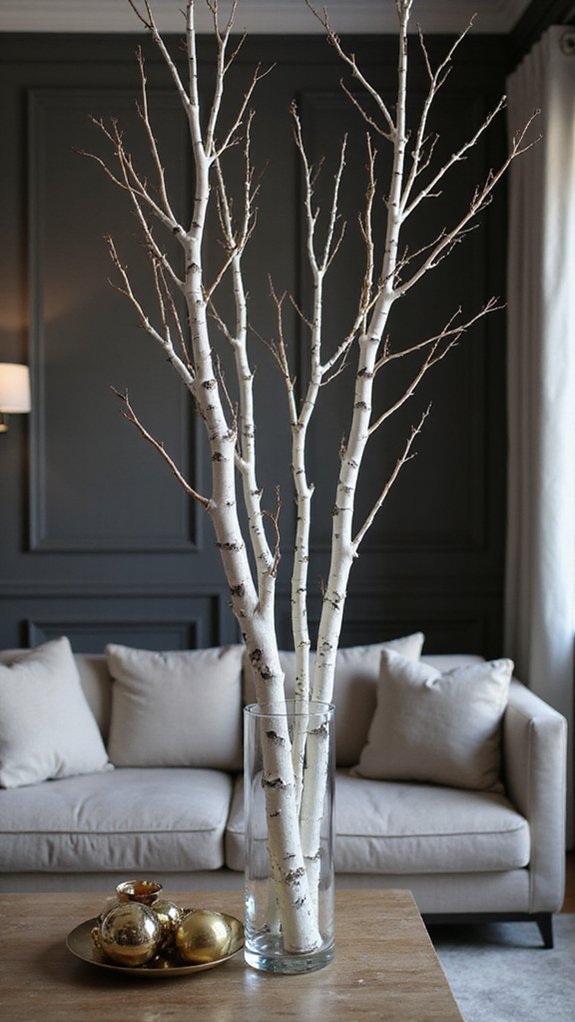
Sculptural branches serve as commanding winter focal points, their organic forms creating visual movement within structured spaces.
Positioning bare twigs in oversized vessels establishes vertical emphasis while preserving minimalist principles. Strategic placement at eye level maximizes impact, transforming natural elements into architectural statements.
Elevating natural elements through deliberate positioning creates architectural drama while honoring minimalist design principles.
Subtle metallic finishes enhance dimensional qualities without compromising restraint. Layering diverse branch varieties pine, magnolia, birch generates textural depth and spatial interest.
This approach to modern holiday decor transforms winter’s skeletal beauty into refined centerpieces that anchor contemporary seasonal arrangements.
Also read this: 7 Best DIY Furniture Projects for Small Spaces
Incorporate Minimalist Candlelight Displays
Minimalist candlelight displays establish ambient illumination through strategic placement and measured restraint, creating atmospheric depth without overwhelming architectural elements.

Layered arrangements combine pillar, taper, and votive candles within neutral or metallic holders, generating visual hierarchy through varied heights and proportions.
Positioning these elements on mantelpieces, coffee tables, and tiered surfaces alongside natural components like greenery and pinecones achieves organic balance.
Flameless LED alternatives provide safety while maintaining realistic flickering effects.
Dimming overhead fixtures allows candlelight to function as primary illumination, transforming spatial dynamics.
This minimalist approach cultivates sophisticated ambiance through intentional curation rather than decorative excess.
Also read this: 10 Charming Fall Garden Decor Ideas to Try This Season
Use Organic Materials in Unexpected Places
Organic materials positioned in unconventional locations create visual tension that elevates traditional holiday arrangements beyond predictable placement patterns.
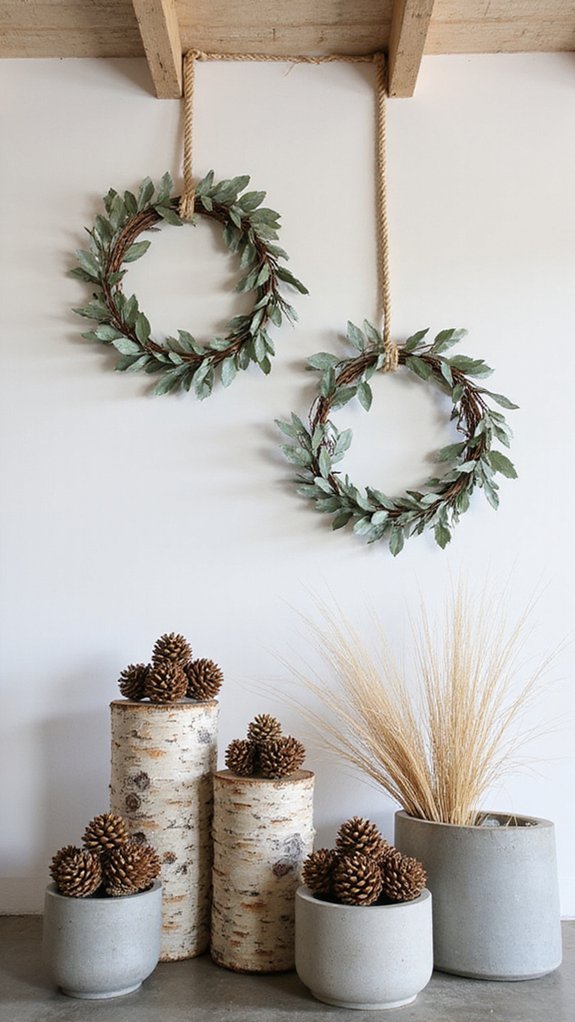
Strategic positioning of natural elements such as driftwood installations on vertical planes, spherical moss compositions anchoring horizontal surfaces, and sculptural branch arrangements adjacent to architectural focal points establishes sophisticated spatial relationships within interior environments.
This approach transforms raw materials into design statements that complement rather than compete with existing architectural features and seasonal lighting schemes.
Driftwood as Wall Art
The weathered textures and sculptural qualities of driftwood transform conventional wall surfaces into dynamic focal points that anchor winter holiday compositions with unexpected organic sophistication.
This sustainable wall art approach leverages naturally occurring materials to establish visual hierarchy while maintaining cohesive winter decor themes.
Strategic driftwood installation enhances spatial dynamics through:
- Geometric arrangements – Linear configurations create structured visual flow across vertical planes
- Preservation techniques – Clear matte sealers maintain authentic textures while preventing structural degradation
- Material integration – Complementary organic elements like pinecones and evergreen branches reinforce thematic continuity
Local sourcing guarantees unique sculptural properties while supporting environmentally conscious design practices.
Moss Ball Table Centerpieces
Spherical moss arrangements introduce biophilic elements into formal dining environments, establishing textural contrast against polished holiday table surfaces through deliberate material juxtaposition.
Moss balls function as versatile focal points, clustering effectively within shallow vessels or operating as singular statement pieces. Their organic geometry complements contemporary minimalist aesthetics while maintaining seasonal relevance.
| Application Method | Visual Impact | Pairing Elements |
|---|---|---|
| Clustered groupings | Dynamic asymmetry | Pillar candles |
| Linear arrangements | Rhythmic repetition | Pinecone accents |
| Scattered placement | Organic randomness | Winter botanicals |
| Layered compositions | Dimensional depth | Metallic vessels |
This holiday decor strategy transforms winter tables through preserved moss construction, utilizing glycerin-treated natural materials or premium synthetic alternatives for sustained durability.
Branch Sculptures Near Fireplaces
Extending organic design principles beyond tabletop applications, branch sculptures transform fireplace surrounds into architectural focal points through strategic placement and material selection.
Birch and oak branches introduce natural texture that contrasts beautifully against stone or brick surfaces.
Positioning these sculptural elements in tall vessels or woven baskets creates vertical emphasis while maintaining visual balance with the fireplace’s horizontal lines.
Key Implementation Strategies:
- Minimalist Installation – Replace traditional garlands with bare branches for contemporary aesthetic appeal
- Accent Integration – Incorporate dried berries, pinecones, or fairy lights for seasonal enhancement
- Maintenance Protocol – Recut and hydrate branches regularly to preserve structural integrity
Design Monochromatic Color Schemes
Monochromatic color schemes establish visual coherence in winter holiday decor by employing varying saturations, values, and intensities of a single hue throughout the spatial composition.
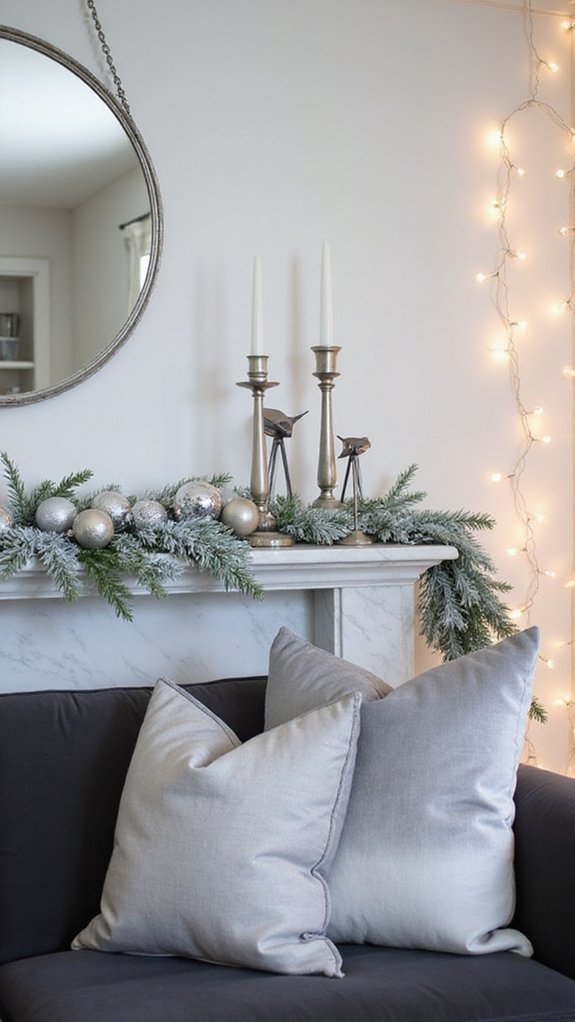
This monochromatic approach creates sophisticated seasonal environments through strategic deployment of tints, shades, and tones within unified palettes.
Monochromatic winter palettes achieve sophisticated seasonal ambiance through deliberate manipulation of singular hue variations across tonal gradients and chromatic intensities.
Texture differentiation becomes paramount, incorporating matte, glossy, and varied surface treatments to maintain visual engagement while preserving chromatic unity.
Popular winter palettes include icy blues, warm neutrals, and deep reds, each establishing distinct atmospheric qualities.
Successful implementation requires balanced distribution of textural contrasts and strategic accent placement, ensuring cohesive integration with existing architectural elements while avoiding compositional monotony.
Add Architectural Elements as Seasonal Accents
While unified color palettes establish a visual foundation, architectural elements serve as structural anchors that elevate seasonal displays beyond surface decoration into sophisticated spatial compositions.
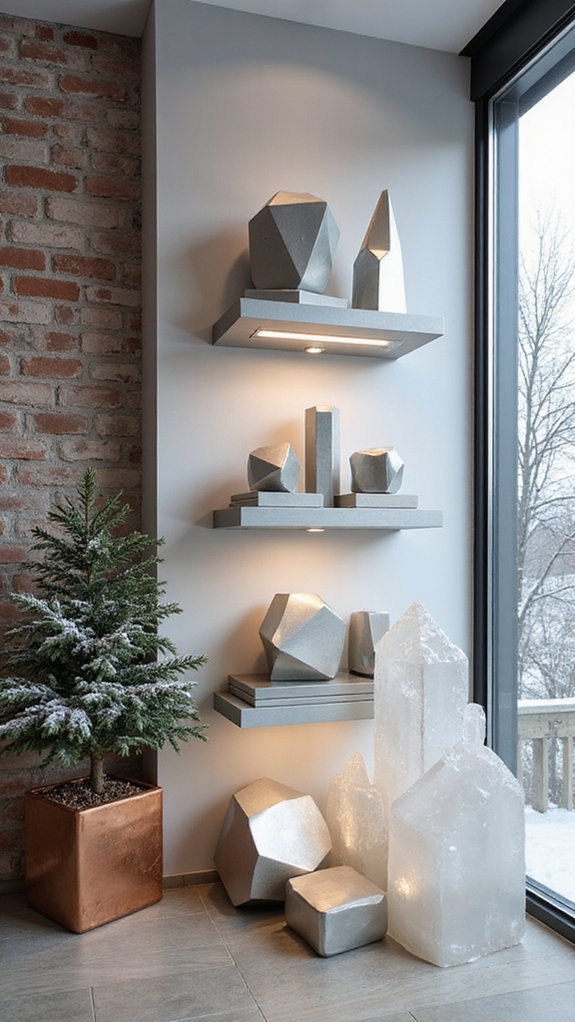
These vintage elements transform ordinary holiday arrangements into curated environments that demonstrate refined design sensibility.
Strategic implementation requires careful consideration of scale, proportion, and material harmony:
- Integrate salvaged architectural pieces like ornate corbels or door frames as dramatic focal points within greenery arrangements.
- Layer architectural motifs such as Greek key patterns into wreath designs for textural sophistication.
- Enhance existing features by decorating mantels and archways with strategic seasonal accents that complement structural lines.
Blend Indoor Plants With Holiday Arrangements
Beyond structural enhancements, living botanical elements introduce dynamic color shifts and organic textures that bridge the gap between permanent interior design and temporary seasonal installations.

Indoor plants like amaryllis, Christmas cactus, and poinsettias provide winter-tolerant foundations for sophisticated holiday arrangements.
Strategic layering of eucalyptus, nandina, or cedar branches with white roses and holly berries creates multidimensional focal points.
Transforming potted specimens into decorative elements through seasonal container treatments maximizes spatial efficiency.
Integrating greenery into wreaths and garlands establishes visual continuity between living interior landscapes and festive displays, achieving cohesive design narratives that extend beyond traditional holiday boundaries.
Style Contemporary Wreaths and Garlands
Contemporary wreath and garland design prioritizes architectural precision over ornamental excess, establishing streamlined focal points that complement modern interior vocabularies.
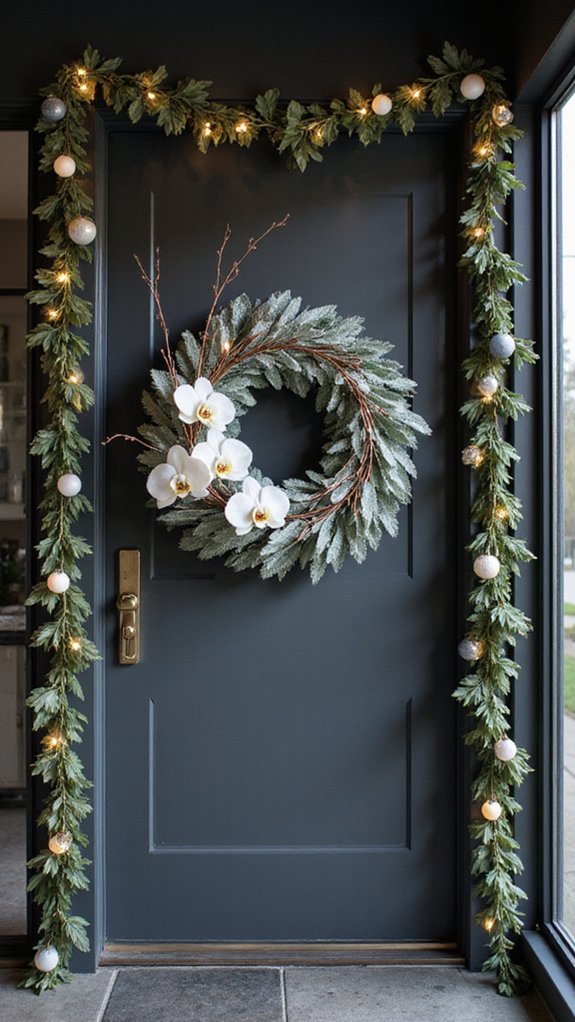
These installations leverage neutral palettes and geometric configurations to achieve visual coherence within minimalist environments.
Strategic design approaches include:
Contemporary wreath design demands strategic approaches that balance architectural precision with subtle ornamental elements to achieve sophisticated spatial integration.
- Textural layering – Combining matte foliage with metallic accents creates dimensional interest while maintaining restraint.
- Asymmetrical compositions – Breaking traditional circular patterns introduces contemporary architectural elements.
- Monochromatic greenery selections – Eucalyptus and boxwood provide consistent color temperatures that support spatial harmony.
High-quality faux materials offer practical longevity while delivering authentic textures. Subtle integrated lighting enhances spatial depth without compromising the clean aesthetic principles fundamental to contemporary holiday installations.
Transform Lighting for Ambient Winter Glow
Through strategic illumination orchestration, winter lighting design establishes atmospheric depth that transforms architectural spaces into immersive seasonal environments.

Multiple light sources candles, lanterns, and string installations create layered ambient glow that defines spatial hierarchy.
Warm-colored bulbs in existing fixtures enhance thermal perception while maintaining architectural integrity. Twinkle lights positioned along mantels, staircases, and botanical elements introduce dynamic visual texture through controlled sparkle distribution.
Fixture integration with seasonal greenery and textured materials ensures cohesive design language. Dimmer controls provide luminosity modulation, enabling shift between intimate gathering settings and celebratory entertainment environments.
This systematic approach achieves professional-grade atmospheric transformation through calculated light placement and intensity management.
Final Verdict
Contemporary winter holiday design achieves sophisticated elegance through strategic material juxtaposition and spatial hierarchy.
The integration of organic elements with architectural salvage creates dynamic visual tension, while neutral textile layering establishes tactile depth. Minimalist lighting schemes provide atmospheric dimension without compromising clean aesthetic principles.
These methodologies transform traditional seasonal decor into curated environments that prioritize scale, texture, and compositional balance, resulting in refined spaces that celebrate the season through restrained, purposeful design intervention.
FAQs
Recommended Products

Havenly Interior Design Service Gift Card $200-500
Interior design service - Home decorating consultation
VIEW LATEST PRICE
Modern Ceramic White Sculptural Vase Set of 3 for Console Table
Modern white ceramic vases - Sculptural vase set
VIEW LATEST PRICE
Pottery Barn Monique Lhuillier Jeweled Christmas Tree Collection Set
Metallic Christmas tree decor - Designer holiday trees
VIEW LATEST PRICE

