

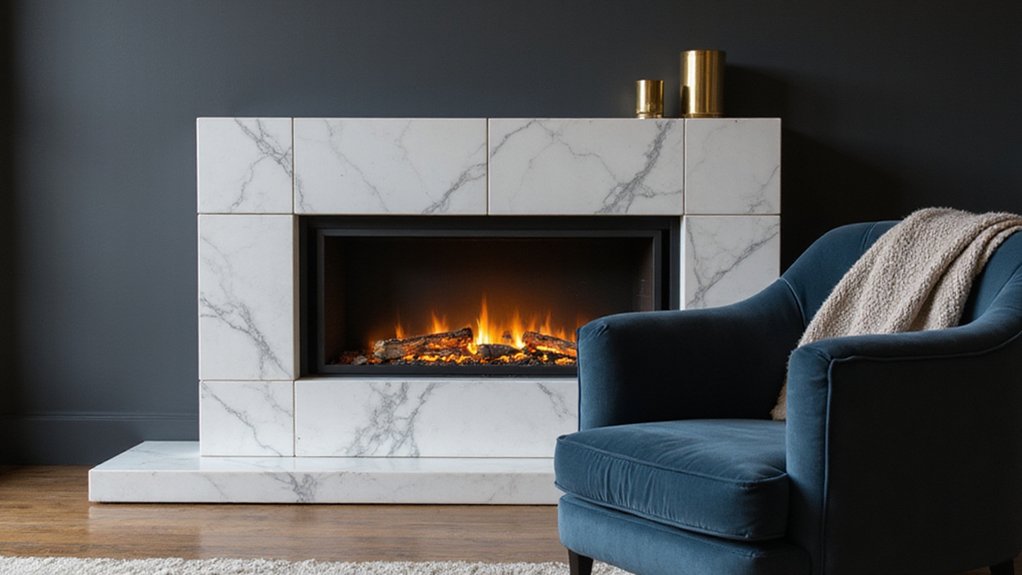
Modern interior design faces unique challenges when addressing compact living environments, particularly regarding fireplace integration. Elegant surrounds function as architectural elements that transcend mere decorative purposes, serving as visual anchors that manipulate dimensional perception through tactical proportioning and material selection. The selection process requires careful consideration of thermal properties, installation limitations, and aesthetic coherence within limited square footage. Understanding these fundamental design principles reveals why certain surround configurations succeed where traditional approaches fail to optimize both form and function.
Key Takeaways
- Elegant surrounds act as commanding centerpieces that enhance visual appeal while maximizing space perception through light-reflecting surfaces and vertical elements.
- Heat-resistant materials like stone and engineered porcelain ensure safety in confined spaces while maintaining structural integrity and aesthetic appeal.
- Built-in wall cavity integration and floating mantel configurations prevent room protrusion, creating illusions of height without sacrificing living space.
- Customizable dimensions and materials allow perfect fitting in compact areas while serving dual purposes for both heating and storage functionality.
- Thoughtful design creates focal points that distribute visual weight harmoniously, using texture layering and color psychology to enhance space perception.
Maximizing Visual Impact in Compact Living Areas

While compact living areas present unique design challenges, tactical fireplace surround selection transforms these limitations into opportunities for refined focal points.
Elegant fireplace surrounds serve as commanding centerpieces that maximize visual appeal through calculated material and dimensional choices. Light-reflecting surfaces and neutral palettes amplify area perception, while vertical architectural elements create ceiling height illusions.
Streamlined profiles prevent overwhelming, maintaining functional flow patterns essential in small spaces. Professional integration with existing design schemes guarantees cohesive aesthetic continuity.
These surrounds effectively concentrate luxury within constrained square footage, delivering cultured ambiance without compromising practical living requirements or movement circulation. Complementing the fireplace with statement lighting such as pendant fixtures or chandeliers creates layered focal points that enhance the overall dramatic effect in small living areas.
Recommended Products

Havenly Interior Design Service Gift Card $200-500
Interior design service - Home decorating consultation
VIEW LATEST PRICE
Safavieh Milan Shag Collection Large Area Rug 9x12
Large area rug 9x12 - Modern living room rug
VIEW LATEST PRICE
West Elm Mid-Century Modern Console Table Acorn Wood
Mid century console table - Minimalist wood furniture
VIEW LATEST PRICEMaterial Selection for Style and Functionality

Material selection for fireplace surrounds in compact areas requires careful consideration of both aesthetic integration and thermal performance characteristics.
Wood options provide natural warmth and texture but demand proper heat shielding and maintenance protocols, while stone materials offer superior heat resistance with minimal upkeep requirements.
The choice between these materials fundamentally impacts the surround’s longevity, safety parameters, and visual contribution to the overall design scheme.
Wood Versus Stone Options
When selecting fireplace surround materials for compact spaces, designers must weigh the distinct advantages of wood versus stone options to achieve ideal visual impact and functional performance.
Wood surrounds deliver versatile aesthetic flexibility through customizable stains and finishes, accommodating both traditional and modern design schemes while offering easier installation processes.
Stone options provide superior durability and heat resistance, with granite and marble selections ensuring long-term structural integrity and elevated visual refinement.
While wood presents lower initial investment costs, stone materials typically offer enhanced value propositions through reduced maintenance requirements and extended service life, making material selection essential for optimizing small-space fireplace design solutions.
Reclaimed wood surrounds introduce authentic character and textural variation while supporting sustainability goals through salvaged timber installations that develop attractive patinas over time.
Heat Resistant Material Benefits
Performance optimization drives the selection of heat-resistant materials in small-area fireplace surrounds, where thermal stress and space limitations demand superior material engineering.
Advanced material specifications guarantee peak functionality in compact installations:
- Natural stone variants like granite provide exceptional thermal stability, preventing warping and discoloration under extreme temperature fluctuations.
- Engineered porcelain systems deliver diverse aesthetic profiles while maintaining structural integrity against heat exposure.
- Quartz compositions offer protective barriers against ash contamination and thermal damage to adjacent wall surfaces.
- Fire-resistant substrates guarantee regulatory compliance while maximizing design flexibility in limited dimensional parameters.
These heat resistant materials transform fireplace surrounds into architectural focal points, balancing thermal performance with modern aesthetics in small spaces. Complement your fireplace installation with natural wood accents that enhance the rustic charm while maintaining the sophisticated design balance essential for compact living areas.
Recommended Products

Wagner Spraytech Studio Home Decor HVLP Paint Sprayer
Wagner paint sprayer - HVLP sprayer interior
VIEW LATEST PRICE
West Elm Mid-Century Show Wood Sofa 82 inch
Mid century modern sofa - Farmhouse living room furniture
VIEW LATEST PRICE
Creating Proportional Design Balance

Achieving proportional design balance in compact areas requires tactical consideration of ceiling height relationships and dimensional harmony.
The fireplace surround must maintain appropriate scale relative to the room’s vertical dimensions while accommodating existing furniture arrangements without creating visual competition.
Proper proportional planning guarantees the surround enhances architectural flow rather than disrupting the room’s established design equilibrium.
Strategic implementation of negative space around the fireplace surround creates compositional balance and prevents overcrowding in small rooms.
Scale to Ceiling Height
The foundation of successful fireplace design lies in establishing proper proportional relationships between the surround and the room’s vertical dimensions. When homeowners scale to ceiling height appropriately, they create proportionate fireplace surrounds that enhance awareness rather than overwhelming compact areas.
- Ceiling-proportionate heights draw the eye upward, creating illusions of increased vertical space.
- Balanced scaling transforms fireplaces into visually appealing focal points without dominating rooms.
- Harmonious proportions distribute visual weight effectively throughout the interior architecture.
- Thoughtful height ratios integrate fireplace elements seamlessly with surrounding wall compositions.
Professional designers emphasize that proper vertical scaling guarantees fireplace surrounds complement rather than compete with existing architectural features. Similar to bathroom design principles, incorporating natural wood elements around fireplace surrounds adds foundational warmth while maintaining the clean lines essential for small space aesthetics.
Balance Furniture Placement
Building upon proper vertical proportions, furniture arrangement becomes the determining factor in creating cohesive dimensional relationships around elegant fireplace surrounds.
Tactical placement maintains proportional scale while guaranteeing harmonious traffic flow throughout the small space. Seating configurations should face the fireplace surround, establishing it as the primary focal point while facilitating natural conversation zones.
Multi-functional pieces like ottomans and side tables maximize dimensional efficiency without overwhelming the area’s visual balance. Maintaining adequate clearance distances guarantees both safety compliance and ideal heat distribution, while properly scaled furniture pieces create inviting atmospheres that emphasize the surround’s architectural significance within compact residential environments.
Storage ottomans serve dual purposes by providing comfortable seating while offering hidden compartments for organizing living room accessories and seasonal items that might otherwise create visual clutter around the fireplace area.
Recommended Products

Jonathan Y Modern Persian Vintage Area Rug Burgundy Gold 5x8
Burgundy gold area rug - Fall vintage rug
VIEW LATEST PRICE
GlowOne LED Floor Lamp for Living Room 65 inch Modern Standing Light
Modern floor lamp tall - LED corner floor lamp
VIEW LATEST PRICE
Heat & Glo Supreme i30-C Gas Fireplace Insert
Gas fireplace insert - Small gas fireplace
VIEW LATEST PRICESpace-Saving Installation Techniques
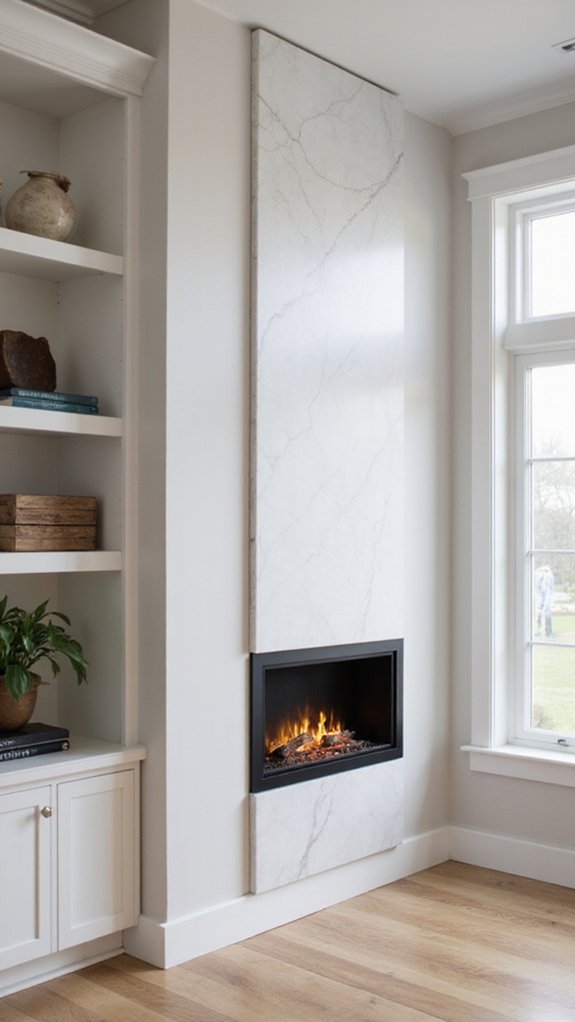
When space limitations challenge traditional fireplace installation methods, tactical design approaches can transform compact areas into refined living environments.
Planned space-saving installation techniques enable homeowners to integrate a fireplace seamlessly within constrained dimensions while maximizing functionality in every small room.
Effective implementation strategies include:
- Built-in wall cavity integration – Recessing fireplace units into existing structural elements eliminates protrusion into living areas.
- Floor-to-ceiling vertical installations – Creating height illusions while minimizing horizontal footprint requirements.
- Floating mantel configurations – Reducing visual bulk through suspended design elements.
- Multi-functional furniture integration – Combining seating, storage, and heating systems within unified architectural solutions.
Similar to convertible furniture systems that maximize square footage efficiency in tiny homes, fireplace surrounds can incorporate dual-purpose elements that serve both aesthetic and functional needs.
Heat Resistance and Safety Considerations

Safety-conscious homeowners must prioritize heat resistance specifications when selecting fireplace surround materials for compact installations, as confined spaces amplify thermal risks and demand heightened protection protocols.
| Material | Temperature Threshold | Safety Rating |
|---|---|---|
| Granite | 1,200°F | Excellent |
| Marble | 1,200°F | Excellent |
| Porcelain Tile | 1,200°F | Excellent |
| Natural Stone | 1,000°F | Good |
Non-combustible materials guarantee ideal safety performance in confined environments where heat dissipation proves challenging. Professional installation prevents thermal transfer to adjacent combustible elements, while regular inspections identify potential material degradation. Compliance with local fire safety regulations maintains structural integrity and protects occupants from hazardous conditions inherent in small-space fireplace surrounds installations.
Customization Options for Personal Expression

Personalization transforms standard fireplace surrounds into distinctive focal points that maximize visual impact within space-constrained environments.
Custom fireplace solutions enable homeowners to select unique materials and finishes that authentically reflect personal style while improving area efficiency.
Effective customization approaches include:
- Material Selection – Stained wood, painted surfaces, or natural stone finishes create bespoke aesthetics.
- Dimensional Tailoring – Precise measurements guarantee ideal fit within compact areas.
- Distinctive Features – Intricate carvings and unique textures establish standout visual elements.
- Professional Collaboration – Expert craftsmanship delivers quality construction and meticulous attention to detail.
These personalized centerpieces enhance entire room aesthetics through thoughtful design integration.
Strategic planning prioritizes texture layering, color psychology, and spatial optimization to maximize the visual impact of your customized fireplace surround within small spaces.
FAQs
What Is the Trend in the Fireplace Surrounds in 2025?
Fireplace surrounds in 2025 emphasize minimalist designs with clean geometries, sustainable materials like reclaimed wood and recycled stone, plus innovative technologies including smart controls for heat output and ambient lighting management.
What Is the Best Fireplace for a Small Room?
Wall-mounted electric fireplaces represent ideal compact fireplace options for small rooms, offering energy efficient designs with minimal physical footprint. These units balance aesthetic considerations through sleek profiles and realistic flame technology while eliminating ventilation requirements.
What Are the Rules for Fireplace Surrounds?
Fireplace surround rules mandate non-combustible fireplace materials meeting safety regulations, proportional dimensions extending 12-24 inches laterally, appropriate height ratios, and design styles that complement area limitations while maintaining structural integrity and aesthetic harmony within architectural parameters.
How to Pick a Fireplace Surround?
Selecting fireplace surrounds requires evaluating design considerations including proportional scaling, material choices emphasizing heat-resistant properties like natural stone or porcelain, and aesthetic styles that complement existing interior architecture while ensuring ideal visual balance.
Final Verdict
Elegant fireplace surrounds represent a tactical design investment for compact residential environments, delivering exceptional dimensional optimization through carefully engineered proportions and premium material specifications. The integration of heat-resistant components with space-efficient installation methodologies guarantees both aesthetic refinement and operational safety. Customizable design parameters enable precise architectural alignment while maintaining focal prominence. These surrounds effectively transform limited square footage into visually expansive, functionally superior living spaces that maximize both thermal efficiency and interior design cohesion.
Recommended Products

Pottery Barn Rustic Mahogany Wooden Mantel Shelf 72-inch
Wooden mantel shelf - Rustic mantel
VIEW LATEST PRICE
Anthropologie Gleaming Primrose Mirror Large Gold Arch
Large gold arch mirror - Mantel mirror decor
VIEW LATEST PRICE
MyGift Set of 3 Floating Triangle Corner Wall Shelves
Triangle corner shelves - Floating corner shelf set
VIEW LATEST PRICE

