


Moving furniture as a renter requires tactical planning to protect both belongings and security deposits.
Professional movers emphasize that property damage during relocations ranks among the most common causes of deposit forfeiture. Critical factors include precise measurements, protective materials, and specialized equipment designed to prevent scratches, dents, and structural damage.
However, even experienced renters frequently overlook several essential techniques that can mean the difference between a successful move and costly repair bills.
Summary
- Measure all furniture dimensions and doorways beforehand to ensure proper fit and avoid costly damage during transport.
- Wrap furniture completely with moving blankets and stretch film while avoiding direct plastic contact with wood surfaces.
- Disassemble large items systematically, labeling hardware in bags to navigate tight spaces without causing wall damage.
- Use furniture sliders, dollies, and corner guards to protect floors, walls, and door frames throughout the move.
- Plan your moving route by removing obstacles and placing protective materials along pathways before transporting furniture.
Measure Everything Before You Move
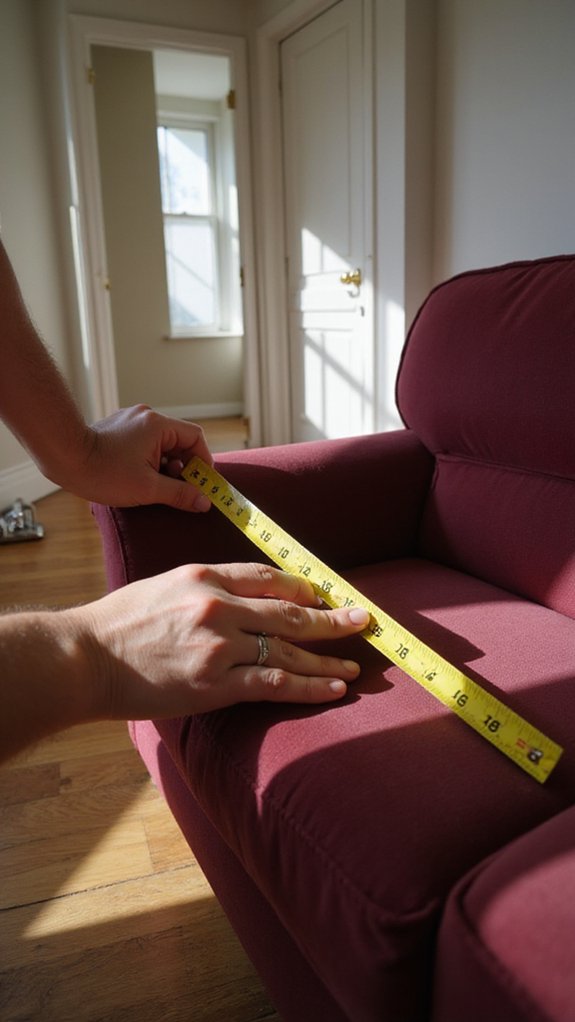
Before attempting any furniture relocation, renters must conduct thorough dimensional assessments of both their belongings and the target environment.
Accurate measurements of furniture dimensions height, width, and depth ensure compatibility with doorways, staircases, and pathways in the new space. Critical clearance points including entry thresholds, stair widths, and ceiling heights require precise documentation to prevent structural damage and injury during the moving process.
Moving equipment dimensions must also align with planned routes. Maintaining extensive measurement records enables tactical comparison against furniture dimensions, facilitating efficient logistics planning and eliminating costly repositioning scenarios that compromise both property integrity and personal safety.
Protect Your Deposit With Proper Furniture Wrapping

Accurate dimensional assessments enable renters to proceed with confidence to the next critical phase: implementing thorough protective measures that safeguard both furniture and rental property surfaces.
High-quality moving blankets and furniture pads must completely cover all pieces, with secure items fastened using stretch film to prevent slippage. Corner guards protect door frames from impact damage.
Complete furniture coverage with moving blankets and stretch film prevents slippage while corner guards shield door frames from costly impact damage.
Quality packing requires avoiding direct plastic contact with wood surfaces to prevent moisture damage. Document condition through detailed photography before transport.
Proper equipment investment helps furniture safely navigate tight spaces, minimize property damage, and protect deposit funds while potentially supporting insurance coverage claims.
Disassemble Large Items to Navigate Tight Spaces

Tactical disassembly transforms oversized furniture into manageable components that navigate rental properties’ narrow corridors and restrictive doorways with minimal risk of structural damage.
Disassembling large furniture requires systematic planning to remove components like legs, shelves, and drawers, creating a compact profile for easier transport. Following manufacturer instructions guarantees safe disassembly techniques that preserve structural integrity.
- Measure door widths and hallway dimensions before moving day to identify items requiring disassembly
- Remove detachable components systematically to achieve maximum size reduction
- Organize screws and hardware in labeled bags to prevent lost pieces during reassembly
- Consult original assembly guides for proper disassembly sequences
- Navigate tight doorways using tactical component separation methods
Once reassembled in your new space, consider implementing vertical wall storage solutions to maximize functionality without compromising your rental deposit.
Use Moving Equipment to Prevent Wall and Floor Damage

While tactical disassembly addresses size limitations, proper moving equipment serves as the primary defense against property damage during furniture relocation.
Furniture sliders reduce friction between heavy items and floors, preventing scratches and dents. Moving blankets and furniture pads create protective barriers around furniture surfaces during transport.
Corner guards and foam padding shield door frames from impact damage when maneuvering tight spaces. A sturdy dolly minimizes floor damage while enabling smooth movement without excessive lifting.
Tactical route planning requires operators to clear obstacles beforehand, ensuring unimpeded passage. This thorough equipment approach prevents both wall damage and floor damage throughout the relocation process.
Plan Your Route to Avoid Property Damage

Before initiating any furniture relocation, operators must conduct thorough route assessment to identify dimensional limitations and potential hazard points throughout the movement corridor. This systematic approach enables teams to plan your route effectively and avoid property damage through proactive hazard mitigation.
Clear the path of all tripping hazards while measuring tight doorways for precise dimensional compatibility.
- Measure doorway widths, ceiling heights, and hallway dimensions for accurate clearance calculations
- Remove rugs, electrical cords, and decorative items that create tripping hazards
- Deploy protective materials including corner guards and moving blankets along transit routes
- Establish communication protocols for coordinated furniture placement and movement execution
- Create detailed floor plans mapping ideal furniture placement in destination areas
FAQs
What Is an Appropriate Tip for Furniture Movers?
Professional mover expectations suggest $20-50 per mover for half-day jobs, $50-100 for full-day moves. Furniture moving etiquette recommends cash tips reflecting service quality, with factors affecting tips including complexity, distance, and regional tipping norms influencing appropriate compensation rates.
Should You Saran Wrap Furniture When Moving?
Yes, saran wrap benefits furniture protection through damage prevention and cost effective solutions. Moving approaches should include proper packing techniques, ensuring complete coverage while avoiding direct wood contact to prevent moisture-related issues during transport.
What Is the Easiest Way to Move Heavy Furniture by Yourself?
Solo moving requires furniture sliders for smooth surfaces, moving straps for proper lifting mechanics, and dolly carts for heavy items. Safety precautions include planning room layout beforehand and using furniture blankets to protect surfaces during transport.
Should You Move Furniture or Boxes First?
Furniture should precede boxes in moving strategies, enabling ideal weight distribution and packing order. This approach guarantees floor protection, efficient time management, and proper vehicle size utilization while protecting fragile items through systematic team coordination.
Final Verdict
Successful renter-safe furniture relocation requires systematic implementation of protective protocols. Precision measurement prevents structural damage, while professional-grade wrapping materials safeguard surfaces from scratches and dents.
Tactical disassembly facilitates navigation through confined spaces, reducing impact risks. Specialized moving equipment distributes weight loads and prevents surface abrasion. Thorough route planning eliminates hazardous obstacles, ensuring deposit preservation.
These technical measures collectively minimize property damage liability while maintaining structural integrity throughout the relocation process.
Recommended Products

CBOMO Corner Guards for Baby Proofing - 16 Pack with Door Slam Stopper
Corner guards furniture moving - Door frame protector
VIEW LATEST PRICE
X-Protector Premium Furniture Pads 133 Piece Pack
Furniture sliders for carpet - Floor protectors
VIEW LATEST PRICE
SMOOTHMOVE Moving Blankets Heavy Duty Professional Quality 12-Pack
Moving blankets heavy duty - Furniture moving pads
VIEW LATEST PRICE