


Interior designers recognize that mixing patterned cushions requires systematic methodology rather than intuitive guesswork.
The process demands careful consideration of color theory, scale relationships, and compositional balance to achieve polished results.
Most homeowners approach pattern mixing with hesitation, fearing visual chaos or design inconsistency. However, specific technical principles govern successful pattern coordination, creating harmonious arrangements that elevate living spaces.
Understanding these fundamental strategies transforms potentially overwhelming decorative decisions into manageable, professional-grade design executions that warrant detailed examination.
Start With a Cohesive Color Palette
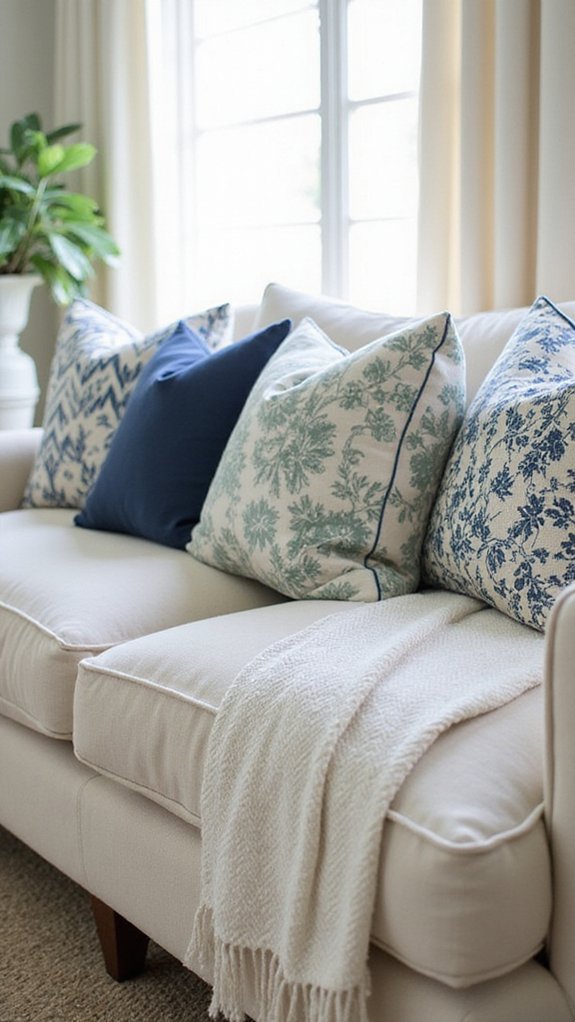
Establishing a cohesive color palette forms the foundational framework for successful pattern mixing in cushion arrangements. Interior designers recommend selecting three primary hues from existing room elements walls, artwork, or furnishings to create the base color scheme.
Extract colors from a favorite patterned pillow cover to establish harmonious foundations for throw pillow patterns. Add accent colors that either complement or contrast with the primary palette, ensuring visual cohesion across different pattern types.
Balance neutral tones with bold hues to achieve flexibility when mixing and matching throw pillows. Layer patterned throw pillows with solid-colored foundations for visual depth while maintaining your established color scheme.
This systematic approach produces combinations that always look intentionally designed rather than randomly assembled.
Balance Organic and Geometric Patterns

The thoughtful juxtaposition of organic and geometric patterns creates refined visual harmony through the deliberate contrast of flowing naturalistic forms against structured, repetitive designs.
Achieving ideal balance requires pulling coordinating colors from organic prints into geometric patterns, establishing cohesion throughout the arrangement.
Contrasting scale proves essential pairing large organic motifs with small geometric elements generates dynamic depth without visual overwhelm.
Thoughtful placement involves positioning organic patterns prominently while adding geometric accents as complementary elements.
Interspersing solid or textured cushions between patterned pieces prevents visual clutter, creating necessary breathing space that enhances the overall composition’s professional polish and refined aesthetic balance.
Similar selective decoration placement principles apply when layering patterns, ensuring each element serves the overall compositional balance rather than competing for attention.
Vary Pattern Scales for Visual Interest
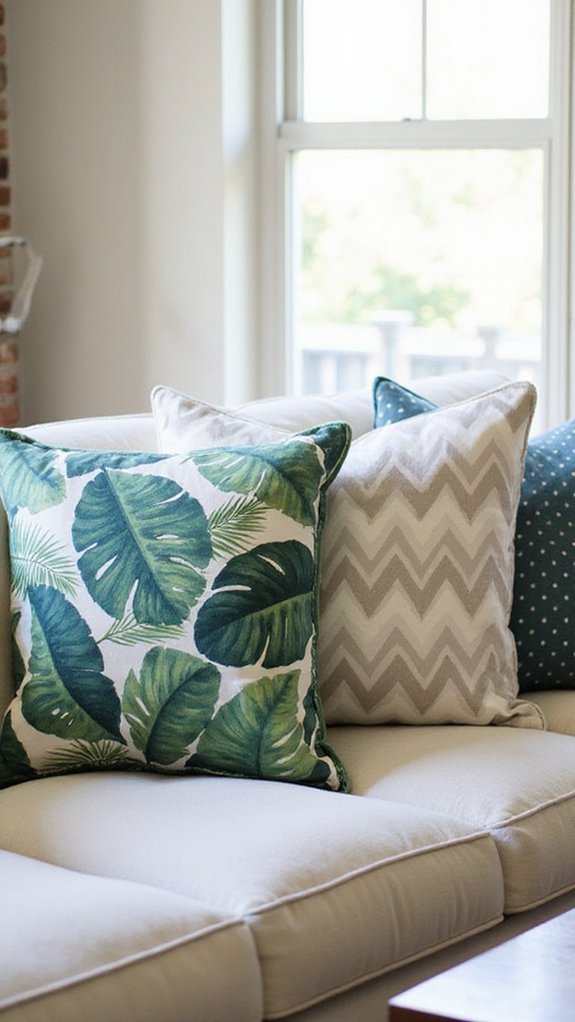
Successful pattern mixing relies on deliberately contrasting scales to create visual hierarchy and dimensional depth within cushion arrangements. Pattern scales must demonstrate significant differentiation large-scale patterns function as dominant focal elements while small patterns provide supporting textural details.
This contrast prevents visual competition between designs, enabling each pattern to maintain distinct identity within the composition. Thoughtful pattern variation enhances decor depth through layered aesthetic principles, where medium-scale motifs bridge transitional spaces between extremes.
Effective mixing patterns requires intentional scale relationships that generate visual interest through calculated opposition rather than arbitrary placement, resulting in professionally arranged compositions with enhanced dimensional complexity.
Apply similar principles when positioning holiday-themed cushions on benches to enhance comfort while maintaining visual balance through coordinated seasonal textiles.
Layer Different Cushion Sizes Strategically

Layer Different Cushion Sizes through systematic layering of varied cushion dimensions establishes architectural foundation through systematic size progression that enhances perception and visual complexity.
Designers anchor arrangements with largest cushions positioned posteriorly, advancing medium pillow sizes forward to generate dimensional depth. Adding accent and lumbar cushions at frontal positions creates visual interest while maintaining structural hierarchy.
Ideal balanced proportions emerge through 2:1 ratios between larger and smaller elements. Within identical scale categories, utilizing varying dimensions—such as 20-inch and 24-inch squares—produces dynamic layered looks.
Cohesive palette consistency across all pillow sizes unifies mixed patterns arrangement, preventing fragmentation while allowing individual motifs to contribute meaningfully to overall composition through systematic layering methodology.
Plush cushions paired with textured materials like knitted blankets create tactile warmth that enhances the comfort and visual appeal of your layered arrangement.
Incorporate Solid Colors and Textures

Solid-colored cushions function as essential visual anchors within patterned arrangements, providing necessary breathing space that prevents overwhelming compositions while establishing foundational stability.
Placement of these decorative cushions creates visual balance while allowing complex patterns to coexist harmoniously.
Textured solids velvet, linen, knits introduce tactile interest without competing visually with busy designs. Color schemes benefit when solid colors utilize complementary hues that either enhance existing patterns or create deliberate contrast for dramatic effect.
Fabric variety through different textures adds dimensional depth while maintaining design harmony. Positioning solid cushions centrally or along the back establishes structural foundation for successful pattern mixing.
These textural elements work particularly well with neutral color palettes that create seamless integration throughout your space.
Frequently Asked Questions
How to Mix Patterned Cushions?
One achieves ideal pattern mixing through color coordination and scale balancing, avoiding color clash while maintaining theme consistency. Thoughtful accent placement creates visual rhythm, blending texture mixing and contrast creation across varied pattern sizes for professional visual balance.
What Is the Rule for Mixing Patterns?
The fundamental rule requires combining three distinct pattern types while maintaining color coordination and scale balancing. Geometric pairing with floral blending prevents pattern clash, while stripe integration and contrast creating through motif matching guarantees visual harmony without overwhelming compositions.
How to Combine Patterns in Interior Design?
Effective pattern combination requires color coordination and scale balancing across motifs. Designers achieve visual weight distribution through texture contrast, color blocking, and pattern repetition while maintaining color harmony and style blending for ideal visual balance.
Should Cushions Be Lighter or Darker Than a Sofa?
Cushion color coordination depends on desired visual balance and color contrast objectives. Lighter tones create airiness while darker shades provide grounding. Consider fabric textures, pattern scale, and placement strategy to achieve ideal style consistency and theme matching within the overall design scheme.
Final Verdict
Successful pattern mixing requires systematic application of design principles to achieve ideal visual cohesion.
Establishing chromatic unity through careful color selection creates foundational harmony, while contrasting organic and geometric motifs generates dynamic tension.
Scale variation establishes visual hierarchy and dimensional depth, complemented by thoughtful size layering that creates structural stability.
The integration of solid elements and varied textures provides essential negative space, preventing visual oversaturation while maintaining polished aesthetic balance throughout the arrangement.
Recommended Products

Color Wheel for Interior Designers Professional Size
Interior design color wheel - Decorator color theory tool
VIEW LATEST PRICE
Havenly Interior Design Service Gift Card $200-500
Interior design service - Home decorating consultation
VIEW LATEST PRICE
Pantone Color Chart Guide Book for Interior Design
Pantone color guide - Interior design color chart
VIEW LATEST PRICE

