


Interior designers recognize layered textiles as essential elements for creating polished, multi-dimensional spaces.
Thoughtful rug and throw placement transforms flat surfaces into rich, tactile environments that engage both visual and physical senses. The practice requires careful consideration of scale, texture contrast, and color relationships to achieve professional results.
Most homeowners struggle with executing these layered looks effectively, often creating cluttered rather than cohesive arrangements.
Five fundamental principles separate amateur attempts from expertly arranged textile compositions.
Start With a Neutral Base Rug That Anchors Your Space

The foundation layer establishes the visual weight and boundaries that define a room’s proportional balance. A large rug measuring 8′ x 10′ or greater creates essential anchoring points without overwhelming the visual field.
Neutral-colored rug selections in jute, sisal, or soft-washed wool provide textural depth while maintaining design flexibility for layered compositions. Natural fiber rug materials contribute organic visual interest through inherent weave patterns and surface variations.
The base rug must complement existing furniture proportions and architectural elements. Pre-measuring with blue painter’s tape ensures ideal positioning before committing to permanent placement within the interior framework.
Light-colored base rugs maximize natural light distribution through enhanced reflectance properties, amplifying the overall luminosity of your layered textile composition.
Layer Complementary Textures for Visual Interest and Comfort

Thoughtful texture combinations elevate layered rugs compositions beyond visual appeal to create multi-sensory environments that engage both sight and touch. Pairing plush foundations with flatweave or sisal overlays generates compelling texture contrast while establishing visual depth throughout the space.
Natural fibers like jute provide structural balance when combined with softer materials, creating refined tactile interest. Smooth throws draped over textured surfaces amplify the sensory experience, contributing to cozy decor that invites interaction.
This deliberate mixing of coarse and refined textures helps delineate zones within open-plan layouts, transforming functional floor coverings into design elements that enhance definition and comfort.
Strategic layering with modular room dividers can further enhance spatial definition while maintaining the cohesive design aesthetic throughout compact living environments.
Follow the 70/30 Rule When Mixing Patterns and Colors
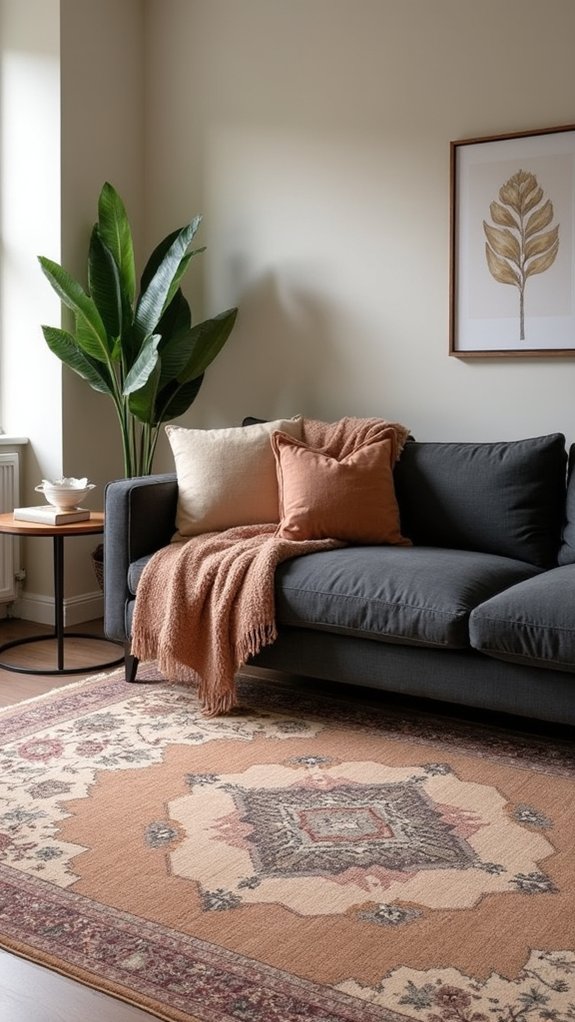
When adding multiple patterns and colors within layered rug compositions, the 70/30 ratio serves as a foundational principle for achieving visual equilibrium throughout the space. This layering approach allocates seventy percent to neutral, subdued elements while reserving thirty percent for bold, contrasting designs.
Effective pattern mixing requires one foundational rug to maintain calm, tonal qualities, balancing vibrant upper layers and preventing visual overload. This rug design method facilitates controlled color balance, allowing patterned pieces to command attention without clashing.
Thoughtful application of this ratio ensures visual harmony within home decor schemes, creating polished, cohesive interiors through measured contrast distribution. Layer floor coverings with accent mats and runners to establish depth and delineate pathways while maintaining this balanced approach to pattern distribution.
Experiment With Different Sizes and Shapes for Dynamic Appeal

Beyond conventional uniform sizing approaches, rug layering achieves visual dynamism through deliberate shape and scale variations that transform perception. Combinations of round over rectangular layered rugs soften angular room geometries while creating compelling visual interest.
Asymmetrical overlaps and intentionally tilted placements generate dynamic movement, establishing less formal atmospheres. Large foundational pieces paired with smaller, uniquely contoured accent rugs oval or irregular silhouettes deliver personalized aesthetics.
Square or rectangular bases enhanced with circular overlays effectively highlight focal zones like seating arrangements. Unexpected pairings, such as linear runners complemented by circular accents, amplify depth through contrasting shapes and sizes.
Similar to effective layered natural materials in seasonal decorating, strategic rug combinations offer tactile variety and visual depth throughout interior spaces.
Add Throws Strategically to Complete the Layered Look

Throws function as essential finishing elements that bridge rug layers with furniture arrangements, establishing cohesive visual flow throughout the space.
Purposeful draping over sofas and chairs at varying angles generates visual interest while cultivating a cozy atmosphere.
Textured fabrics including knit, faux fur, and woven materials introduce tactile variety that complements layered rugs beneath.
Complementary or contrasting colors enhance the aesthetic depth, while folding techniques neat or loose determine the overall formality level.
Positioning throws along furniture edges or draped over rug perimeters creates intentional connections between design elements, resulting in a professionally styled space with dimensional elegance.
Layer different fabric weights and weaves to create dimensional depth that maximizes visual impact within your living area.
Frequently Asked Questions
What Is the Rule for Layering Rugs?
The rule requires establishing size variation with larger base rugs, implementing texture contrast through material selection, achieving color coordination across layers, pattern mixing, and precise placement techniques that maintain visual balance and awareness.
How to Layer Throw Rugs?
Layer throw rugs through thoughtful placement strategies and size balancing, adding texture mixing and material contrast. Achieve visual harmony via color coordination and thoughtful pattern pairing, creating dimensional depth while maintaining flow throughout the designated area.
What Are Some Rug Layering Mistakes to Avoid?
Common rug layering mistakes include pattern mismatch creating visual discord, wrong scale proportions disrupting balance, uneven edges compromising aesthetic alignment, excessive layering overwhelming spaces, poor color coordination clashing harmoniously, and creating slippery surfaces that compromise safety and stability.
Is Layering Rugs Still in Style in 2025?
Yes, layering rugs remains stylish in 2025 modern decor. Designers emphasize color coordination and texture mixing while considering furniture placement. Seasonal styling updates and budget options make this trend accessible for modern arrangements.
Final Verdict
Mastering layered rug and throw composition requires careful planning and deliberate material selection.
The foundation establishes visual weight through neutral base elements, while successive layers introduce textural contrast and dimensional depth.
Adhering to proportional color distribution maintains compositional balance, preventing visual chaos. Geometric variation through diverse silhouettes creates dynamic focal points within the arrangement.
Thoughtful throw placement serves as the final compositional element, unifying disparate textures while enhancing cohesion and functional comfort throughout the interior landscape.
Recommended Products

Havenly Interior Design Service Gift Card $200-500
Interior design service - Home decorating consultation
VIEW LATEST PRICE
Color Wheel for Interior Designers Professional Size
Interior design color wheel - Decorator color theory tool
VIEW LATEST PRICE
Wagner Spraytech Studio Home Decor HVLP Paint Sprayer
Wagner paint sprayer - HVLP sprayer interior
VIEW LATEST PRICE

