


Interior designers increasingly recognize that modern living spaces demand more than aesthetic appeal they require environments that nurture mental well-being and spiritual balance.
Zen-inspired living room layouts offer a thoughtful approach to creating sanctuaries within the home, employing principles of harmony, material authenticity, and intentional minimalism.
These carefully arranged designs transform ordinary rooms into meditative retreats. Five distinct layout concepts emerge as particularly effective in achieving this transformation, each addressing specific aspects of tranquil living.
Also read this: 7 Best Boho-Chic Bedroom Design Ideas
The Open Flow Meditation Space
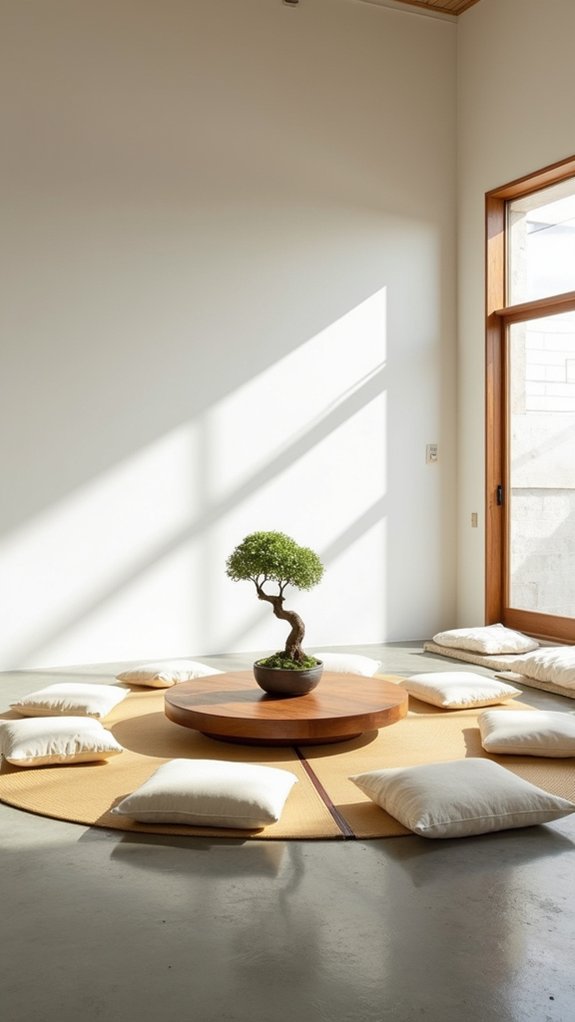
While traditional living rooms often compartmentalize functions through distinct furniture groupings, the open flow meditation space eliminates visual barriers to create an uninterrupted continuum that supports mindful movement and contemplative practices.
This design philosophy maximizes open spaces through low-profile platform seating and minimalist furnishings that maintain sightlines across zones.
Natural materials like wood and organic textiles establish tactile connections to nature while supporting the meditative atmosphere.
Thoughtful placement of sheer window treatments optimizes daylight penetration, while Zen decor elements including indoor plantings and water features enhance the contemplative environment through biophilic design principles.
Strategic implementation of negative space creates compositional balance and highlights focal points while promoting psychological calm through reduced cognitive load.
Sunken Seating Area With Natural Materials

The sunken seating area represents an architectural intervention that creates intimate gathering zones through deliberate floor level manipulation.
This lowered platform configuration establishes hierarchy while maintaining visual continuity through low-profile furnishings and platform-based seating arrangements.
Natural materials including wood, stone, and organic textiles reinforce biophilic design principles essential to authentic Zen spaces. Earthy color palettes in soft upholstery complement the calming material selection, promoting sensory tranquility.
Thoughtful placement of windows or skylights above the sunken zone maximizes natural light penetration, strengthening indoor-outdoor connections while enhancing the expansive quality characteristic of contemplative environments.
Minimalist Symmetrical Arrangement

Symmetrical balance emerges as a fundamental organizing principle that establishes visual equilibrium through precise furniture positioning around designated central anchors.
A minimalist symmetrical arrangement creates harmony by mirroring furniture placement across focal elements like fireplaces or coffee tables. Low-profile platform sofas and tables maintain unobstructed sightlines while reinforcing the serene aesthetic.
Neutral tones throughout the arrangement sustain visual continuity, preventing chromatic disruption of the meditative atmosphere.
Natural materials integrated within this symmetrical framework enhance the Wabi Sabi philosophy of imperfect beauty.
Thoughtful placement of soft textiles and botanical elements completes the composition, fostering deeper environmental connection.
Nature-Focused Conversation Circle

Organic materiality defines the nature-focused conversation circle through targeted placement of wooden furniture and natural textiles that cultivate intimate social engagement within Zen-inspired environments.
Low-profile seating arrangements establish inclusive dialogue zones while maximizing flow. Potted plants function as living architectural elements, bridging interior spaces with natural ecosystems.
Unobstructed fenestration paired with translucent window treatments optimizes daylight penetration, supporting circadian wellness principles.
Minimalist accent placement emphasizes earth-derived elements stone formations, botanical specimens, and nature-inspired artwork creating sensory harmony.
Strategic incorporation of evergreen plants like small potted conifers provides year round structural continuity that anchors the conversation space with living focal points.
This configuration balances organic materials with purposeful negative space, generating contemplative atmospheres that support mindful conversation and environmental connection within residential interiors.
Low-Profile Zen Garden Layout
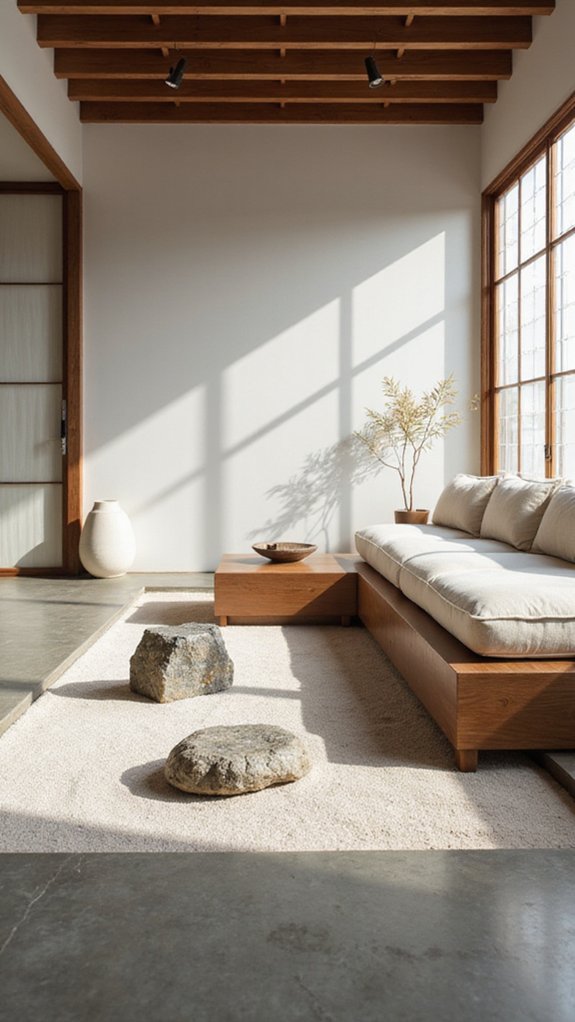
Sunken seating configurations anchor the low-profile Zen garden layout, establishing grounded relationships that dissolve boundaries between interior architecture and meditative landscapes.
Natural materials including smooth stones, sand, and minimalist greenery create focal points that enhance contemplative experiences.
Platform sofas and tables maintain openness while reinforcing horizontal design principles fundamental to Zen aesthetics.
| Design Element | Impact |
|---|---|
| Sunken seating | Immersive ground connection |
| Smooth stones/sand | Meditative focal points |
| Low-lying greenery | Organic visual softness |
Thoughtful placement of water features and bamboo elements amplifies the calming ambiance, creating seamless nature integration within minimalist frameworks through deliberate low-profile furniture selection.
Final Verdict
These five Zen-inspired layouts demonstrate fundamental design principles that prioritize harmony, material authenticity, and environmental integration.
Each configuration employs thoughtful furniture placement, natural element inclusion, and visual balance to create contemplative environments.
The emphasis on horizontal planes, organic textures, and unobstructed circulation patterns establishes spaces conducive to mindfulness while maintaining functional accessibility.
Successful implementation requires careful consideration of scale, proportion, and the interplay between built and natural elements within residential contexts.
FAQs
Recommended Products

Safavieh Milan Shag Collection Large Area Rug 9x12
Large area rug 9x12 - Modern living room rug
VIEW LATEST PRICE
West Elm Mid-Century Modern Console Table Acorn Wood
Mid century console table - Minimalist wood furniture
VIEW LATEST PRICE
West Elm Mid-Century Show Wood Sofa 82 inch
Mid century modern sofa - Farmhouse living room furniture
VIEW LATEST PRICE

