


Interior designers consistently face the challenge of maximizing aesthetic appeal within spatial constraints. Small apartments demand strategic approaches that blend functionality with visual interest, particularly when incorporating vintage elements.
The key lies in understanding how period pieces can enhance rather than overwhelm compact living spaces. Through careful selection and placement principles, vintage decor transforms cramped quarters into sophisticated environments.
These specialized techniques require knowledge of scale, proportion, and design harmony skills that separate successful vintage integration from cluttered amateur attempts.
Also read this: Indoor-Outdoor Home Decor Ideas
Layer Modern and Vintage Pieces for Maximum Impact
How can small apartment dwellers achieve sophisticated design depth without overwhelming their limited square footage? Strategic layering techniques create visual complexity through intentional juxtaposition of temporal aesthetics.

Pairing vintage furniture pieces with contemporary elements establishes dynamic contrast while maximizing spatial efficiency. A distressed mid-century credenza anchored by sleek modern seating exemplifies this principle.
Strategic vintage-contemporary pairings create sophisticated spatial tension, transforming limited square footage into dynamic, efficiently curated living environments.
Modern decor accessories complement antique mirrors and retro wall art, generating textural dialogue without spatial compromise. Cohesive color palettes unify disparate elements, preventing visual fragmentation.
This calculated approach transforms compact environments into curated spaces where vintage character enhances rather than competes with contemporary functionality.
Also read this: 7 Mid-Century Vintage Living Room Decor Ideas
Antiques are the one thing we can buy today that will increase in value tomorrow.
Create Cohesion With Mismatched Vintage Finds
Successfully integrating mismatched vintage pieces requires strategic design principles that prioritize visual unity over individual item origins. Color palette coordination serves as the primary foundation for achieving cohesion.

While symmetrical placement techniques maximize spatial harmony in compact environments. Balancing contrasting vintage styles through intentional arrangement prevents visual chaos and optimizes the perceived scale of small apartment spaces.
Match Color Palettes First
The foundation of any successful vintage aesthetic in compact living spaces begins with establishing a deliberate color palette that unifies disparate decorative elements.
Designers recommend selecting a dominant neutral or base color for walls and primary furniture pieces, creating visual continuity throughout the space.
This strategic approach allows diverse vintage accents from different eras to integrate seamlessly within the overall scheme. Complementary hues should be carefully distributed across textiles, artwork, and accessories to maintain cohesive design principles.
A curated, limited color palette prevents eclectic collections from overwhelming small spaces while maximizing visual harmony and spatial flow.
Use Symmetrical Arrangement Techniques
While disparate vintage pieces may appear chaotic when randomly distributed, strategic symmetrical arrangements transform eclectic collections into cohesive design statements within constrained square footage.
Symmetry establishes visual equilibrium in vintage decor through deliberate placement patterns that maximize spatial impact:
- Position matching vintage lamps or artwork flanking focal points like fireplaces or sofas
- Deploy pairs of antique accessories vases, frames, or candlesticks to unify mismatched elements
- Center statement mirrors with symmetrical side tables creating balanced vignettes
- Align mismatched vintage furniture using consistent spacing intervals to prevent visual discord
- Mirror vintage textile placement throw pillows, runners across seating arrangements for interior design cohesion
Balance Different Vintage Styles
Curating mismatched vintage decor requires strategic cohesion techniques that transform disparate elements into unified design compositions within limited apartment spaces.
Combining mid-century modern pieces with rustic farmhouse elements creates compelling eclectic design when unified through consistent color palettes or matching finishes like distressed wood or antique brass.
Small apartment layouts benefit from symmetrical arrangements using mismatched vintage items—pairing different antique mirrors or side tables maintains visual balance despite stylistic differences.
Strategic layering of similar-toned ceramics and coordinated picture frames establishes connectivity between diverse periods. This approach maximizes personality while preventing overwhelming aesthetics in compact living environments.
Choose Room-Specific Vintage Decor Elements
Room-specific vintage decor implementation requires strategic selection of period-appropriate elements that align with each space’s functional requirements while maximizing visual impact within limited square footage.

Small apartment dwellers must prioritize multi-functional vintage furniture pieces that enhance both aesthetic appeal and storage capacity.
Successful vintage decorating balances authentic period aesthetics with practical storage solutions, especially crucial for maximizing impact in compact living spaces.
Strategic home decor placement guarantees each room maintains distinct character while contributing to overall design cohesion.
- Kitchen spaces: Integrate distressed rustic cabinets and pendant lamps with antique finishes for functional vintage charm
- Bedrooms: Install vintage bedside lamps and distressed dressers with floral curtains for intimate ambiance
- Living areas: Display vintage botanical prints with period-appropriate textiles
- Dining zones: Feature retro tablecloths complementing vintage dishware collections
- Entryways: Position antique mirrors with vintage sconces for welcoming first impressions
Transform Spaces With Vintage Textiles and Fabrics
Beyond furniture placement and room-specific selections, vintage textiles serve as transformative design elements that maximize aesthetic impact while maintaining spatial efficiency in compact living environments.

Antique quilts, grain sack covers, and embroidered linens introduce authentic character without consuming floor space.
Framing vintage scarves creates textured focal points on walls, while thrifted curtains and tablecloths with nostalgic patterns establish cohesive color schemes.
Small apartment decor benefits from repurposed fabrics as upholstery accents or headboards, optimizing functionality.
Strategic layering of contrasting vintage textiles mixing floral and geometric motifs generates visual depth through fabric accents, reinforcing nostalgic aesthetics in constrained square footage.
Add Color Through Strategic Vintage Accents
While neutral palettes provide foundational stability in compact living spaces, strategic vintage color accents maximize visual impact through carefully positioned decorative elements that amplify spatial dynamics without overwhelming square footage constraints.

Effective vintage color integration requires deliberate placement strategies:
- Incorporate vintage accessories like retro blankets and vibrant dishware for immediate visual enhancement.
- Deploy colorful textiles including quilts and patterned rugs to establish warmth while maintaining spatial coherence.
- Position statement furniture pieces such as turquoise armchairs as focal anchors in compact rooms.
- Utilize vintage art with bold hues to create designated visual focal points.
- Balance saturated vintage elements against neutral backgrounds for optimal aesthetic equilibrium.
Maximize Storage With Repurposed Vintage Furniture
Three fundamental principles govern successful vintage furniture repurposing in compact living environments: dual-functionality optimization, vertical space utilization, and hidden storage integration.
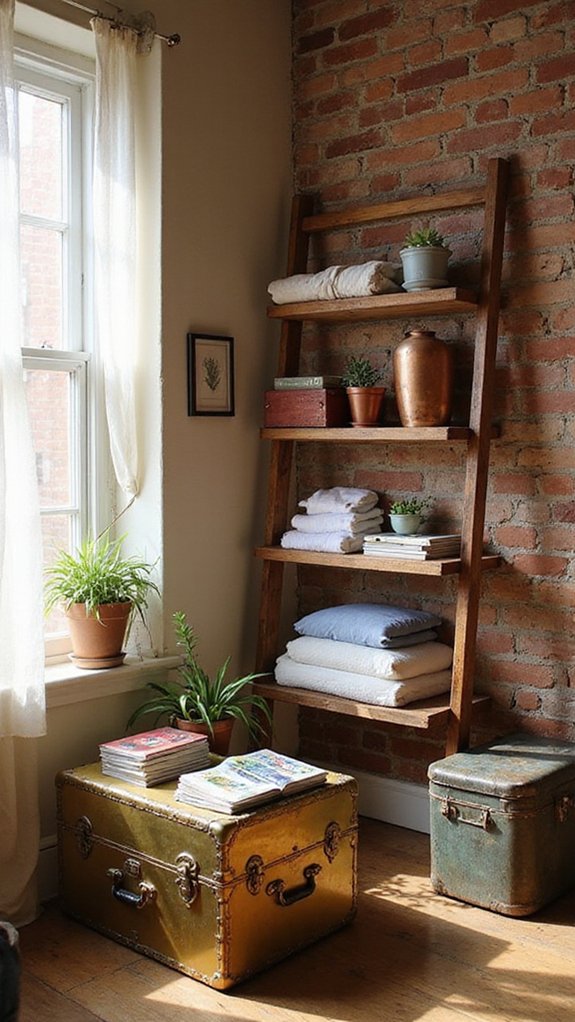
Antique dressers and chests deliver substantial storage capacity while establishing authentic character within small apartment layouts.
Vintage trunks function as coffee tables with concealed compartments, maximizing floor efficiency.
Wall-mounted refinished cabinets eliminate spatial constraints while accommodating books and kitchenware.
Multi-functional elements like repurposed ladders serve as towel racks, expanding storage solutions beyond conventional boundaries.
Vintage furniture featuring built-in compartments sideboards and drawer-equipped bed frames seamlessly combine aesthetic appeal with space optimization, creating cohesive storage solutions for restricted square footage.
Utilize Vertical Space With Vintage-Inspired Shelving
When vertical surfaces remain underutilized, small apartments sacrifice valuable storage potential that vintage-inspired shelving systems can effectively reclaim.

Strategic implementation of vintage shelving transforms walls into functional storage zones while maintaining aesthetic coherence.
Vintage shelving systems transform neglected wall space into stylish storage solutions that maximize functionality while preserving authentic design character.
Effective vertical space optimization strategies include:
- Installing distressed wood wall-mounted units or antique corner shelves for maximum character
- Mounting repurposed vintage crates or wooden pallets as customizable storage solutions
- Implementing vintage wall-mounted spice racks and plate organizers in kitchens
- Incorporating decorative vintage brackets with floating shelves for authentic retro appeal
- Utilizing open vintage shelves for accessible storage without countertop clutter
This approach maximizes small apartment functionality while preserving vintage design integrity.
Incorporate Thrifted Items for Budget-Friendly Style
Thrift stores and secondhand markets provide cost-effective access to authentic vintage pieces that maximize decorative impact within constrained apartment budgets.

Strategic procurement from these sources requires developing systematic shopping approaches that identify high-value items suitable for small-space applications.
Successful vintage integration involves balancing curated thrifted discoveries with contemporary furnishings to achieve cohesive aesthetic schemes without overwhelming limited square footage.
Smart Thrift Shopping Strategies
Strategic sourcing through secondary markets enables apartment dwellers to acquire authentic vintage furniture while maintaining strict budgetary parameters.
Effective thrift shopping requires systematic approaches to maximize small apartment decor potential within constrained square footage.
Essential thrift shopping methodologies include:
- Multi-platform reconnaissance – Monitor local thrift stores, flea markets, and online resale platforms simultaneously
- Authentication assessment – Prioritize pieces with genuine patina and distinctive character over mass-produced replicas
- Dimensional compatibility – Measure spaces beforehand to ensure proportional harmony in compact layouts
- Budget allocation discipline – Establish spending limits to prevent financial overextension during acquisition phases
- Temporal persistence – Maintain regular browsing schedules as premium vintage pieces experience rapid turnover rates
Mixing Thrifted With New
The artful integration of vintage acquisitions with contemporary furnishings creates sophisticated design narratives that maximize aesthetic impact while preserving budgetary constraints in compact living environments.
Thrifted vintage side tables or dressers positioned alongside modern seating establish layered depth within limited square footage.
Strategic placement of antique accessories vases, frames, wall art introduces character without spatial overwhelm. Contemporary cabinetry paired with vintage hardware achieves balanced aesthetics through calculated contrast.
Retro textiles from secondhand sources inject color and texture affordably. Successful eclectic decor emerges through curated color palette coherence, ensuring thrifted elements complement existing contemporary pieces for harmonious small apartment design execution.
Design Multi-Functional Areas With Antique Pieces
Multi-functional design principles become essential when working with limited square footage, particularly when incorporating vintage elements that must serve dual purposes.

Antique furniture pieces excel in space-saving decor applications when selected strategically for their versatility and storage capabilities.
Strategic vintage furniture selection transforms limited spaces by merging timeless aesthetics with essential storage and multi-functional capabilities.
- Incorporate antique side tables or chests as storage solutions that double as decor accents in multi-functional small spaces.
- Use vintage fold-out screens or room dividers made from repurposed antique materials to define distinct zones.
- Place antique buffets or cabinets in dining or work areas to maximize storage while adding character.
- Select multi-use vintage furniture, such as foldable desks serving workspace and decorative functions.
- Layer vintage decor elements creating cohesive, versatile zones blending style with function.
Enhance Small Kitchens With Retro Appliances and Accessories
Small kitchen spaces benefit dramatically from carefully selected retro appliances that maximize both aesthetic appeal and functional efficiency within constrained square footage.

Vintage appliances like compact 1950s-style refrigerators and scaled-down retro stoves deliver period authenticity without overwhelming limited space.
Strategic placement of retro accessories including colorful enamelware and vintage dishware creates visual depth while maintaining functionality.
| Appliance Category | Vintage Option | Space-Saving Feature |
|---|---|---|
| Refrigeration | 1950s-style compact fridge | Apartment-sized footprint |
| Cooking | Retro countertop stove | Portable, multi-functional |
| Food prep | Antique toaster | Vertical storage capability |
| Beverage | Old-fashioned coffee pot | Wall-mountable design |
| Storage | Vintage canisters | Stackable configuration |
Integrating period-appropriate signage and decorative hardware enhances kitchen decor cohesion.
Final Verdict
Successful vintage-inspired small apartment design requires systematic integration of carefully curated elements that maximize both aesthetic impact and spatial efficiency.
Through strategic layering, cohesive color coordination, and purposeful selection of multi-functional vintage pieces, designers can achieve ideal space utilization while maintaining authentic period character.
Vertical storage solutions, room-specific focal points, and budget-conscious thrifting create harmonious environments that demonstrate how thoughtful curation transforms spatial constraints into distinctive design advantages within compact living quarters.
FAQs
Recommended Products

Color Wheel for Interior Designers Professional Size
Interior design color wheel - Decorator color theory tool
VIEW LATEST PRICE
Vintage Glass Bottle Vase Set with Small American Flags Centerpiece Kit
Vintage bottle vase patriotic - Americana centerpiece kit
VIEW LATEST PRICE
Bethany Lowe Designs Black Cat Silhouette Halloween Lantern
Bethany Lowe cat lantern - Vintage Halloween black cat
VIEW LATEST PRICE

