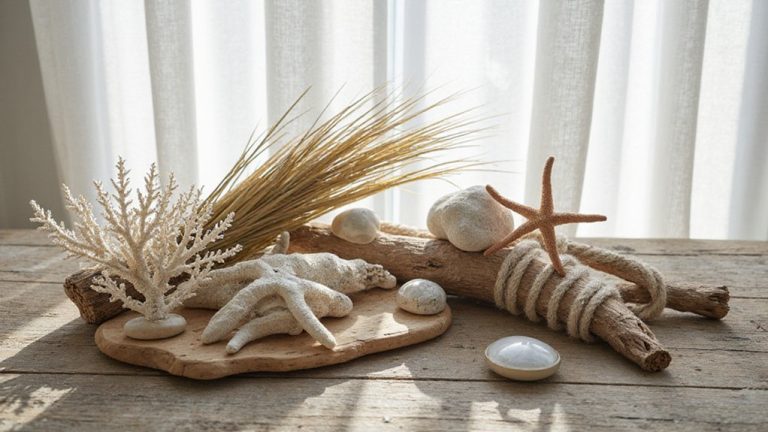


Interior design professionals recognize Japandi aesthetics as the ideal fusion of Scandinavian minimalism and Japanese wabi-sabi principles.
This refined palette approach transforms standard apartment spaces through deliberate color selection, planned material integration, and calculated lighting implementation.
The methodology requires precise execution of five fundamental styling techniques that establish visual harmony while maintaining functional simplicity.
Each element builds systematically toward achieving the distinctive serenity characteristic of authentic Japandi interiors, yet mastering their proper sequence remains the critical challenge.
Start With Neutral Base Colors and Layer Different Tones

How does one establish the foundational palette that defines Japandi aesthetics? Begin with a neutral base of white, beige, or light gray walls to create the essential neutral foundation.
Layer multiple neutral tones including taupe, oatmeal, and soft greys across surfaces to build depth and dimension. Apply lighter neutrals to dominant elements like walls and flooring, then introduce warm neutrals through accent pieces for visual contrast.
Include subtle variations within textiles and furniture to enhance dimensionality while preserving harmonious color progressions.
This systematic layering shades approach maintains the minimalist tranquility central to authentic Japandi color palette execution.
Soft whites and off-whites function as the most effective foundation colors because they masterfully reflect natural light to create the illusion of expanded space while providing a versatile foundation that accommodates diverse accent colors.
Incorporate Natural Materials Like Wood and Bamboo for Warmth

Building upon the established neutral foundation, natural materials serve as the primary method for introducing warmth and tactile richness into Japandi interiors. Wood and bamboo elements create textured surfaces that balance minimalist aesthetics with organic comfort.
Thoughtful placement of wooden furniture low tables, chairs, and shelving establishes visual anchoring points throughout the space. Natural wood tones including oak, walnut, and ash generate depth through tonal variation.
Wall paneling and bamboo screens introduce sustainable elements while maintaining clean lines. Handcrafted pieces emphasize superior craftsmanship, showcasing natural grain patterns.
This integration of natural materials transforms sterile environments into warm, organic spaces that embody authentic Japandi principles.
Textural layering creates visual continuity across seating, rugs, and accessories while maintaining the essential harmony between natural elements and minimalist design.
Balance Light Neutrals With Strategic Black Accents

While light neutrals establish the foundational serenity of Japandi design, purposeful black accents provide essential visual contrast that prevents the palette from appearing washed out or monotonous.
These carefully positioned elements lighting fixtures, furniture legs, and hardware create refined depth while preserving minimalism’s core principles.
Black accents should maintain matte finishes to guarantee understated elegance aligns with natural texture emphasis. Unlike bohemian design that embraces bold color palettes anchored by earthy tones, Japandi styling relies on this restrained contrast approach to achieve visual sophistication.
| Element Type | Application | Design Impact |
|---|---|---|
| Furniture | Chair frames, table legs | Defines organic shapes |
| Lighting Fixtures | Pendant lamps, sconces | Anchors neutral colors |
| Decor | Picture frames, vases | Enhances visual hierarchy |
This contrast methodology reinforces clean architectural lines while maintaining tranquil harmony.
Add Texture Through Natural Fiber Rugs and Wall Hangings

Black accents establish visual hierarchy through contrast, yet texture remains the primary vehicle for achieving authentic Japandi tactile interest.
Natural fiber rugs crafted from jute, sisal, or seagrass introduce organic warmth through varied surface textures.
Wall hangings utilizing woven materials like rattan and bamboo enhance minimalist compositions while delivering subtle dimensional depth.
Layered textures emerge through thoughtful rug placement, creating refined visual complexity within neutral palettes.
Handcrafted elements featuring rustic finishes embody Wabi-Sabi principles, celebrating natural imperfections as aesthetic assets.
This textured integration establishes material harmony, reinforcing the earthy, organic foundation essential to authentic Japandi design methodology.
Strategic placement following visual hierarchy principles ensures each textural element contributes meaningfully to the overall composition without creating visual clutter.
Maximize Natural Light With Warm Dimmable Fixtures
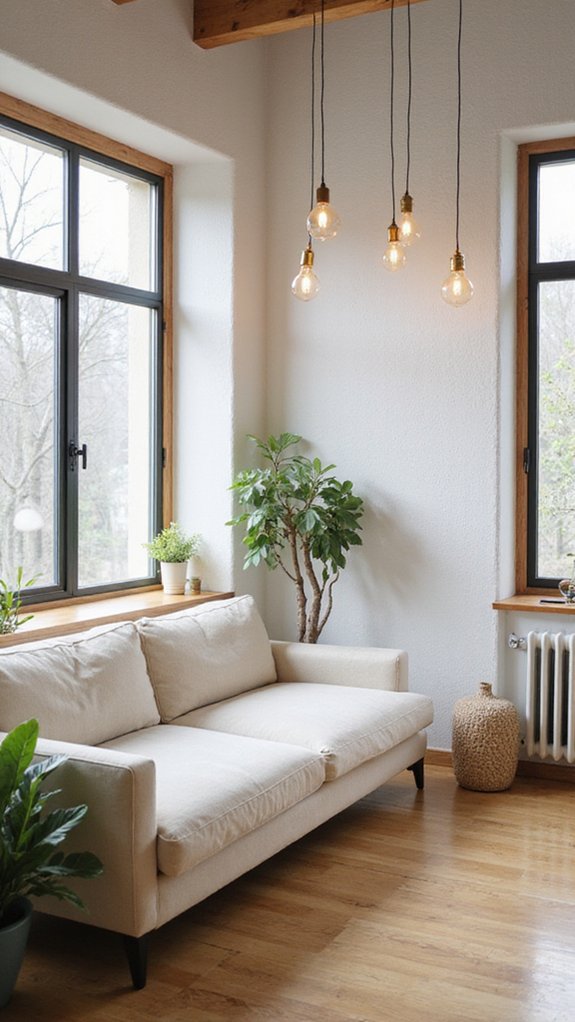
Natural light optimization requires careful fixture selection that amplifies rather than competes with daylight penetration. Thoughtful placement of warm fixtures near large windows with light filtering curtains maximizes luminous transmission while minimizing harsh shadow formation.
Dimmable lighting systems featuring rice paper lanterns and minimalist lighting fixtures create uniform ambient glow distribution throughout interior spaces. Installation of dimmer switches on all electrical circuits enables precise brightness modulation for temporal lighting requirements.
Selecting fixtures in neutral tones ensures seamless integration with established color schemes, maintaining authentic Japandi ambiance through cohesive design methodology and enhanced natural light utilization.
Layered lighting techniques combining different fixture types and targeted illumination create visual depth and hierarchy within minimalist interior spaces.
Frequently Asked Questions
What Are the 7 Rules of Japandi Home Style?
Japandi’s seven principles encompass minimalist furniture, natural materials, neutral tones, functional design, balanced contrast, organic textures, and understated elegance. These rules integrate cozy textiles, simple decor, and muted palettes to achieve harmonious, clutter-free living spaces.
Is Japandi Still in Style in 2025?
Yes, Japandi remains highly relevant in 2025, featuring sustainable materials, minimalist furniture, and neutral tones. Modern interpretations emphasize natural textures, functional decor, eco-friendly lighting, handcrafted details, open layouts, and organic shapes with cozy accents.
What Are the Best Colors for Japandi?
Optimal Japandi color schemes utilize neutral tones, warm browns, and soft greys as foundational elements. Designers use earthy shades, beige tones, and charcoal blacks for contrast, while muted pastels and subdued greens provide subtle accent points within the monochrome palette.
How to Decorate Japandi Style?
Japandi decoration employs minimalist furniture with clean lines, organic materials like bamboo, neutral palettes in muted tones, natural textures through cozy textiles, ambient lighting fixtures, functional decor pieces, and clutter-free spaces emphasizing visual harmony.
Final Verdict
Successful Japandi apartment styling requires systematic implementation of five core principles: establishing neutral color foundations, integrating natural material compositions, achieving tonal balance through deliberate contrast placement, including tactile surface treatments, and optimizing luminosity through controlled lighting systems.
This methodical approach creates harmony through deliberate material selection, chromatic restraint, and textural layering.
The resulting aesthetic framework delivers minimalism while maintaining organic warmth, demonstrating how calculated design interventions produce refined residential environments that embody authentic Japandi design philosophy.
Recommended Products

Pantone Color Chart Guide Book for Interior Design
Pantone color guide - Interior design color chart
VIEW LATEST PRICE
Havenly Interior Design Service Gift Card $200-500
Interior design service - Home decorating consultation
VIEW LATEST PRICE
Canva Pro Annual Subscription Digital Design Platform
Canva Pro subscription - Digital mood board tool
VIEW LATEST PRICE