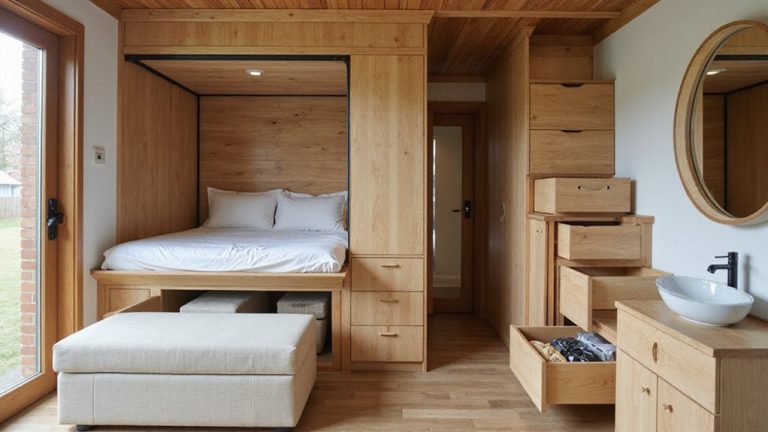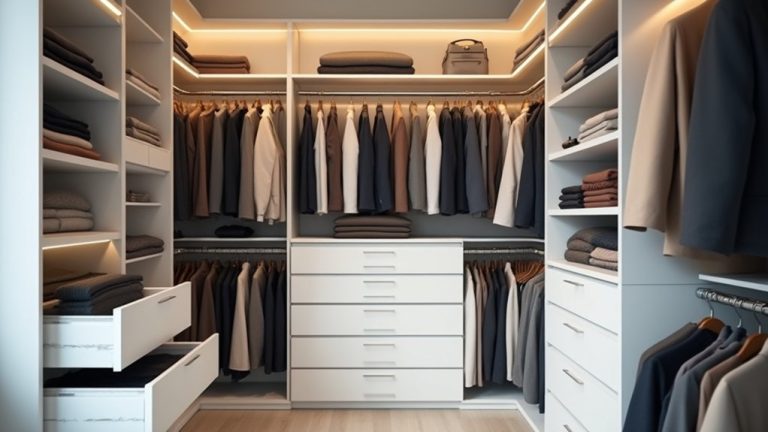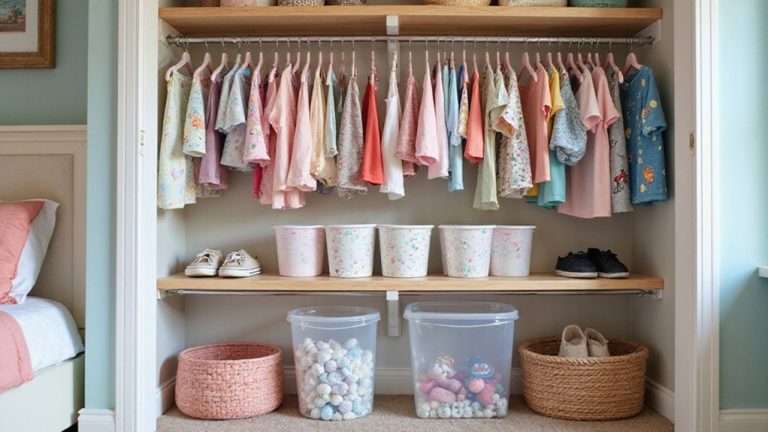


Space optimization experts recognize that standard closet configurations waste approximately 40% of available cubic footage through inefficient vertical utilization and neglected zones.
Professional organizers employ systematic approaches to reconfigure these compact storage environments, transforming underperforming areas into high-capacity organizational systems.
Methodical implementation of multi-level frameworks, specialized mounting hardware, and geometric storage solutions can effectively triple functional capacity within existing parameters.
These systematic interventions address the fundamental challenge of maximizing density while maintaining accessibility and visual coherence.
Maximize Vertical Space With Multi-Level Storage Systems

When confronting the limitations of diminutive closet dimensions, multi-level storage systems emerge as the most effective solution for vertical space optimization.
Adjustable shelving units accommodate diverse clothing types while maximizing available height through organized sectioning. Cascading hangers effectively double hanging capacity, enabling vertical garment arrangement without compromise.
Clear drawer storage positioned on elevated shelves maintains seasonal footwear organization while preventing floor-level accumulation. Pegboards integrated into wall surfaces provide additional vertical storage for accessories and bags.
This systematic approach transforms restrictive closet environments into highly functional storage ecosystems, achieving maximum efficiency through engineered vertical utilization methods.
Transform Dead Space With Strategic Shelf Placement

Thoughtful shelf placement transforms previously unusable closet areas into functional storage zones through systematic identification and optimization of dead space.
Modular shelving systems installed in awkward corners, sloped walls, and narrow vertical strips beside doors create additional cubic footage without compromising floor space or accessibility.
Above-door installations and corner-specific configurations maximize three-dimensional storage capacity while maintaining organizational efficiency in compact closet environments.
Awkward Corner Solutions
Most closet corners represent underutilized cubic footage that can be transformed through calculated shelf placement and specialized storage solutions.
Corner shelving units maximize awkward corner spaces by creating dedicated zones for shoes and accessories. Vertical storage systems with floating shelves convert dead space into functional areas, while stackable bins maintain organizational efficiency within confined dimensions.
| Solution Type | Storage Method | Item Categories |
|---|---|---|
| Floating Shelves | Wall-mounted units | Frequently used items |
| Stackable Bins | Modular containers | Small accessories |
| Custom-built Corner Cabinets | Fitted installations | Multiple categories |
Planned hook placement and pegboard systems optimize vertical real estate for bags and jewelry storage.
Modular components enable flexible reconfiguration as storage needs evolve, allowing corner solutions to adapt to changing wardrobe requirements while maintaining structural organization.
Above Door Storage
Above door areas present ideal vertical territory for systematic storage expansion beyond traditional corner configurations.
Installing floating shelves or wall-mounted cabinets transforms previously unutilized overhead space into functional storage zones. These installations maximize storage capacity without compromising floor accessibility or traffic flow patterns.
Adjustable shelving systems accommodate varying item dimensions while maintaining organizational flexibility for evolving storage requirements. Thoughtful placement of seasonal items, decorative bins, and infrequently accessed belongings optimizes space utilization efficiency.
Above door storage solutions require periodic content evaluation and rotation protocols to prevent accumulation disorders. Decorative bins maintain visual coherence while ensuring retrieval accessibility when storage access becomes necessary.
Vertical Wall Maximization
Underutilized vertical surfaces within confined closet environments represent substantial storage potential through systematic shelf integration methodologies. Install shelves above hanging rods to maintain garment clearance while expanding storage solutions.
Floor-to-ceiling configurations maximize vertical space utilization in constrained footprints. Modular shelving systems accommodate irregular wall angles, converting problematic areas into functional zones.
| Shelf Configuration | Accessibility Rating | Capacity | Best Use |
|---|---|---|---|
| Above Rod Mounting | High | Medium | Daily Items |
| Floor-to-Ceiling | Variable | Maximum | Seasonal Storage |
| Narrow Vertical Units | Excellent | High | Folded Garments |
| Modular Strip Systems | Good | Flexible | Custom Applications |
Planned placement requires periodic assessment to optimize closet organization effectiveness.
Double Your Hanging Capacity With Simple Rod Additions

When vertical space remains underutilized in compact closets, installing a secondary hanging rod beneath the primary rod maximizes storage capacity through layering.
This affordable solution enables users to double your hanging capacity by positioning the second rod at ideal heights using chains or S-hooks.
The configuration creates an organized system where shorter garments occupy lower tiers while maintaining clearance for full-length items above.
Height adjustment prevents interference between clothing categories, ensuring efficient vertical space utilization.
This systematic approach delivers enhanced accessibility and visibility while providing an economical method to maximize space in small spaces without structural modifications.
Create Instant Organization With Clear Labeled Bins

Beyond maximizing hanging capacity through rod systems, clear labeled bins transform chaotic storage areas into methodical organizational frameworks.
These transparent containers enable immediate visual identification of contents, eliminating rummaging behaviors while facilitating rapid retrieval of seasonal clothing items.
Stackable clear bins optimize vertical space utilization in constrained closet environments, maintaining floor accessibility for movement efficiency.
Category-specific labeling systems—designating shoes, accessories, and garments—establish systematic organization protocols.
Regular label updates support ongoing decluttering initiatives, ensuring accurate content identification.
Color-coded labeling enhances aesthetic integration while providing secondary organizational hierarchies, creating extensive storage solutions that maximize efficient use of limited resources through thoughtful compartmentalization.
Repurpose Household Items for Creative Storage Solutions

| Household Item | Storage Application |
|---|---|
| Wine Crates | Shoe/accessory containers |
| Over-door Organizer | Small item compartmentalization |
| Tension Rod | Belt/tie hanging system |
| Mason Jars | Component organization units |
| Ladder | Vertical display shelving |
Professional architects recommend implementing multi-functional repurpose strategies that convert existing materials into optimized storage infrastructures, eliminating procurement costs while achieving maximum organizational density within limited dimensional parameters.
Utilize Door Space for Hidden Storage Opportunities
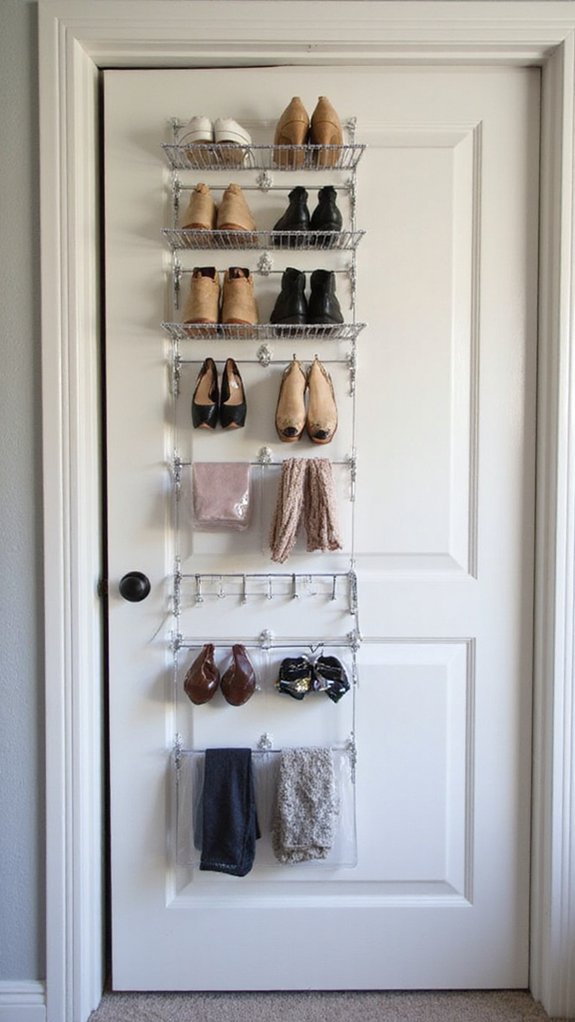
Door surfaces represent untapped vertical storage real estate that can greatly expand closet capacity without requiring additional floor space.
Over-door organizer systems, back-door hanging solutions, and door-mounted storage racks transform these overlooked areas into functional storage zones that maintain accessibility while concealing items from view.
Thoughtful implementation of door-based storage solutions maximizes efficiency by converting previously unused surfaces into organized storage infrastructure.
Over-Door Organizer Systems
Most closet doors represent untapped vertical storage real estate that can accommodate organizational systems without compromising floor space or interior shelving capacity.
Over-door organizers transform this underutilized zone into functional customizable storage through multi-compartment configurations. These adjustable systems accommodate diverse inventory footwear, accessories, toiletries while maintaining easy access protocols.
The storage solution optimizes small space efficiency by redistributing items from overcrowded shelving units onto door-mounted platforms. Thoughtful implementation facilitates systematic decluttering your closet through designated compartmentalization.
These versatile installations adapt to standard door specifications, enabling immediate closet space expansion without structural modifications or permanent mounting hardware requirements.
Back-Door Hanging Solutions
Thoughtful placement of hanging mechanisms on closet door interiors creates concealed storage zones that maximize efficiency without visual disruption.
Over-the-door organizers transform the back of your closet into functional vertical storage, accommodating shoes, accessories, and cleaning supplies without consuming floor area.
Hanging shoe organizers featuring multi-pocket configurations effectively house belts, ties, and jewelry while liberating shelf space.
Hooks and racks mounted on door backs optimize accessibility for scarves, bags, and hats.
Slim shelving systems guarantee unobstructed door movement while utilizing every available inch.
Customizable over-the-door solutions adapt to specific storage requirements, maintaining a clutter-free environment through systematic organization principles.
Door-Mounted Storage Racks
Expanding beyond basic hanging solutions, specialized rack configurations mounted directly to door surfaces create advanced storage ecosystems that capitalize on vertical real estate.
Door-mounted storage systems transform underutilized space behind closet doors into functional organizers for accessories and seasonal items. Multi-tiered pocket configurations, adjustable shelving units, and modular hook assemblies accommodate diverse storage requirements while maintaining accessibility protocols.
These installations eliminate floor-level clutter through targeted vertical deployment, enabling homeowners to enhance storage capacity without compromising interior circulation patterns.
Implementation requires minimal hardware investment, typically utilizing tension-based or adhesive mounting systems that preserve door integrity while maximizing efficiency within constrained environments.
Implement Smart Hanger Techniques to Reclaim Space

When conventional hanging methods fail to maximize vertical real estate, cascading hanger systems provide the primary solution for space-constrained closets.
These targeted configurations transform limited hanging capacity through systematic vertical stacking methodologies.
Professional organizers recommend these storage system optimizations to create space in your closet:
- Cascading hangers – Double vertical capacity for shirts and blouses through systematic stacking
- Soda tab connectors – Ingenious linking mechanism expanding hanging infrastructure
- Clip-on configurations – Horizontal space preservation for pants and skirts
- Shower ring integration – Efficient accessory organization for items like socks and scarves
- Slim non-slip profiles – Streamlined closet storage preventing garment displacement
These creative closet solutions rival clever IKEA hacks for optimization efficiency.
Frequently Asked Questions
How Do I Maximize Space in My Tiny Closet?
Ideal space utilization requires implementing vertical storage systems, multifunctional hangers, and hanging organizers. Add drawer dividers, seasonal rotation protocols, under bed storage solutions, and foldable furniture to achieve maximum cubic capacity efficiency in constrained closet environments.
How to Use Dead Space in a Closet?
One maximizes closet dead space through dead corner solutions, vertical shelving options, under hanging racks, hidden drawer integration, over the door organizers, storage bins stacking, and multi functional hangers for ideal optimization efficiency.
How to Make a Narrow Closet More Functional?
Optimize narrow closets through targeted shelf organizers, dual-level hanging racks, vertical bins for shoe storage, multi-use hangers maximizing capacity, enhanced closet lighting for visibility, and systematic seasonal rotation protocols to maintain efficiency and accessibility.
How to Store Clothes in a Very Small Space?
Optimize small spaces through effective folding techniques, space-saving hangers, and vertical storage systems. Implement seasonal rotation with drawer organizers, maximize under-bed storage capacity, and utilize closet dividers for systematic compartmentalization and enhanced efficiency.
Final Verdict
Through systematic implementation of these seven optimization methodologies, storage capacity in constrained closet environments can be increased by up to 300%.
The integration of vertical multiplication systems, targeted compartmentalization, and geometric efficiency principles creates a thorough organizational framework.
These evidence-based techniques demonstrate that effective space utilization requires understanding dimensional relationships and maximizing cubic footage through calculated placement of storage infrastructure and repurposed organizational components within existing architectural parameters.
Recommended Products

Elfa Classic White Custom Closet Organization System
Elfa closet system - Modular closet organization
VIEW LATEST PRICE
mDesign Wire Storage Baskets for Closet Organization Set of 8
Wire storage baskets - Closet wire baskets
VIEW LATEST PRICE
IKEA PAX Wardrobe System 98.5x23.6x93.1 inch White
IKEA PAX wardrobe system - Modular closet system
VIEW LATEST PRICE