


Transforming an outdoor patio into an authentic farmhouse retreat requires thoughtful material selection and purposeful plant integration.
The process demands careful consideration of weatherproof elements, layout organization, and botanical choices that complement rustic aesthetics.
Successful farmhouse patios balance functional durability with visual warmth through deliberate layering of textures, controlled lighting schemes, and carefully selected greenery.
Each design decision must serve both practical outdoor living needs and the distinctive character that defines true farmhouse style.
Choose the Right Materials for Authentic Farmhouse Appeal
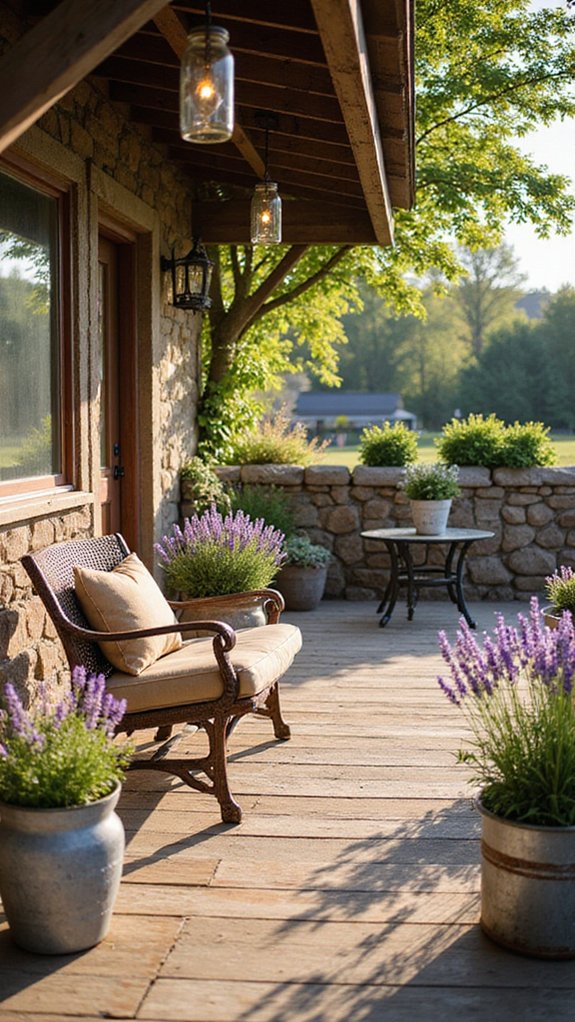
Material selection forms the foundation of successful farmhouse patio design, where authenticity emerges through deliberate choices that honor traditional agricultural aesthetics.
Natural materials establish core design integrity through reclaimed wood applications that deliver environmental sustainability while providing textural warmth.
Stone elements create structural permanence through brick installations and fieldstone accents that anchor the composition.
Wrought iron fixtures introduce industrial heritage through furniture frames and architectural details that resist weathering.
Concrete surfaces achieve versatility through decorative treatments mimicking traditional substrates.
Terra-cotta pots function as both horticultural vessels and outdoor decor, supporting herb cultivation while reinforcing agricultural connections essential to authentic farmhouse environments.
Create Defined Zones for Dining and Relaxation

Thoughtful organization transforms undifferentiated patio expanses into purposeful outdoor rooms that serve distinct functional requirements while maintaining visual cohesion.
Large area rugs establish clear boundaries between dining area and seating area configurations, creating defined zones through textural contrast.
Strategic rug placement transforms expansive outdoor spaces into distinct functional zones through deliberate textural definition and visual boundary creation.
Contrasting outdoor furniture styles—sturdy farm tables with molded chairs versus plush sectionals reinforce functional distinctions while preserving farmhouse style authenticity.
Thoughtful planter placement creates natural barriers using ornamental grasses or boxwood hedging, providing organic separation without visual obstruction.
Layered ambient lighting systems, including string lights and lanterns, delineate evening zones while capitalizing on scenic sightlines through calculated furniture positioning.
Weather-resistant fabrics like acrylic and polyester ensure durability across zones while maintaining the aesthetic integrity of your functional outdoor spaces.
Select Comfortable Seating With Cozy Textiles

Effective farmhouse patio seating requires furniture constructed from weather-resistant materials such as teak, powder-coated aluminum, or all-weather wicker that withstand seasonal temperature fluctuations and moisture exposure.
Thoughtful layering of outdoor-specific textiles including solution-dyed acrylic cushions, waterproof throw pillows, and fade-resistant blankets creates visual depth while maintaining functional durability.
The integration of neutral-toned fabrics with subtle geometric or botanical patterns establishes cohesive design continuity that complements surrounding plantings and architectural elements.
Incorporating outdoor rugs beneath seating arrangements helps define functional zones while adding textural interest and protecting deck surfaces from furniture wear.
Choose Durable Outdoor Furniture
Several key material considerations define the foundation of successful farmhouse patio furniture selection, where wicker, wood, and dark metal emerge as ideal choices for their inherent resistance to UV degradation, moisture penetration, and thermal expansion cycles.
Durable outdoor furniture requires neutral-toned bases that accommodate seasonal textile variations while maintaining structural integrity. Comfortable seating options featuring thick cushions with weatherproof fabrics guarantee longevity during temperature fluctuations.
Thoughtful patio makeover planning includes multifunctional furniture like sectional configurations that optimize space utilization.
Farmhouse style principles emphasize material authenticity, where natural wood grain patterns and metal patinas develop protective oxidation layers that enhance both aesthetic character and functional performance.
Strategic placement of furniture pieces with rounded edges enhances safety while maintaining the rustic aesthetic appeal that defines farmhouse outdoor living spaces.
Layer Soft Weather-Resistant Fabrics
While structural furniture establishes the foundational framework, textile layering transforms utilitarian outdoor spaces into inviting farmhouse retreats through thoughtful fabric selection that prioritizes both environmental resilience and tactile comfort.
Weather-resistant outdoor fabrics like acrylic and polyester maintain structural integrity while delivering softness essential for farmhouse style authenticity.
| Fabric Type | Weather Resistance | Comfort Level |
|---|---|---|
| Acrylic | High UV/fade resistance | Moderate softness |
| Polyester | Moisture repellent | Enhanced texture |
| Polypropylene | Superior durability | Structured support |
Thick cushions and throw pillows in neutral palettes create cozy atmosphere foundations, while layered blankets provide thermal regulation for extended outdoor seating functionality across seasonal variations.
Add Ambient Lighting for Evening Enjoyment

As daylight fades and outdoor entertaining extends into twilight hours, thoughtful lighting placement becomes essential for maintaining both functionality and farmhouse charm.
Implementing layered ambient lighting transforms any outdoor space into an enchanting venue for evening gatherings.
String lights draped along pergola beams create overhead warmth, while solar-powered lanterns positioned at varying heights establish visual rhythm. This cozy illumination approach combines practicality with rustic aesthetics.
- Install dimmable LED fixtures around dining zones for adjustable brightness control during intimate dinners versus lively celebrations.
- Layer multiple light sources including fairy lights, wall-mounted sconces, and pendant fixtures for dimensional depth.
- Position solar lanterns carefully on tables and pathways to minimize maintenance while maximizing atmospheric impact.
Incorporate Natural Greenery and Seasonal Flowers

Plant placement forms the foundation of authentic farmhouse patio design, where carefully selected specimens create visual layers that complement architectural elements.
Natural greenery through potted plants, herbs, and succulents establishes baseline vibrancy while seasonal flowers in terracotta pots provide dynamic color shifts. Climbing plants on trellises create vertical interest and natural shade zones.
Create textural contrast by pairing broad-leaf plants with fine-textured specimens and incorporating height variation through low groundcovers, medium shrubs, and tall ornamental grasses for enhanced visual depth.
| Plant Category | Container Type | Seasonal Timing | Design Function |
|---|---|---|---|
| Herbs | Terracotta pots | Year-round | Functional greenery |
| Annual flowers | Colorful containers | Spring/Summer | Color bursts |
| Succulents | Clay vessels | Continuous | Low-maintenance structure |
| Climbing vines | Trellis systems | Growing season | Vertical screening |
Regular seasonal rotation maintains farmhouse style authenticity while optimizing outdoor space functionality.
Use Weatherproof Rugs to Define Outdoor Spaces

Weatherproof rugs function as foundational design elements that establish distinct boundaries within farmhouse patio environments, transforming expansive hardscape surfaces into purposeful zones through material placement.
These durable textiles define outdoor spaces through calculated positioning, creating visual anchors that complement surrounding plantings and architectural elements.
Polypropylene-constructed outdoor rug selections provide ideal weather resistance while maintaining aesthetic cohesion with farmhouse design principles.
- Zone Delineation: Position rugs beneath seating clusters to establish conversational areas separate from dining zones
- Pattern Integration: Select geometric or botanical motifs that echo nearby plant textures and foliage patterns
- Scale Proportioning: Choose dimensions that accommodate furniture groupings with 18-24 inch perimeter spacing
Solution-dyed acrylic fabrics maintain superior color vibrancy and UV protection while offering quick-drying properties essential for outdoor farmhouse environments.
Personalize With Rustic Accessories and Decor Elements

Rustic accessories establish authentic farmhouse character through deliberate material selections that emphasize weathered textures and agricultural heritage elements within outdoor patio compositions.
Weathered wood planters and galvanized buckets create functional focal points while supporting potted herbs that enhance both aesthetic appeal and practical utility.
Cozy throw pillows featuring plaid patterns introduce textile contrast against hard surfaces, following design principles of material balance.
Mason jar lanterns provide ambient illumination, transforming evening outdoor living space dynamics.
These decorating ideas cultivate cohesive farmhouse backyard environments through thoughtful placement of vintage garden tools and handcrafted signage that reflect personalized agricultural authenticity within modern patio frameworks.
Frequently Asked Questions
What Is the Best Color for the Exterior of a Farmhouse?
White exterior paint optimizes farmhouse aesthetics through color psychology principles. Light siding options create foundational neutrality, while dark trim contrasts establish visual hierarchy. Roofing choices should complement seasonal palettes, with sage-green accents mimicking native vegetation for cohesive landscape integration.
What Trend Is Replacing Farmhouses?
Modern cottage aesthetics are replacing farmhouses, blending Scandinavian simplicity with vintage bohemian elements. Design principles emphasize coastal vibes through native plant integration, while rustic elegance meets modern minimalism, creating biophilic spaces with industrial chic functionality.
Is Farmhouse Decor Still in Style in 2025?
Farmhouse aesthetics remain prevalent in 2025, with modern farmhouse integrating sustainable decor principles. Current farmhouse trends emphasize vintage elements in outdoor spaces, utilizing native plantings and reclaimed materials to achieve enduring design functionality.
How to Make a Backyard Patio Look Nice?
Transform patios through thoughtful patio furniture placement, layered outdoor lighting systems, purposeful plant arrangements in grouped containers, cohesive color schemes using neutral palettes, diverse seating options, and carefully selected decorative accents that establish visual hierarchy and functional zones.
Final Verdict
Integration of drought-tolerant perennials and native plantings maximizes seasonal interest while minimizing maintenance requirements.
Proper spacing guarantees adequate air circulation, preventing fungal issues in humid climates. Material selection should prioritize UV-resistant finishes and galvanized hardware to withstand thermal expansion cycles.
Asymmetrical furniture placement creates visual balance according to the rule of thirds, while establishing clear sight lines between functional zones.
These evidence-based design principles guarantee long-term durability and horticultural success in farmhouse patio installations.
Recommended Products

Sunnydaze Outdoor Decorative Whiskey Barrel Planter 15 Inch Set of 2
Whiskey barrel planters outdoor - Farmhouse outdoor planters
VIEW LATEST PRICE
Sunnydaze Rustic Hanging Metal Candle Lanterns Set of 2
Outdoor hanging lanterns metal - Farmhouse candle lanterns
VIEW LATEST PRICE
Sunnydaze Decorative Outdoor Throw Pillow Covers French Country Style Set of 4
French country outdoor pillows - Rustic patio throw pillows
VIEW LATEST PRICE

