


Modern outdoor kitchens require thoughtful planning that balances functionality with environmental durability.
The placement of cooking zones, material selection, and flow patterns directly impact both performance and longevity.
Weather resistance becomes paramount when integrating appliances and storage systems into exterior spaces. Climate control and lighting solutions must address the unique challenges of outdoor cooking environments.
These five essential design principles transform basic outdoor cooking areas into refined culinary spaces that withstand seasonal extremes while maintaining ideal workflow efficiency.
Design a Functional Triangle Layout for Maximum Efficiency

Every successful outdoor kitchen relies on strategic relationships between its core functional zones. The functional triangle layout optimizes workflow by positioning the cooking area, prep space, and refrigeration in triangular formation.
This configuration maintains 4-9 feet between each zone, guaranteeing efficient movement while preventing overcrowding. Clear pathways between the refrigerator, countertops, and primary cooking stations enable seamless shifts during meal preparation.
The outdoor kitchen design accommodates multiple users simultaneously without workflow interference. Dedicated zones within the triangle enhance outdoor cooking efficiency by organizing tasks systematically.
Regular assessment guarantees the layout adapts to evolving cooking patterns and entertaining requirements.
Choose Weather-Resistant Materials That Match Your Home’s Style
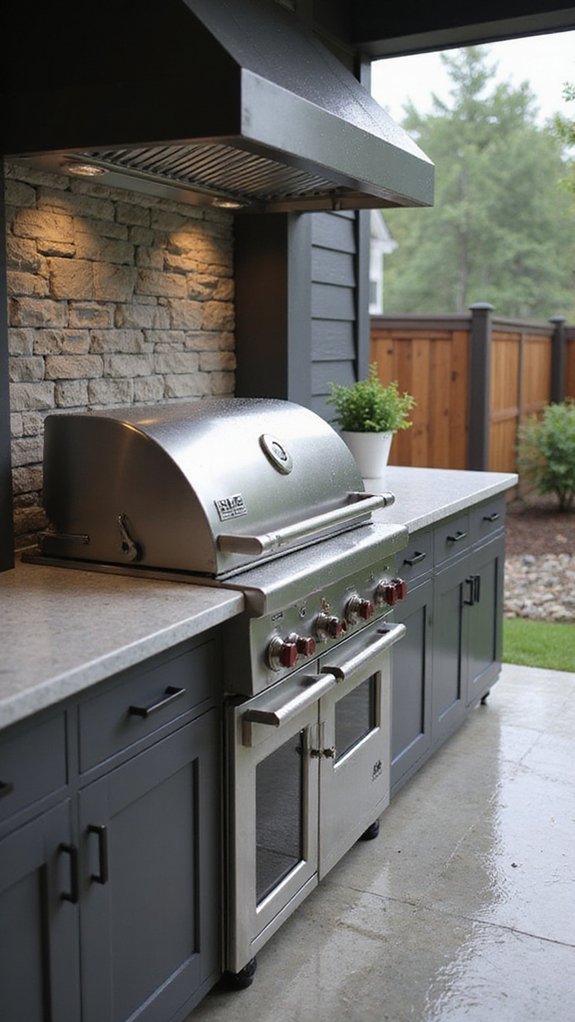
Material selection forms the structural foundation upon which functional outdoor kitchen layouts achieve long-term performance and visual coherence.
Weather-resistant materials including stainless steel, stone, and high-density polyethylene provide essential durability against environmental exposure while requiring minimal maintenance interventions.
Thoughtful material choices must complement your home’s architectural style, integrating sleek metals for modern profiles or natural stone for traditional aesthetics.
Rot-resistant woods like cedar enhance warmth through accent applications.
Durable countertops utilizing granite or concrete deliver sustained performance under outdoor conditions.
Marine-grade aluminum outdoor cabinets prevent corrosion while maintaining structural integrity, optimizing both functionality and aesthetics within extensive design frameworks.
Recommended Products

POLYWOOD Modern Adirondack Chair - Weather-resistant Recycled Plastic
POLYWOOD adirondack chair - Recycled plastic outdoor furniture
VIEW LATEST PRICE
POLYWOOD Modern Adirondack 6-Piece Conversation Set with Fire Pit
POLYWOOD recycled HDPE patio set - HDPE outdoor furniture conversation set
VIEW LATEST PRICE
Lechuza Cubico Premium 16-Inch Self-Watering Planter
Self watering planters outdoor - Modern outdoor planter large
VIEW LATEST PRICEIntegrate Smart Storage Solutions and Essential Appliances

Integration of smart storage solutions with weather-resistant appliances transforms outdoor kitchen functionality through optimized organization and enhanced operational efficiency.
Built-in cabinetry constructed from marine-grade aluminum or PVC provides durable storage infrastructure while essential appliances designed for outdoor use withstand environmental challenges.
Vertical shelving systems maximize storage capacity without sacrificing floor area, particularly beneficial for compact installations. Pull-out drawers enhance accessibility during culinary operations, while multi-functional appliances optimize cooking capabilities within limited parameters.
Vertical storage and pull-out systems deliver maximum functionality while multi-purpose appliances enhance cooking efficiency in constrained outdoor spaces.
- Seamless organization that eliminates chaotic searches for essential cooking tools
- Weather-resistant durability that protects valuable kitchenware investments year-round
- Enhanced entertaining confidence through accessible, well-planned storage systems
- Maximized cooking potential with space-efficient, versatile appliance configurations
Recommended Products

Balefire Goods All-Weather Outdoor Deep Seat Cushion Set with Back Support
Weather resistant outdoor cushions - Deep seat patio cushions
VIEW LATEST PRICE
Hampton Bay Belleville 7-Piece Padded Sling Outdoor Dining Set
Outdoor dining set - Patio furniture set
VIEW LATEST PRICEAdd Proper Lighting and Climate Control Features

Ideal illumination and atmospheric regulation systems complement storage infrastructure by extending functional operating hours and maintaining comfortable environmental conditions throughout diverse weather patterns.
Proper lighting and climate control features transform outdoor kitchen functionality through targeted implementation of dimmable LED lighting beneath cabinetry and along circulation paths. Smart lighting systems enable remote brightness and color adjustments via smartphone applications.
Ceiling fans and outdoor heaters provide year-round temperature regulation, while misting systems and retractable awnings counter excessive heat exposure.
Weather-resistant fixtures paired with energy-efficient bulbs guarantee operational longevity and reduced consumption, creating sustainable outdoor living space solutions optimized for continuous seasonal utilization.
Create Seamless Indoor-Outdoor Entertainment Zones

When indoor and outdoor entertainment zones operate as unified architectural systems, boundaries dissolve through deliberate material continuity and circulation design.
Thoughtful positioning of large sliding doors facilitates ideal access between areas, while consistent color palettes merge indoor outdoor environments seamlessly.
The outdoor kitchen becomes an extension of interior functionality, enhanced by coordinated outdoor furniture that mirrors indoor comfort and style specifications.
- Bi-fold doors opening to reveal endless summer evenings flowing naturally between spaces
- Fire pits crackling as conversations shift from kitchen island to garden sanctuary
- Coordinated materials creating visual poetry across threshold boundaries
- Extended seasons of gathering through integrated heating systems enhancing experience year-round
Frequently Asked Questions
What Should Every Outdoor Kitchen Have?
Every outdoor kitchen requires thoughtful grill selection, durable countertop options, functional seating arrangements, weather-resistant appliance choices, adequate lighting solutions, secure storage ideas, proper plumbing considerations, thorough fire safety, cohesive outdoor decor, and well-defined cooking zones for ideal planning and environmental integration.
How to Design the Perfect Outdoor Kitchen?
Effective outdoor kitchen design integrates targeted cooking zones with weather protection, ideal lighting options, and cohesive seating arrangements. Layout considerations prioritize workflow efficiency while storage solutions and landscaping integration create seamless environmental harmony.
What Is the Best Material to Use for an Outdoor Kitchen?
Stainless steel outdoor appliances paired with natural stone or concrete countertops provide ideal durability. Weather resistant cabinets, composite materials, and heat resistant surfaces guarantee longevity while maintenance considerations guide material selection for environmental integration.
Does an Outdoor Kitchen Increase House Value?
Outdoor kitchens considerably increase property appraisal values by 10-15%, reflecting strong buyer preferences for outdoor entertaining amenities. This home investment typically yields 100% return value, with market trends indicating growing demand for integrated outdoor living spaces.
Final Verdict
Modern outdoor kitchen implementation requires systematic integration of functional geometry, material engineering, and environmental responsiveness.
Triangular circulation patterns optimize workflow efficiency while weather-resistant material selection guarantees structural longevity. Intelligent storage systems maximize utilization within climatic limitations.
Controlled lighting and ventilation systems extend operational parameters across diurnal cycles. Seamless threshold shifts between interior and exterior zones create unified architectural environments that respond to both programmatic requirements and site-specific conditions through deliberate organization.


