

Modern farmhouse kitchen islands require strategic planning to achieve the perfect balance between rustic authenticity and modern functionality.
Designers must carefully consider material selection, layout configuration, and visual cohesion to create islands that serve as both practical workstations and aesthetic anchors.
The integration of traditional elements with modern conveniences presents unique challenges that demand specific technical approaches.
Three fundamental principles guide successful farmhouse island design, each addressing critical aspects that determine the project’s overall success and long-term satisfaction.
Choose the Right Materials and Finishes for Your Farmhouse Island

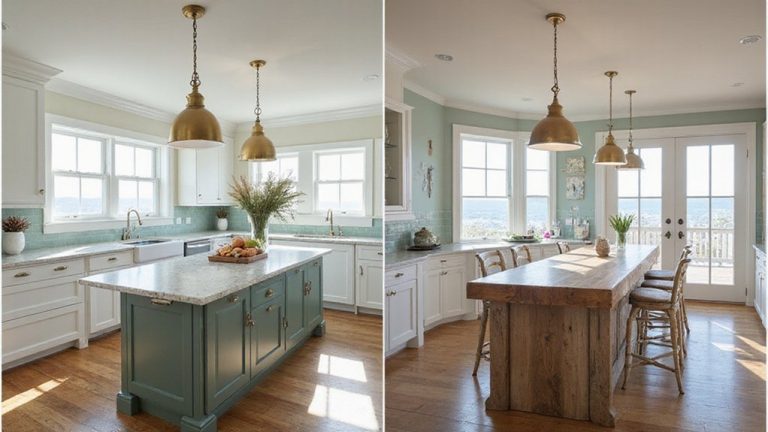
When selecting materials for a modern farmhouse kitchen island, designers prioritize natural materials that balance authenticity with farmhouse functionality.
Reclaimed wood and oak provide essential durability while delivering rustic charm characteristic of farmhouse style. Butcher block countertops offer practical workspace alongside aesthetic appeal.
Reclaimed wood and butcher block surfaces merge farmhouse authenticity with practical durability for timeless kitchen design.
Thoughtful material combinations wood with metal or stone accents create refined visual depth. Finishes should emphasize matte or distressed textures in muted tones that harmonize with the existing color palette.
Cabinet hardware selections, particularly black matte or brass options, establish contrast while maintaining design cohesion throughout the space’s overall composition.
Design Functional Storage and Seating Solutions
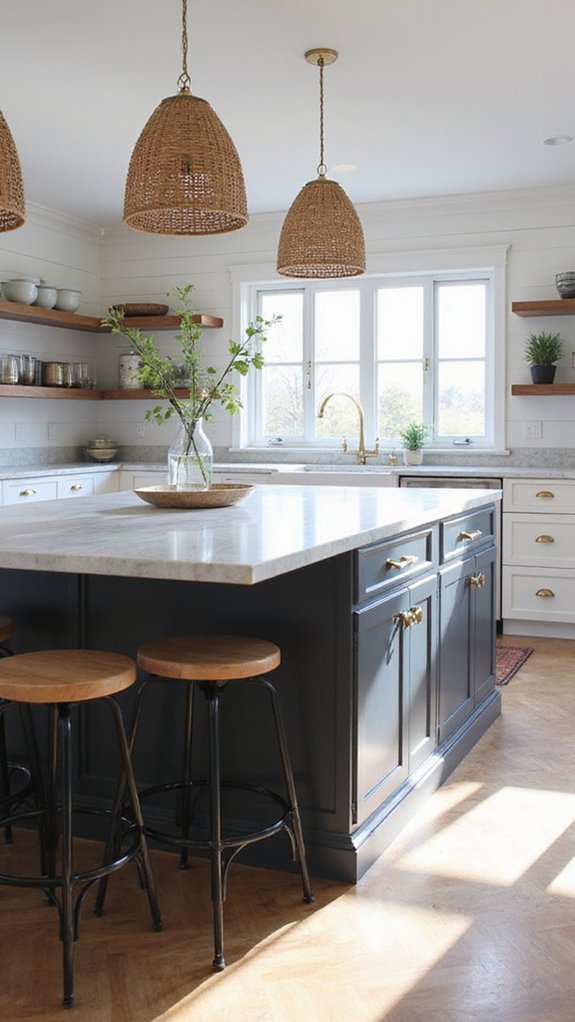
Material selection establishes the foundation, yet maximizing functionality requires thoughtful integration of storage and seating elements within the island framework.
Multi-functional features enhance utility through built-in storage solutions, integrating cabinets and open shelving for kitchen essentials organization. Hidden compartments optimize space efficiency via pull-out drawers for utensils and tools.
Seating options demand twenty-four-inch minimum width per position, ensuring comfort during casual dining experiences. Bar-height counter implementation creates distinct gathering zones while maintaining cooking area separation.
Functional storage placement promotes accessibility without compromising kitchen island decor aesthetics, delivering thorough solutions that balance practical requirements with modern farmhouse design principles.
Strategic height placement accommodates adult accessibility while incorporating child-safe configurations including rounded edges and secure mounting systems for family-friendly environments.
Style Your Island With Decorative Elements and Lighting

Aesthetic refinement transforms functional kitchen islands into compelling design statements through thoughtful integration of decorative elements and purposeful lighting schemes.
Statement lighting featuring oversized pendants creates focal points while delivering task illumination. Layered decor featuring varying heights generates visual interest through dimensional composition.
Decorative trays organize items functionally while introducing color accents. Open shelving displays selected kitchenware maintaining accessibility and inviting atmosphere.
Natural elements including fresh flowers enhance modern farmhouse style kitchen aesthetics by introducing organic warmth. Incorporate weathered wood accents and galvanized metal containers to anchor your island’s composition with authentic farmhouse textures.
These decor tips emphasize thoughtful placement of decorative bowls, candles, and botanical arrangements, creating cohesive design narratives that balance practicality with polished visual appeal throughout the culinary workspace.
Frequently Asked Questions
What Is Replacing the Kitchen Island in 2025?
Large communal tables featuring smart appliances and eco-friendly materials are replacing traditional islands. These multi-functional spaces embrace open concepts with minimalist design, integrating sustainable practices while offering custom solutions that blend industrial elements with vintage accents.
What Is the 3×4 Kitchen Rule?
The 3×4 kitchen rule establishes ideal work triangle dimensions between sink, stove, and refrigerator. Each leg measures 4-9 feet, creating efficient traffic patterns and functional zones that enhance kitchen layout performance and space efficiency.
What Trend Is Replacing Modern Farmhouses?
Cottagecore aesthetics replace modern farmhouses, emphasizing vintage accents, artisanal finishes, and biophilic elements. This trend includes sustainable materials, softer textures, and botanical motifs, moving away from minimalist designs toward personalized, nature-connected spaces with handcrafted details.
What Is the Rule of Thumb for Kitchen Island?
Kitchen island dimensions should measure minimum 24×48 inches with 36-42 inch clearance for ideal traffic flow. Designers recommend limiting size to 10% of total kitchen area while including proper seating arrangements, storage solutions, and functional layouts for efficient appliance placements.
Final Verdict
Successful modern farmhouse kitchen island design requires thoughtful material selection, emphasizing reclaimed wood and natural stone for authentic character.
Ideal functionality stems from integrated storage systems and multi-level surfaces accommodating both preparation and dining needs.
Lighting architecture should include scaled pendant fixtures that provide adequate task illumination while establishing visual hierarchy.
These three foundational principles guarantee the island functions as both a practical work zone and central gathering point, maximizing efficiency within modern farmhouse aesthetics.
Recommended Products

Sauder Palladia Kitchen Island with Reclaimed Wood Finish
Reclaimed wood kitchen island - Rustic kitchen island
VIEW LATEST PRICE
Stone Beam Modern Farmhouse Wood Bar Stools Set of 2
Farmhouse bar stools - Wood kitchen stools
VIEW LATEST PRICE
Winsome Savannah Kitchen Cart with Wood Top Storage
Farmhouse kitchen cart - Kitchen island cart wood
VIEW LATEST PRICE