


Small deck owners face a fundamental design challenge: maximizing greenery without sacrificing precious floor space.
Modern railing planters address this constraint through vertical integration, transforming perimeter barriers into productive growing surfaces.
Modern models feature engineered drainage systems, adjustable mounting mechanisms, and weather-resistant materials that withstand seasonal extremes.
The seven planters examined demonstrate how thoughtful material selection, installation flexibility, and aesthetic consideration converge to create functional solutions that adapt to varying deck dimensions and architectural styles.
Space-Saving Design Features That Maximize Small Deck Areas

Modern railing planters employ precision-engineered mounting systems that conform to standard 2×4 and 2×6 railing dimensions, eliminating installation complexity while maximizing efficiency on compact deck surfaces.
These railing planter box designs optimize vertical growing space through dimensional planning, typically measuring 16″L x 12″W x 10″H to accommodate diverse plant varieties without consuming premium floor area.
Strategic vertical cultivation maximizes limited deck real estate through engineered dimensions that accommodate multiple plant species without sacrificing valuable floor space.
Rail planters feature tool-free installation mechanisms that enable immediate deployment across standard deck configurations. The lightweight construction facilitates effortless repositioning, allowing dynamic reconfiguration.
This modular approach transforms underutilized railing perimeters into productive growing zones, effectively doubling functional deck capacity through vertical space utilization.
Vertical storage configurations maximize wall and railing space while supporting integrated plant displays that enhance air circulation patterns and natural light distribution in compact outdoor areas.
Material Options: From Durable PVC to Weather-Resistant Resin

Modern railing planters utilize advanced synthetic materials that deliver superior performance in demanding outdoor environments.
PVC construction, exemplified by products like Versatex, provides exceptional resistance to UV degradation and thermal expansion while maintaining structural integrity across temperature fluctuations.
Weather-resistant resin alternatives offer comparable durability with reduced weight profiles, enabling effortless installation and repositioning on weight-sensitive deck structures.
PVC Durability Benefits
Versatex PVC construction delivers exceptional structural integrity for deck railing planters, utilizing a solid polymer composition that resists cracking, chipping, and UV-induced fading across extended exposure periods.
This non-porous material eliminates moisture absorption, preventing warping in humid conditions while maintaining dimensional stability.
The lightweight design facilitates installation on weight-sensitive small decks without compromising structural performance.
| Property | PVC Performance | Traditional Materials |
|---|---|---|
| Moisture Resistance | Zero absorption | High absorption risk |
| Pest Vulnerability | Complete immunity | Susceptible to damage |
| Maintenance Requirements | Minimal upkeep | Regular treatment needed |
| Weather Durability | All-season stability | Seasonal deterioration |
PVC railing planters offer customizable painting options while maintaining robust weatherproofing characteristics throughout varied climatic exposures.
Weather-Resistant Resin Advantages
Weather-resistant resin emerges as a compelling alternative to PVC construction, offering distinct performance characteristics that enhance small deck installations through advanced polymer engineering.
This lightweight material facilitates effortless rail planter mounting while maintaining structural integrity under environmental stress. UV-resistant formulations prevent color degradation, preserving aesthetic appeal throughout extended exposure cycles.
The non-toxic composition enables safe cultivation of edible plants, expanding functional applications beyond ornamental use. Integrated drainage systems eliminate water accumulation issues, promoting ideal root health.
Weather-resistant resin rail planter designs combine durability with reduced weight loads, making them ideal solutions for space-limited deck environments requiring reliable long-term performance.
Installation Methods for Different Railing Types and Sizes

Proper installation techniques vary greatly based on railing construction and dimensions, requiring specific mounting approaches for ideal stability and longevity.
Standard wooden railings accommodate planters through simple 1-2 screw placement on center or side positions, eliminating additional tool requirements.
Flat metal railing configurations accept widths spanning 1-2 inches, maximizing narrow space utilization.
Round railing diameters up to 2.5 inches provide compatible mounting surfaces for diverse architectural styles.
Non-standard dimensions require custom phone-ordered sizing solutions, ensuring precise fitment across unique installations.
Heavy-duty zip ties offer alternative securing methods for specialized configurations, delivering reliable attachment without permanent railing modifications or structural compromises.
Self-Watering Systems to Reduce Maintenance Requirements

While traditional railing planters demand frequent watering attention, self-watering systems revolutionize small deck gardening through integrated reservoir technology that triples water capacity and reduces maintenance intervals to once weekly or less.
These systems employ advanced wicking mechanisms that enable potting mix to automatically draw moisture from concealed reservoirs, delivering consistent hydration without oversaturation.
Initial monitoring during the first weeks allows users to calibrate ideal water levels as growing medium adapts to automated delivery.
- Triple water capacity reduces watering frequency to one-third of conventional planters
- Wicking technology provides consistent moisture distribution without manual intervention
- Modular reservoir options retrofit existing planter models for enhanced functionality
- Low-maintenance design supports urban lifestyles and frequent travelers
Plant Selection Guide for Optimal Growth in Railing Planters
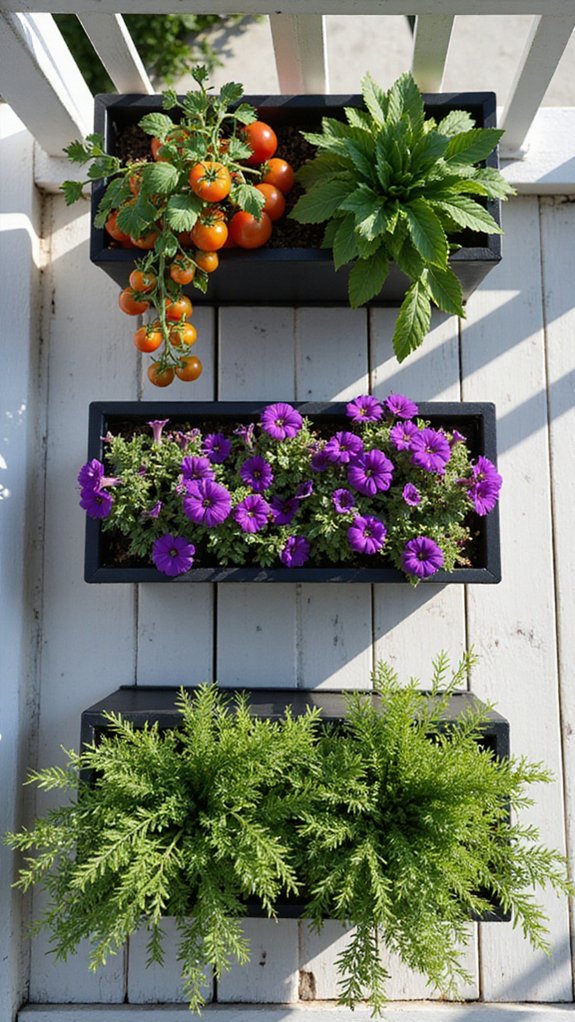
Successful plant selection for railing planters depends on matching botanical requirements to specific microclimatic conditions, container dimensions, and structural limitations inherent in elevated deck environments.
Window Box configurations require thoughtful plant placement considering sunlight exposure patterns. Quality potting mix formulations must balance moisture retention with drainage efficiency to prevent root complications in confined spaces.
| Light Condition | Flowering Species | Foliage/Herbs |
|---|---|---|
| Full Sun | Petunias, Geraniums | Basil, Thyme |
| Partial Shade | Begonias | Parsley |
| Full Shade | Impatiens | Ferns, Ivy |
Trailing varieties maximize vertical space utilization while cascading elements create visual depth beyond railing boundaries.
Style Varieties to Match Contemporary Outdoor Aesthetics

Modern railing planters integrate seamlessly with current outdoor spaces through carefully engineered design principles that prioritize clean geometric forms and uncluttered visual profiles.
The minimalist aesthetic framework eliminates ornamental excess while maintaining structural integrity through streamlined silhouettes and precision-manufactured edges.
Color coordination systems allow these planters to function as architectural extensions of existing deck elements, creating cohesive visual continuity across the outdoor environment.
Minimalist Design Elements
Modern railing planters embrace geometric precision through clean-lined silhouettes that eliminate ornamental distractions, creating visual harmony with streamlined deck environments.
Current designs prioritize functional aesthetics through angular profiles and unadorned surfaces that complement architectural minimalism. These planters feature structured proportions that maintain visual balance while maximizing growing capacity within compact rail-mounted configurations.
- Geometric shapes with sharp angles and defined edges create architectural consistency
- Neutral color palettes establish refined foundations that add vibrant color through plantings
- Smooth surface treatments eliminate texture variations for seamless rail integration
- Proportional scaling guarantees dimensional harmony between planter size and deck architecture
Color Coordination Options
While geometric precision establishes the structural foundation of modern railing planters, thoughtful color selection amplifies their architectural impact within modern deck environments.
Neutral tones including white, gray, and black deliver seamless integration with existing outdoor aesthetics, creating cohesive visual flow across limited square footage.
Alternatively, vibrant deep blues or greens introduce calculated color punctuation against monochromatic furniture arrangements.
Textured surfaces featuring matte finishes or geometric patterns enhance dimensional interest while preserving clean design principles.
Coordinated color schemes linking planters with complementary outdoor cushions and décor elements establish unified environmental harmony, maximizing visual coherence within constrained deck parameters through intentional chromatic relationships.
Budget-Friendly Options Under $200 for Every Deck Size

Since small deck spaces demand careful budget allocation without compromising aesthetic appeal, homeowners can select from several railing planters that deliver professional design elements under the $200 threshold.
These budget-friendly options maximize outdoor space efficiency while maintaining design integrity across varied price points.
Thoughtful selections include:
- Countryside Railing Planter – $16.00 entry-level solution for maximum affordability
- English Garden Railing Basket – $70.00 classic aesthetic with space optimization
- Medallion Railing Planter – $80.00 mid-range functionality with refined styling
- Simple Elegance Railing Planter – $110.00 modern design for compact installations
Each option addresses specific space requirements while delivering measurable value within established budget parameters.
Frequently Asked Questions
Are Railing Planters Worth It?
Railing planters prove worthwhile through space efficiency and aesthetic enhancement. Design considerations include rail compatibility and drainage systems. Installation tips emphasize proper weight distribution and secure mounting hardware to guarantee structural integrity and maximum functionality.
What Plants Are Good for Deck Rail Planters?
Ideal selections include trailing varieties like ivy, compact herbs such as basil, vibrant deck rail flowers like petunias, leafy greens including spinach, and cherry tomatoes. These species maximize container gardening efficiency while providing aesthetic appeal and functional harvests.
Do Deck Rail Planters Need Drainage Holes?
Yes, deck rail planters require drainage holes to prevent waterlogging and root rot. Effective drainage solutions guarantee peak plant health, while proper planter maintenance includes monitoring hole clearance for consistent water flow and soil aeration.
Can a Planter Replace a Railing?
No, planters cannot replace railings due to critical safety concerns and structural inadequacy. While planters enhance aesthetic appeal, railings provide essential fall protection and load-bearing capacity mandated by building codes for occupant safety.
Final Verdict
Modern railing planters deliver ideal space utilization through engineered vertical growing systems that integrate seamlessly with modern deck architectures.
Advanced material compositions guarantee weather durability while tool-free mounting mechanisms accommodate diverse railing specifications. Self-watering technologies reduce maintenance intervals, supporting sustained plant health in confined growing environments.
These design solutions transform compact outdoor spaces into functional green installations, achieving maximum aesthetic impact within budget parameters ranging from $16 to $200 per unit.
Recommended Products

Lechuza Cubico Premium 16-Inch Self-Watering Planter
Self watering planters outdoor - Modern outdoor planter large
VIEW LATEST PRICE
MyGift Set of 3 Modern White Ceramic Self-Watering Hanging Planters
Ceramic self-watering hanging planter - Modern white hanging pot
VIEW LATEST PRICE
Threshold Designed with Studio McGee Modern Farmhouse Coat Rack Hall Tree
Entryway hall tree - Coat rack storage
VIEW LATEST PRICE

